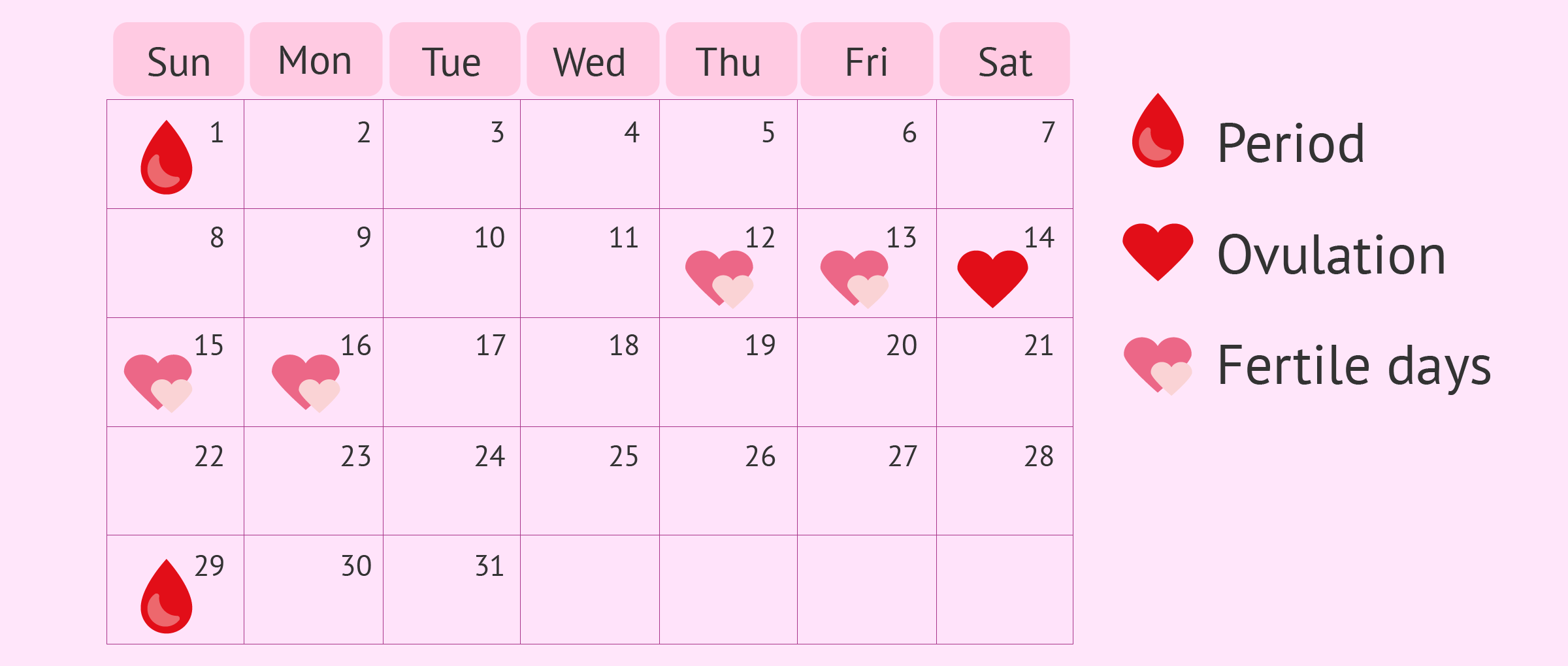
Timing is everything. But when it comes to your body, timing is also incredibly annoying. You've probably stared at a little glowing circle on a phone screen, wondering if that "fertile window" is actually real or just a mathematical guess based on an "average" person who doesn't exist. Understanding what is ovulation week isn't just about memorizing a textbook diagram of ovaries. It’s about biology, hormones, and the weird reality that your body doesn't actually care about a calendar.
Most people think ovulation is a single moment. It’s not. Well, the release of the egg is a moment, but the biological lead-up—the "week" we talk about—is a complex hormonal shift that changes your brain chemistry, your skin, and even how you walk.
The Big Myth: It’s Not Just Day 14
Let’s get the biggest lie out of the way. If you have a 28-day cycle, your 6th-grade health teacher probably told you that you ovulate on day 14.
Maybe you do. Honestly, though? Most people don't. A massive study published in Nature Digital Medicine analyzed over 600,000 cycles and found that the "standard" 28-day cycle is actually only present in about 13% of women. For everyone else, the timing of what is ovulation week shifts. It wanders. It might show up on day 11 or hold off until day 21.
Ovulation is the main event. It’s when a mature follicle in your ovary bursts open and sends an oocyte (the egg) down the fallopian tube. This egg only lives for about 12 to 24 hours. That’s it. That’s the whole window for the egg. So why do we call it a "week"? Because sperm are surprisingly resilient. They can hang out in your reproductive tract for up to five days, just waiting.
So, when we define the fertile week, we are really talking about the life span of the sperm plus the one-day life of the egg. This creates a roughly six-day window of opportunity. If you have sex on Monday, and you ovulate on Thursday, you could still get pregnant. Biology is wild like that.
The Hormonal Puppet Master
Everything is driven by the pituitary gland. It’s this tiny pea-sized thing in your brain that decides when the show starts. It sends out Follicle-Stimulating Hormone (FSH). This tells your ovaries, "Hey, wake up, we need some eggs."
Several follicles start growing, but usually, only one becomes the "dominant" one. As this follicle grows, it pumps out estrogen. This is the "feel-good" phase for many. Your skin looks clearer. Your libido might spike. You might feel more social. This estrogen buildup eventually triggers a massive surge in Luteinizing Hormone (LH).
The LH surge is the starting gun. Once LH spikes, ovulation usually happens within 24 to 36 hours.
How to Actually Know You’re in Your Ovulation Week
Apps are basically just calculators. They guess. If you really want to know what’s happening, you have to look at the data your body is literally leaking.
Cervical Mucus (The Fluid Truth)
This sounds gross to some, but it’s the most accurate biomarker you have. As estrogen rises, your discharge changes. It goes from dry or sticky to creamy, and finally, to something that looks exactly like raw egg whites. This "egg white cervical mucus" (EWCM) is designed to keep sperm alive. It’s alkaline. It’s stretchy. If you see this, you are in your what is ovulation week peak.
The Basal Body Temperature (BBT) Shift
Your resting temperature stays low during the first half of your cycle. The day after you ovulate, your temperature jumps by about 0.5 to 1 degree Fahrenheit. This happens because the empty follicle (now called the corpus luteum) starts producing progesterone, which is thermogenic. It warms you up.
Note the catch: BBT only tells you that you already ovulated. It doesn't warn you that it’s about to happen. It’s a rearview mirror, not a GPS.
Mittelschmerz
About 20% of women feel ovulation. It’s a sharp or dull cramp on one side of the lower abdomen. It’s called Mittelschmerz, which is German for "middle pain." It’s literally the sensation of the follicle rupturing or the fallopian tube contracting.
Why Your "Week" Might Be Missing
Sometimes the machinery stalls. Anovulation—a cycle where you don't release an egg—is actually pretty common. Stress is the biggest culprit. Your brain (the hypothalamus) is very sensitive to perceived danger. If you’re running a marathon, starving yourself, or dealing with a massive deadline, your brain might decide it’s a bad time to potentially grow a human. It shuts down the LH surge.
Polycystic Ovary Syndrome (PCOS) is another huge factor. In PCOS, the body produces too many androgens (male-pattern hormones), which prevents the follicles from maturing properly. You might have several months where you never hit that "ovulation week" at all.
Then there's the perimenopause transition. As people hit their late 30s or early 40s, cycles can get shorter or more erratic. You might ovulate on day 8 one month and day 18 the next. This is why "calendar counting" becomes useless as we age.
The LH Strip Controversy
A lot of people rely on those "pee sticks" or Ovulation Predictor Kits (OPKs). They are great, but they aren't foolproof. An LH strip tells you your body is trying to ovulate. It doesn't guarantee the egg actually made it out. In some cases, like with Luteinized Unruptured Follicle Syndrome (LUFS), the LH surges, the hormones look right, but the egg stays trapped inside the follicle.
Practical Realities of the Fertile Window
If you're trying to conceive, the day before ovulation is actually more statistically successful than the day of. You want the "waiting room" (the fallopian tubes) to already be full of sperm when the egg arrives. Since the egg dies so fast, waiting until the egg is released to have sex is often too late.
If you're trying to avoid pregnancy, this week is the "danger zone." Because sperm are so hardy, "unprotected sex on Tuesday" can lead to "conception on Friday." This is why the rhythm method has such a high failure rate for people with irregular cycles. You think you’re safe, but your pituitary gland decides to move the deadline.
Beyond Fertility: The Mood Shift
We don't talk enough about how what is ovulation week affects your brain. Estrogen is a precursor to serotonin. When estrogen is high right before ovulation, many people feel "on top of the world." High energy. High confidence.
Then, the moment ovulation ends, estrogen drops off a cliff and progesterone takes over. Progesterone is the "chilling out" hormone. It can make you feel sleepy, slightly more anxious, or ready to nest. If you’ve ever wondered why you feel like a different person from one Tuesday to the next, check your cycle. It’s probably the shift from the follicular phase to the luteal phase.
Actionable Steps for Tracking
Stop guessing. If you want to master your understanding of your own cycle, do these three things starting tomorrow:
- Check your fluid every time you wipe. Look for that clear, stretchy texture. This is your "Go" signal.
- Buy a basal thermometer. It needs to measure to two decimal places (e.g., 97.65). Take your temp the second you wake up, before you even sit up in bed. Record it.
- Cross-reference. If your app says you're ovulating but you're dry as a bone and your temp hasn't shifted, trust your body over the algorithm.
Understanding your ovulation week is really about understanding your unique rhythm. There is no "normal," there is only what is normal for you. Stress, diet, sleep, and illness can all push the date. By watching the biomarkers instead of the calendar, you actually get a clear picture of your reproductive health.
Moving Forward
Start a simple log. Don't overcomplicate it with expensive tech if you don't want to. A simple notebook works. Track the "Egg White" mucus and the day of the temperature jump. After three months, you’ll likely see a pattern that no app could have predicted perfectly. This data is the most powerful tool you have for either achieving pregnancy or simply understanding why your mood and energy levels are doing what they're doing.
Pay attention to the "one-sided" twinges in your pelvis. Note the days you feel inexplicably confident. It’s all connected to that 24-hour window where an egg makes its debut. Knowing exactly when that happens puts you back in the driver's seat of your own biology.