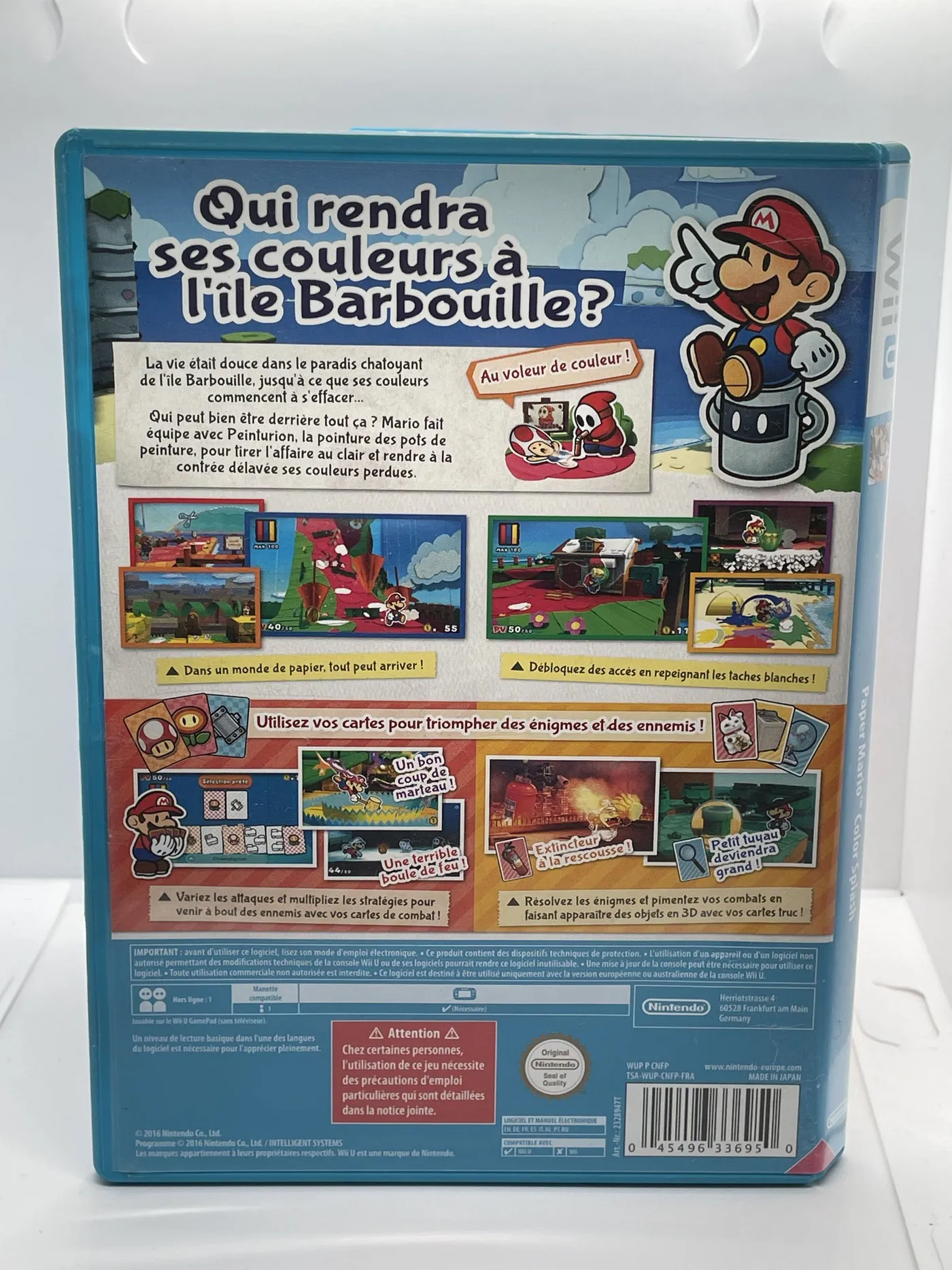
Look, I get it. Mentioning Paper Mario Color Splash in a room full of RPG purists is a great way to start an argument. People are still salty about the shift away from the Thousand-Year Door mechanics. They miss the partners. They miss the XP. They miss the deep, branching narrative paths that made the GameCube era feel like a playable storybook.
But here is the thing: if you actually sit down and play the 2016 Wii U release today, you realize it’s one of the most charming, visually stunning, and genuinely hilarious games Nintendo ever put out. It’s a tragedy it was tethered to a console that practically nobody owned.
Paper Mario Color Splash isn't a traditional RPG. It doesn't try to be. Instead, it’s an adventure game wrapped in a gorgeous, high-definition paper aesthetic that still looks better than most modern Switch titles. Seriously. The textures on the cardboard are so crisp you can almost feel the grain.
Prisma Island and the Great Paint Mystery
The game kicks off with a mystery. Princess Peach and Toad show up at Mario’s house with a "letter" that turns out to be a folded-up, drained-of-color Toad. It’s creepy. It's weird. It’s exactly the kind of offbeat humor that developer Intelligent Systems excels at. This leads the gang to Prisma Island, a vibrant vacation spot that has been systematically bled dry of its pigment by a mysterious force (spoilers: it’s Bowser, but with a twist).
Enter Huey. He’s a talking paint can.
While some fans rolled their eyes at yet another "helper" character after Kersti in Sticker Star, Huey is actually great. He’s sarcastic. He’s genuinely helpful. He provides the emotional weight for a story that, on the surface, seems like it's just about painting blank spots on a wall.
The core loop of Paper Mario Color Splash involves Mario using his new Paint Hammer to restore color to the environment. You see a white spot on a house? Whack it. A colorless Toad face-down in the dirt? Whack him. It’s satisfying in a "cleaning up the room" kind of way. This isn't just window dressing, either. Restoring color often triggers environmental puzzles or unlocks new paths.
Let’s Talk About the Battle System (The Elephant in the Room)
If there is one thing that holds this game back from universal acclaim, it’s the combat. It uses a card-based system. To attack, you have to pick a card on the Wii U GamePad, "paint" it to power it up, and then flick it toward the TV.
It’s slow.
There’s no way around that. In a world where we want snappy, fast-paced encounters, having to look down at a second screen to choose a "Worn-out Jump" card feels like a chore after the fiftieth battle.
However, there is a nuance here that people miss. The game is less about "leveling up" and more about resource management. You have to decide if that Big Shiny Hammer card is worth using on a couple of Shy Guys, or if you should save it for the inevitable mini-boss around the corner. It turns every encounter into a puzzle of efficiency rather than a grind for numbers.
Honestly, the "Things" make the combat worth it. These are real-world objects—a giant fan, a lemon, a fire extinguisher—that Mario finds and turns into cards. Watching a photorealistic giant fan blow a battalion of paper enemies off the screen is peak Nintendo surrealism. It’s absurd. It’s hilarious. It makes you want to see what the next Thing is going to do.
Writing That Actually Makes You Laugh Out Loud
We need to talk about the writing. The localization team at Nintendo of America deserves a raise for this one. Paper Mario Color Splash might be the funniest game in the entire Mario franchise.
The Toads in this game are basically having an existential crisis 24/7. You’ll find them hiding in crates, questioning the meaning of their paper existence, or complaining about their low-paying jobs at the Port Prisma juice bar. There is a specific subplot involving a "Justice Toad" superhero group that is genuinely clever satire.
The enemies aren't just fodder, either. Shy Guys are portrayed as bumbling construction workers or hungry minions who just want to slurp some paint through a straw. It’s this personality that carries the game through its slower mechanical moments. You aren't playing for the thrill of the fight; you’re playing to see what ridiculous thing the next NPC is going to say.
A Visual Masterpiece on Dead Hardware
Even in 2026, the art direction of this game holds up. Because everything is designed to look like a physical craft project—corrugated cardboard, tape, glitter, construction paper—the game doesn't age the way realistic graphics do. The way the lighting hits the "paper" surfaces creates a tactile feel that few games achieve.
When you walk across a bridge made of folded paper, it flexes. When a character gets crumpled, they stay wrinkled. It’s a commitment to a theme that is rare in big-budget titles. It’s basically a playable diorama.
Why It’s Better Than Sticker Star
A lot of people skip this game because they hated Sticker Star on the 3DS. That’s a mistake. While they share a similar DNA, Paper Mario Color Splash fixes the biggest issues of its predecessor.
- Direction: You actually know where to go. Sticker Star was notoriously cryptic. Color Splash has a better flow and gives you better hints about which "Thing" cards you need for boss fights.
- Personality: The world feels lived-in. Prisma Island has distinct locales—a haunted hotel, a prehistoric jungle, a high-speed train—that feel like actual places rather than just "Grass World" and "Desert World."
- The Script: As mentioned, it’s actually funny. Sticker Star felt a bit sterile. This game feels like it has a soul.
The Reality of Collecting in 2026
If you want to play this today, you have a couple of options. You can hunt down an original Wii U disc, which, let's be real, is getting harder and more expensive as that console enters the "retro" hall of fame. Or you can hope for a Switch (or Switch 2) port.
Nintendo has been on a tear lately with remakes. We got Super Mario RPG, we got The Thousand-Year Door. It feels like only a matter of time before they look at the Wii U library again. But until then, the original hardware is the only way to experience the dual-screen "flicking" mechanic as it was intended.
Is it perfect? No. The lack of a traditional leveling system still stings for long-time fans. The Roshambo temples are basically just rock-paper-scissors filler. And yes, sometimes you run out of blue paint at the exact moment you need to solve a puzzle.
But the highs? They are incredibly high. The music is a live-recorded jazz-fusion masterpiece that will get stuck in your head for weeks. The "Sunset Express" level is an all-time classic Mario stage. The final boss fight actually manages to be surprisingly touching.
Actionable Steps for the Curious Player
If you are thinking about dusting off the Wii U or grabbing a copy from a local game shop, keep these tips in mind to actually enjoy your time:
- Don't grind. You don't need to fight every single enemy in the overworld. If you can avoid a fight, avoid it. Save your cards for the scripted encounters and boss fights.
- Talk to the "Wringer" Toad. He’s in Port Prisma. If you’re stuck on a boss, he will give you a hint about which "Thing" card is mandatory to win. Don't waste your time guessing; the game expects you to use the hint system.
- Paint everything. Not just for the 100% completion, but because the game rewards you with extra cards and "Hammer Scraps" (which increase your paint capacity). It’s the closest thing the game has to an XP system.
- Invest in a stylus. Using your finger on the Wii U GamePad is okay, but a stylus makes the card-painting and flicking process much faster and more precise.
Paper Mario Color Splash isn't the RPG you were promised in 2004. It’s something else entirely—a slow-paced, humorous, artistic journey through a world made of stationery. If you go into it expecting a comedy-adventure rather than a deep stat-heavy RPG, you might just find your new favorite "underappreciated" game.
Stop waiting for the port that might never come. Find a copy, grab your paint hammer, and go save Prisma Island. It’s worth the trip.