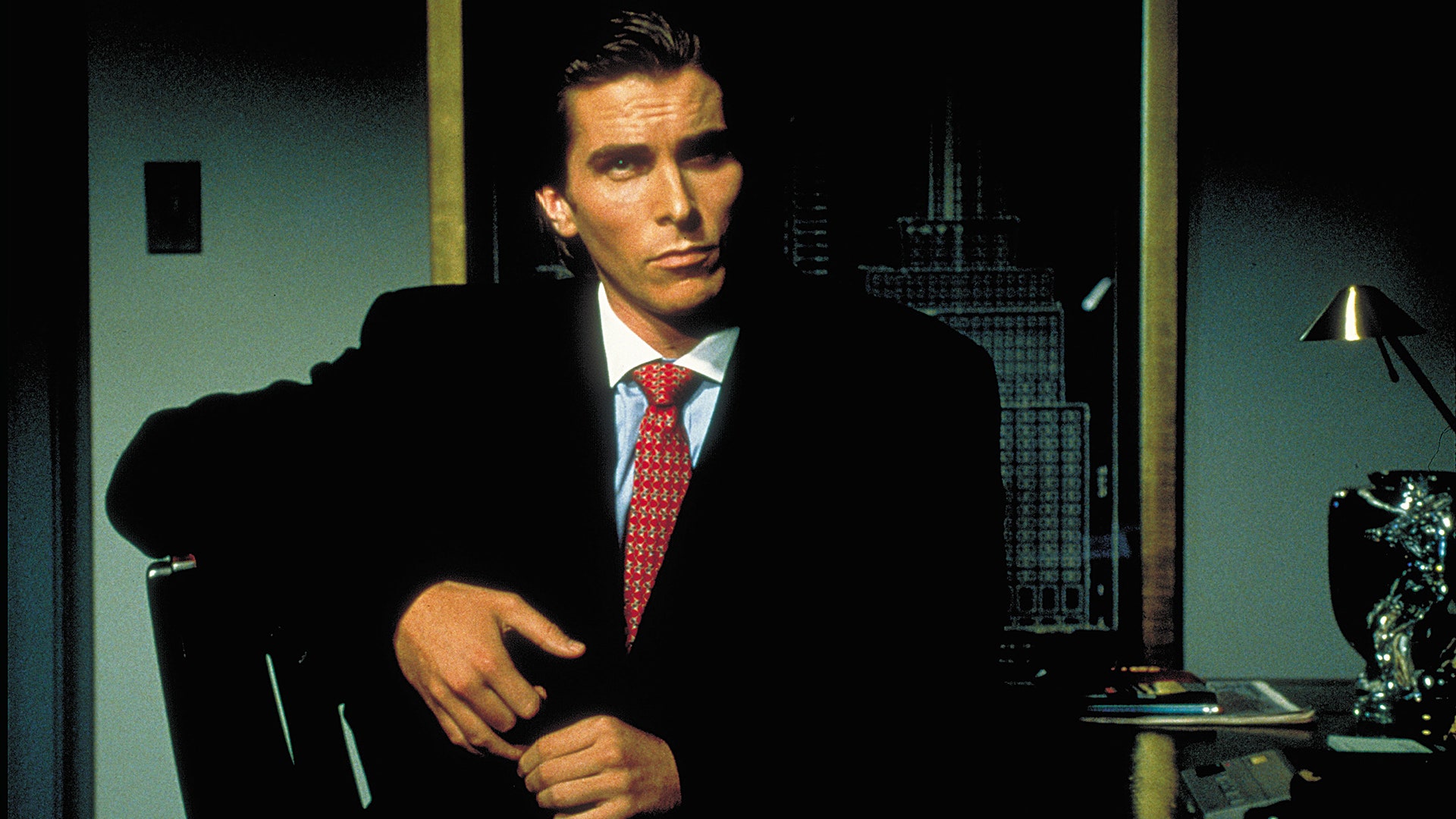
If you’ve seen the movie or read the book, you probably remember the crisp suits, the Valentino ties, and that absolutely unhinged morning routine involving an ice pack mask and a deep-pore cleanser. But if someone asked you to explain what Patrick Bateman's job actually entails on a Tuesday afternoon at 2:00 PM, you’d probably stutter.
Most people just say "he's in finance" or "he's a banker." Honestly, that's what the movie wants you to think. But the reality of his professional life is way more bizarre—and a lot more pathetic—than most fans realize.
The Title vs. The Reality at Pierce & Pierce
Basically, Patrick Bateman is a Vice President in the Mergers and Acquisitions (M&A) department at a fictional Wall Street firm called Pierce & Pierce.
On paper, that sounds incredibly impressive. In the 1980s, being a VP in M&A meant you were at the center of the universe. You were supposed to be orchestrating massive corporate takeovers, analyzing balance sheets, and moving millions of dollars across borders before lunch.
But here’s the kicker: at Pierce & Pierce, everyone is a Vice President.
If you look closely during the legendary business card scene, you’ll notice something hilarious. Every single guy at that table—Bryce, McDermott, Van Patten, and Paul Allen—has the exact same title. In the world of American Psycho, the title "Vice President" is basically a participation trophy for wealthy Ivy League grads. It’s a middle-management role that carries zero actual authority.
Does he actually do any work?
Short answer: No.
Longer answer: He spends his entire workday performing the ritual of having a job. Throughout the story, we almost never see Bateman actually looking at a spreadsheet or closing a deal. Instead, his "work" consists of:
- Ordering expensive takeout.
- Making personal phone calls to secure dinner reservations at Dorsia (and failing).
- Watching The Patty Winters Show.
- Arranging his office to look perfectly productive while doing absolutely nothing.
- Comparing the watermark and lettering of business cards with other men who are equally idle.
There’s a scene in the book where he literally spends hours trying to decide where to go for lunch. That's his job. He’s a professional consumer who happens to have a desk.
Why the Job Matters (The "Fit In" Factor)
You might wonder why a guy who is clearly a trust-fund kid even bothers to show up to an office. His father "practically owns the company," after all. He doesn’t need the paycheck.
There’s a telling moment where Evelyn asks him why he doesn't just quit. His response? "Because I want to fit in."
That’s the core of the whole character. Patrick Bateman's job isn't a career; it's a camouflage. In the hyper-materialistic culture of 1980s Manhattan, you didn't exist unless you had a prestigious firm on your business card. Having a job at Pierce & Pierce is just another accessory, like his Rolex or his Oliver Peoples glasses. It makes him indistinguishable from the other "yuppies" around him, which is exactly how he hides his violent side.
The "Aquisitions" Typo
Have you ever noticed the typo on the cards?
In the film, the business cards for these high-powered "experts" frequently feature the word "Aquisitions" instead of "Acquisitions." It’s a tiny, blink-and-you-miss-it detail that proves none of these guys actually care about the business. They are so obsessed with the "pale nimbus" coloring and the "silian braille" lettering that they don't even notice the company can't spell its own department name.
It’s a perfect metaphor for Bateman’s life: a beautiful, expensive surface with absolutely nothing—or something broken—underneath.
How He Compares to Paul Allen
The reason Bateman hates Paul Allen so much isn't because Allen is a better person. It’s because Allen is better at the job of being a yuppie.
Paul Allen handles the "Fisher account." He can get a table at Dorsia on a Friday night. He has a slightly better apartment. In Bateman’s world, your value as a human is tied directly to your perceived status at the firm. Because Allen is seen as more "successful" in the social hierarchy of Pierce & Pierce, Bateman views his existence as a personal insult.
Actionable Takeaways from Bateman’s Career Arc
While you definitely shouldn't follow Bateman's lead on... well, anything... there are a few "real world" insights we can pull from how his job is portrayed:
- Titles can be empty: In the corporate world, especially in finance and tech, titles like "VP" or "Director" can sometimes be inflated to keep employees happy without giving them actual power. Always look at the responsibilities, not just the business card.
- The "Mask of Sanity" in the workplace: Bateman represents the extreme version of the "work persona." Most people have a professional mask, but when the mask becomes the entirety of the person, that's where the trouble starts.
- Company Culture vs. Reality: Pierce & Pierce is a satirical look at a toxic, superficial culture where looking busy is more important than being productive. If you find yourself in an environment where people care more about the font on a slide deck than the data in it, you're in a Bateman-esque situation.
Basically, Patrick Bateman's job is to be a ghost in a suit. He is an investment banker who doesn't invest, a manager who doesn't manage, and a vice president with no power. He’s just a guy in a room, waiting for the clock to hit 5:00 PM so he can go be a monster.
To understand Bateman more deeply, next time you watch the film, ignore the dialogue and look at the background of his office. You'll see a man who has mastered the art of looking like he belongs, while being entirely absent from the work itself.