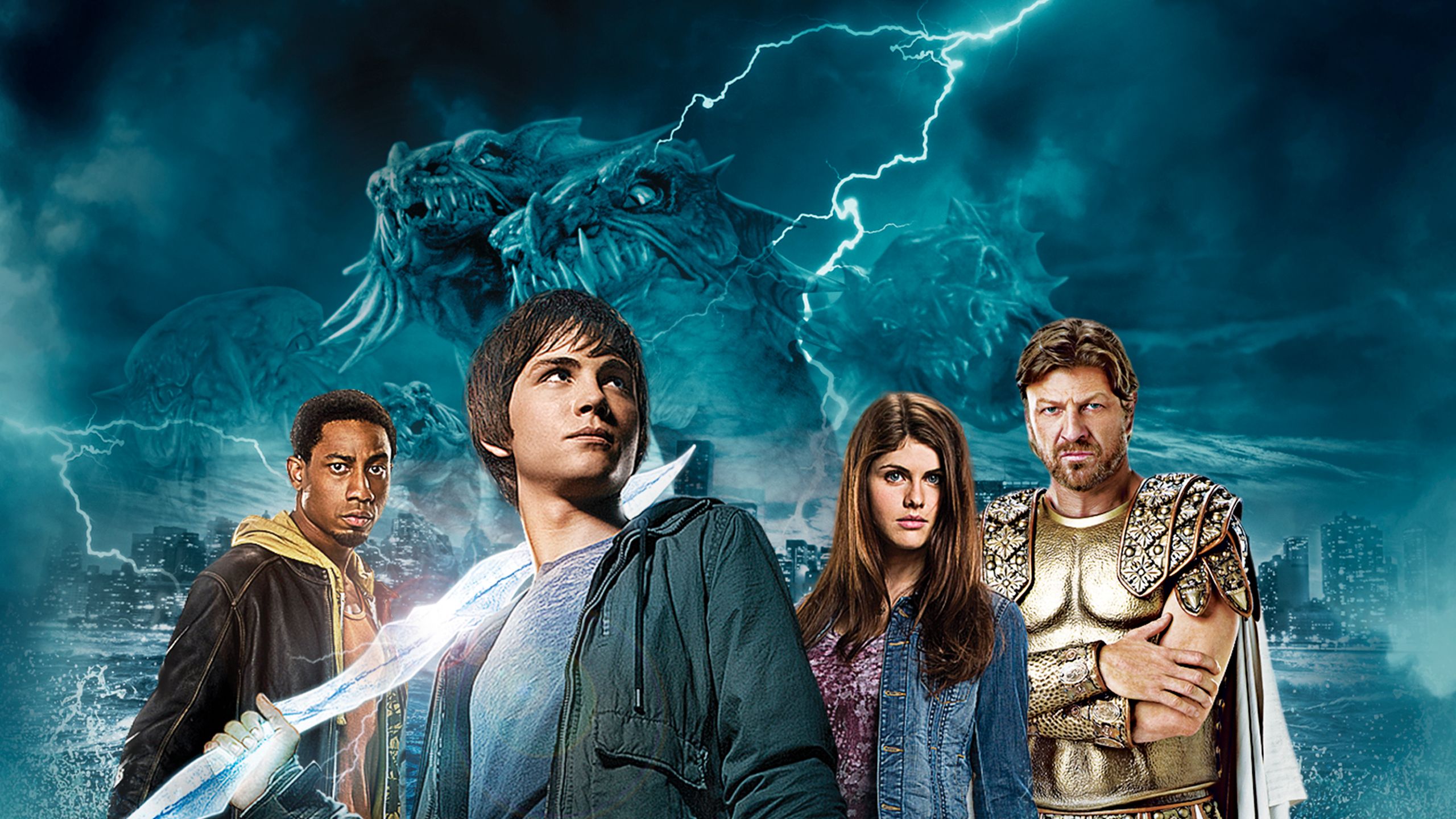
Honestly, if you ask Rick Riordan about the Percy Jackson & the Olympians movies, he’ll probably tell you he’d rather have his teeth pulled without anesthesia than watch them. That is a real quote. He actually said that.
For a lot of us who grew up reading about the kid with dyslexia and a pen that turns into a sword, those movies are a sore spot. They were supposed to be the next Harry Potter. 20th Century Fox had the rights, they had the budget, and they even hired Chris Columbus—the guy who literally launched the Potter franchise.
So, what went wrong? Why did a series with millions of fans stall out after just two films?
The aging problem and the "Meat Grinder"
The biggest mistake happened before a single camera even rolled. In the books, Percy is twelve. That’s the whole point. He’s a kid finding out he’s a "half-blood" and has four years to grow up before a massive prophecy kicks in on his sixteenth birthday.
Fox decided to make the characters sixteen right from the start.
Rick Riordan famously sent emails to the producers pleading with them not to do this. He told them it would kill the longevity of the franchise. If you start at sixteen, where do you go for five movies? By the time you get to The Last Olympian, your lead actor is twenty-five and looks like he should be filing taxes, not fighting Kronos.
Riordan didn't mince words. He called the script a "meat grinder" for his life's work.
He was right. By aging everyone up, the movies lost that sense of childhood wonder. Instead of a middle-grade adventure, we got a weirdly hormonal teen drama where Percy and Annabeth have romantic tension ten minutes after meeting. In the books, they barely like each other for years. It’s a slow burn. The movie just doused it in gasoline and lit a match for the sake of "appealing to teens."
Lightning Thief vs. Sea of Monsters: A box office reality check
Let’s look at the numbers because they tell a weird story. People often think these movies were total flops, but they actually made money.
The Lightning Thief (2010) had a production budget of about $95 million. It pulled in nearly $227 million worldwide. That’s not a disaster. It’s actually decent enough that Fox felt confident enough to greenlight a sequel.
But then Sea of Monsters arrived in 2013.
The budget was roughly the same (around $90–95 million), but the box office dropped to $202 million. Critics weren't kind either. While the first film has a "Rotten" 49% on Rotten Tomatoes, the sequel plummeted to 42%.
The fans were louder than the critics. By the second movie, the plot had deviated so far from the books that it was unrecognizable. They decided to skip the third and fourth books' plot points and just summon Kronos—the ultimate series villain—at the end of the second movie.
Once you kill the big bad in movie two, you’ve effectively written yourself into a corner. There was nowhere left to go.
The cast was actually great (mostly)
Here is a hot take: Logan Lerman was a fantastic Percy Jackson.
Even Rick Riordan has said he has nothing against the actors. Lerman brought a certain "done with this" energy that fit Percy's snarky personality perfectly. Alexandra Daddario is a powerhouse, though fans were (rightfully) annoyed that the movie made Annabeth a brunette when her blonde hair is a specific point of her character in the books.
And don't even get me started on the adult casting.
- Uma Thurman as Medusa? Iconic.
- Sean Bean as Zeus? Perfect (and he didn't even die!).
- Stanley Tucci as Mr. D in the sequel? Absolute casting gold.
The problem was never the talent in front of the camera. It was the script. Brandon T. Jackson’s Grover was turned into a "ladies' man" trope that felt dated the second it hit the screen. It wasn't the Grover from the books who was obsessed with nature and finding the god Pan.
Why a third movie never happened
By 2014, the writing was on the wall. Logan Lerman admitted in interviews that he hadn't heard anything about a third film, The Titan's Curse. He also pointed out the obvious: they were getting too old.
You can't play a teen prophecy child forever.
When Disney acquired 21st Century Fox in 2019, the fate of the "Logan Lerman era" was sealed. Disney didn't want a failing movie franchise; they wanted a fresh start for Disney+.
That’s how we got the 2023 TV series. Rick Riordan finally got the creative control he’d been begging for since 2007. He’s an executive producer now. He helps cast the kids (who are actually twelve!). He vets the scripts.
What we can learn from the "Peter Johnson" era
Fans jokingly call the movies the "Peter Johnson" movies because the characters in the books are so different from their film counterparts. But honestly? The movies are okay if you’ve never read the books. They’re flashy, the Lotus Casino scene is genuinely fun, and the music is catchy.
But as an adaptation? They are a masterclass in how not to treat source material.
If you’re a writer or a creator, the takeaway here is simple: respect your core audience. Fox thought they knew better than the fans. They thought they could "fix" a story that had already sold millions of copies. They were wrong.
If you’re looking for a way to engage with the world of Percy Jackson today, here’s what you should actually do:
- Watch the Disney+ series first. It’s much closer to the heart of the books.
- Read the books (again). They hold up. Even for adults.
- Check out the Broadway musical. No, seriously. The Lightning Thief: The Percy Jackson Musical is surprisingly faithful and has a cult following for a reason.
The movies are a time capsule of an era where Hollywood thought every YA book needed to be "edgy" and "older." We've moved past that now. We want accuracy. We want the characters we fell in love with on the page.
The demigods deserve that much.
Actionable Insight: If you're a fan who felt burned by the original films, your best bet is to support the newer adaptations that involve the author directly. This ensures studios understand that "faithful to the book" is a better business model than "reimagining for the masses." Stay updated on Rick Riordan’s blog for production news on future seasons of the TV series.