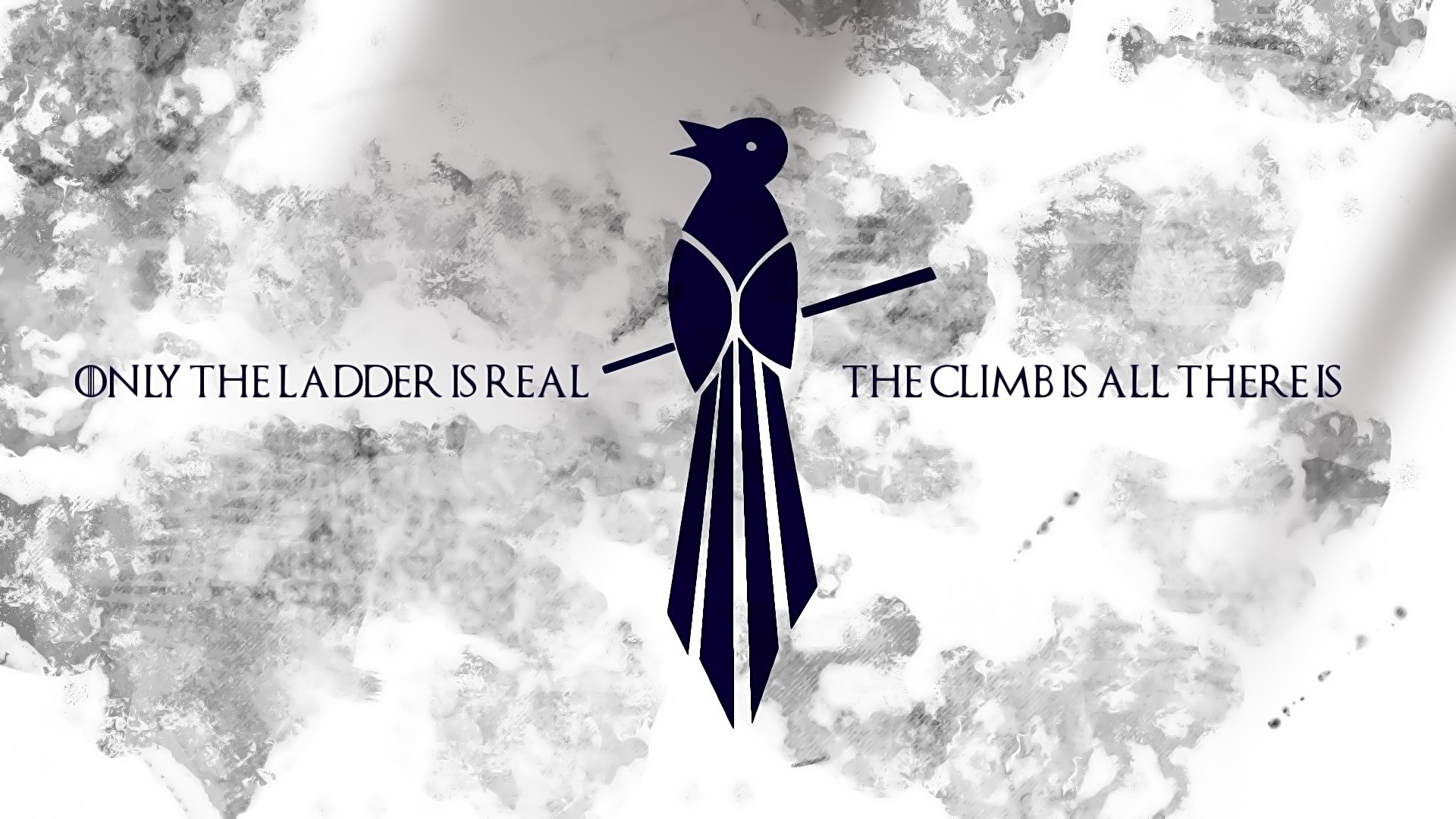
He started with nothing. No legendary sword, no dragon glass, and certainly no three-eyed raven whispering the future into his ear. Petyr Baelish, known to almost everyone in Westeros by the mocking nickname "Littlefinger," was basically the most dangerous man in the Seven Kingdoms precisely because he was the only one playing the game with a modern deck of cards.
While the Starks were obsessing over honor and the Lannisters were drowning in their own golden legacy, Baelish was looking at the world as a series of ledgers. He was a self-made monster. Honestly, if you look at the trajectory of Game of Thrones Baelish is the singular engine that drives the entire plot of the first few seasons. Without him, Jon Arryn stays alive, Ned Stark stays in Winterfell, and the War of the Five Kings never happens. He didn't just participate in the chaos; he manufactured it from thin air.
The Myth of the Mastermind
Most fans remember his "chaos is a ladder" speech—which, let's be real, is probably the most quoted bit of dialogue in the show—but they often miss the actual mechanics of how he worked. He wasn't just a guy who told lies. He was the Master of Coin. This gave him a level of power that a warrior like Robert Baratheon couldn't even fathom. He understood that debt is a shackle. By the time Ned Stark arrives in King’s Landing, the Crown is six million dragons in debt, and Baelish is the only one who knows where the money went.
It’s kinda brilliant, actually.
He made himself indispensable by being the only person who could "find" money when the King wanted a tournament. But here’s the kicker: Baelish was almost certainly embezzling and destabilizing the economy on purpose. George R.R. Martin has hinted in the books that Baelish’s financial wizardry was actually a shell game. He bought off the City Watch, placed his own men in the customs offices, and ensured that if he ever fell, the whole financial house of cards would come down with him. That's true power. Not a Valyrian steel blade, but a ledger that only you can read.
Why Everyone Underestimates the Game of Thrones Baelish Strategy
The biggest mistake characters made—and frankly, some viewers too—was thinking Baelish wanted the Iron Throne in a traditional sense. Sure, he told Sansa he wanted to sit on it with her by his side, but Petyr was a creature of the shadows. He knew a man from a minor house on the Fingers could never openly rule.
Instead, he practiced "strategic invisibility."
He let people think he was a pimp. He let them think he was a social climber who was "useful" but harmless. Varys was the only one who saw through it, famously telling him that he would see the country burn if he could be king of the ashes. And Baelish didn't even deny it. He just smiled.
- He betrayed Ned Stark not because he hated him, but because Ned was too rigid to survive.
- He orchestrated Joffrey’s death with Olenna Tyrell because a stable King is bad for business.
- He sold Sansa to the Boltons—a move that still infuriates fans—to consolidate power in the North while keeping his hands clean in the eyes of the Lannisters.
Some people call these "plot holes" or "inconsistencies," especially in the later seasons. But if you look at his history, Baelish always overplayed his hand when his emotions got involved. His obsession with Catelyn Stark, and later Sansa, was his only real blind spot. He wasn't a robot. He was a man who grew up feeling small and spent his entire adult life trying to make the world feel as small as he did.
The Braavosi Connection and the Power of Low Birth
There’s a detail people often forget: Baelish’s great-grandfather was a Braavosi sellsword. This is huge. Braavos is a city built on banking and the rejection of old-blood nobility. Petyr brought that merchant-class ruthlessness to a feudal society that wasn't ready for it.
He didn't care about "rights" or "lineage." He cared about leverage.
Think about his relationship with Lysa Arryn. It was disgusting, sure, but it gave him the Vale—the only kingdom with a fresh army that hadn't been decimated by the war. He managed to secure one of the strongest military positions in Westeros without ever drawing a sword. He did it with a kiss and a push out a Moon Door.
The Winterfell Downfall: Was It Earned?
We have to talk about the end. In the show’s seventh season, the Game of Thrones Baelish arc concludes in a way that remains deeply polarizing. Some experts, like those at Los Seven Reinos or long-time book analysts, argue that Baelish wouldn't have been caught so easily by the Stark sisters.
The logic? A man who outplayed Tywin Lannister shouldn't have been outplayed by a teenage girl with a list and a brother who sees everything.
But there’s another way to look at it. Baelish’s power relied on people acting in their own self-interest. He understood greed, lust, and ambition. He did not understand the weird, supernatural shift the world was taking. How do you plan for a kid who can literally see the past? You can’t. Baelish was a master of the human game, but he was totally unprepared for a world where "magic" was a real variable. His death wasn't just a trial; it was the world of the "new" (magic and destiny) killing the world of the "old" (political maneuvering).
Essential Takeaways from the Baelish School of Politics
If you’re looking to understand the deeper themes of the series, Baelish is your case study. He represents the transition from feudalism to a more cutthroat, capitalistic form of power. He proved that information is the most valuable commodity in Westeros, more so than gold or dragons.
- Watch the Money: Baelish’s real power was the Treasury. If you control the flow of cash, you control the lords who spend it.
- Information is Non-Linear: He didn't just collect secrets; he planted them. He gave the dagger to the assassin, then lied about who it belonged to. He created the "truth" he wanted others to find.
- The Danger of the "Why": Baelish’s downfall wasn't a lack of intelligence; it was a lack of a "why" beyond himself. He had no legacy. No children he cared about. No cause. When you play for nothing but your own ego, you eventually run out of board to play on.
To really get the most out of a re-watch or a re-read, pay attention to the scenes where Baelish isn't talking. Look at who he’s watching in the background of the throne room. You’ll see him cataloging every weakness, every debt, and every secret affair.
If you want to dive deeper into the lore, check out the Fire & Blood histories to see how previous Masters of Coin compared to Petyr. You'll quickly realize that while others were good at math, Baelish was the only one who was good at people. He didn't just count the coins; he made the coins dance.
The best way to appreciate the complexity of this character is to track the travels of the Valyrian steel dagger. From the attempt on Bran's life to the throat of the Night King, that blade moved through the story because Baelish put it in motion. He may have died on his knees in the mud of Winterfell, but for a solid decade, the entire world of Westeros was spinning on his finger.
Next time you watch the show, ignore the dragons for a second. Look at the guy in the corner with the mockingbird pin. He’s the one actually writing the history books, even if he didn't live to see the end of them. Check the scene in season one where he talks to the two girls in his brothel while Ned Stark is looking for the truth—it's basically a roadmap for every betrayal that follows.
Once you see the pattern, you can't unsee it. Baelish wasn't just a villain; he was the architect of the entire tragedy. And honestly? Westeros was a lot more interesting when he was pulling the strings.