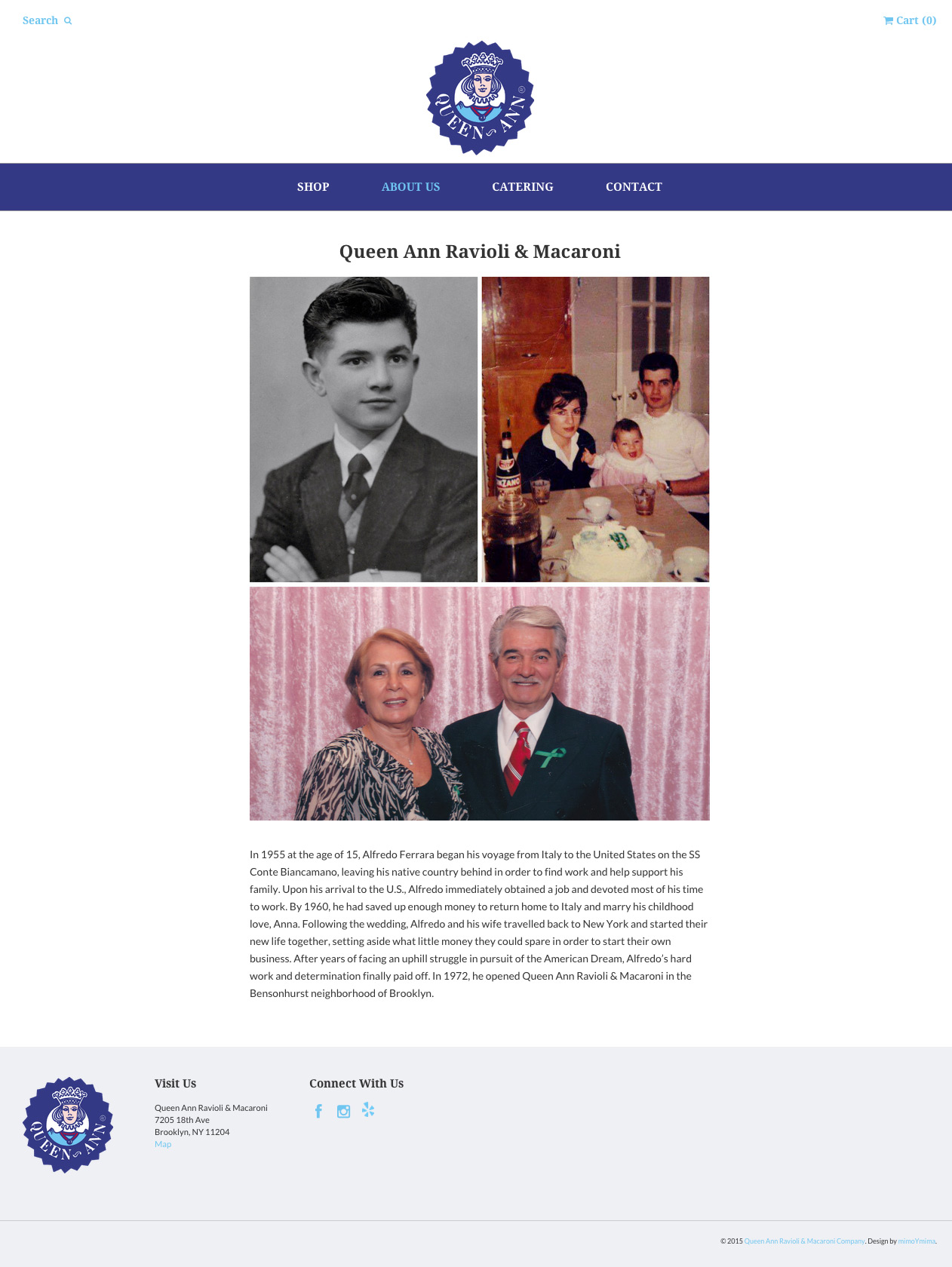
Walk down 18th Avenue in Brooklyn and you'll feel it. The air in Bensonhurst just smells different. It’s a mix of espresso, diesel, and that unmistakable, heavy scent of semolina flour. Honestly, most people think the "old Brooklyn" is dead, buried under a mountain of $7 lattes and glass condos. But they’re wrong. You just have to know where to look. Queen Ann Ravioli Bensonhurst is exactly where you look.
This isn't some curated, Pinterest-ready boutique. It is a time capsule. Since 1972, this shop at 7205 18th Ave has been the heartbeat of the neighborhood. While the rest of the world started buying "fresh" pasta from plastic tubs at the supermarket, the folks here stayed stuck in their ways. Thankfully.
The 124-Year-Old Secret in the Back
You can’t talk about Queen Ann without talking about the machine. George Switzer, the owner and a local legend in his own right, isn't just a pasta maker; he’s a caretaker of history. In the back of the shop sits an antique pasta-making machine manufactured by Cevasco Cavagnaro & Ambrette Inc.
It was built in the early 1900s. It’s loud. It’s temperamental. And it produces a texture that modern, high-speed industrial machines simply cannot replicate.
Modern machines use a lot of heat. They blast the dough out through Teflon dies. It’s efficient, sure, but it kills the soul of the pasta. The antique machine at Queen Ann Ravioli Bensonhurst works slowly. It keeps the dough cool. This preserves the integrity of the wheat. When you cook their ravioli, the pasta has this "rustica" touch—a slight roughness that actually grips the sauce instead of letting it slide off like a raincoat.
What to Actually Order (Don't Overthink It)
If it’s your first time walking in, you might feel a bit overwhelmed. The walls are lined with imported olive oils, Pecorino Romano, and those classic blue-and-white boxes.
- The Round Cheese Ravioli: This is the flagship. It’s a 16-count box of pure nostalgia. The ricotta is creamy, not grainy, and they don’t over-salt it.
- The Giant Gourmet Manicotti: These are hand-filled and huge. Seriously. Two of these are a full meal for a grown adult.
- Fresh Linguine: They sell it by the pound. It’s made daily. If you buy it on a Tuesday, it was probably hanging to dry that morning.
- The "Special" Stuff: Sometimes they have lobster ravioli or spinach-infused dough. If they have the crepes (manicotti shells), grab them. They are thin, delicate, and miles better than the dried pasta tubes you find in the "ethnic" aisle of the grocery store.
George usually says there’s no way to do what they do any faster. "Simple takes longer," he often tells visitors. That’s the whole philosophy. You’re paying for the time the machine took to roll that dough and the decades the family spent perfecting the cheese-to-pasta ratio.
The Great Bensonhurst Pasta Rivalry
Look, we have to address the elephant in the room. Bensonhurst is the "Little Italy" that actually stayed Italian-American. You’ve got a "Holy Trinity" of pasta shops within walking distance of each other: Queen Ann, Pastosa, and Papa Pasquale.
People in the neighborhood have lost friendships over which one is better.
Pastosa is the giant—the flagship on New Utrecht Avenue is iconic and their herb-flecked filling is world-famous. Papa Pasquale is the Zagat-rated darling with those legendary heroes. But Queen Ann Ravioli Bensonhurst is the underdog. It’s the shop that feels the most like a family kitchen. It’s smaller. It’s grittier.
In a blind taste test conducted by local food critics, Queen Ann often wins the "kid vote." Why? Because the texture is exceptionally smooth and the sauce is a bit tangier. It’s approachable. It’s comfort food in its purest form.
Why It Still Matters in 2026
Gentrification is a weird thing. It brings in new money but often washes away the "flavor" of a place. Queen Ann has survived because it doesn't try to be anything else. They aren't trying to sell you a "lifestyle" or an "experience." They are selling you a box of pasta for a few bucks.
When Andrew Zimmern filmed Bizarre Foods here, he noted that 18th Avenue used to be lined with shops like this. Now, they are rare. Queen Ann stayed. They stayed through the demographic shifts and the rise of delivery apps. They even partnered with Mercato to ship their stuff, but the core business is still the person walking in off the street to get dinner for Sunday.
How to Visit Like a Local
Don't just show up at 5:00 PM on a Saturday and expect a quick in-and-out. The line will be out the door, and the regulars will be chatting with George about the neighborhood.
- Bring Cash: While they take cards now, cash is always easier in these old-school spots.
- Check the Date: They usually make specific items on specific days. Tuesday is a big production day. If you want the freshest of the fresh, go mid-week.
- The Freezer is Your Friend: Most of their ravioli is sold frozen to preserve that "fresh-made" texture when you boil it at home. Don't be a snob about it. It’s how it’s done.
- Ask for Recommendations: If you aren't sure which sauce goes with the cavatelli, just ask. They won't bite. Mostly.
Final Take: Is It Worth the Trek?
If you live in Manhattan or Queens, Bensonhurst feels like another planet. You have to take the D train forever. But if you care about food history—real food history, not the stuff written on a marketing plaque—you have to go.
Queen Ann Ravioli Bensonhurst isn't just about the food. It’s about the fact that a 124-year-old machine is still turning, a local family is still working, and for about ten dollars, you can eat a meal that tastes exactly the same as it did in 1972. You can't put a price on that kind of consistency.
Actionable Next Steps
- Plan your visit: Head to 7205 18th Avenue, Brooklyn. They are generally open Tuesday through Saturday, 9 AM to 6 PM, and shorter hours on Sunday.
- Storage tip: If you aren't cooking them immediately, keep the ravioli in the freezer. Do not defrost them before boiling; drop them straight into salted, boiling water to prevent them from sticking or tearing.
- The "Secret" Pairing: Pick up a jar of their house-made marinara or vodka sauce while you're there. The acidity in their red sauce is specifically balanced to cut through the richness of the whole-milk ricotta.