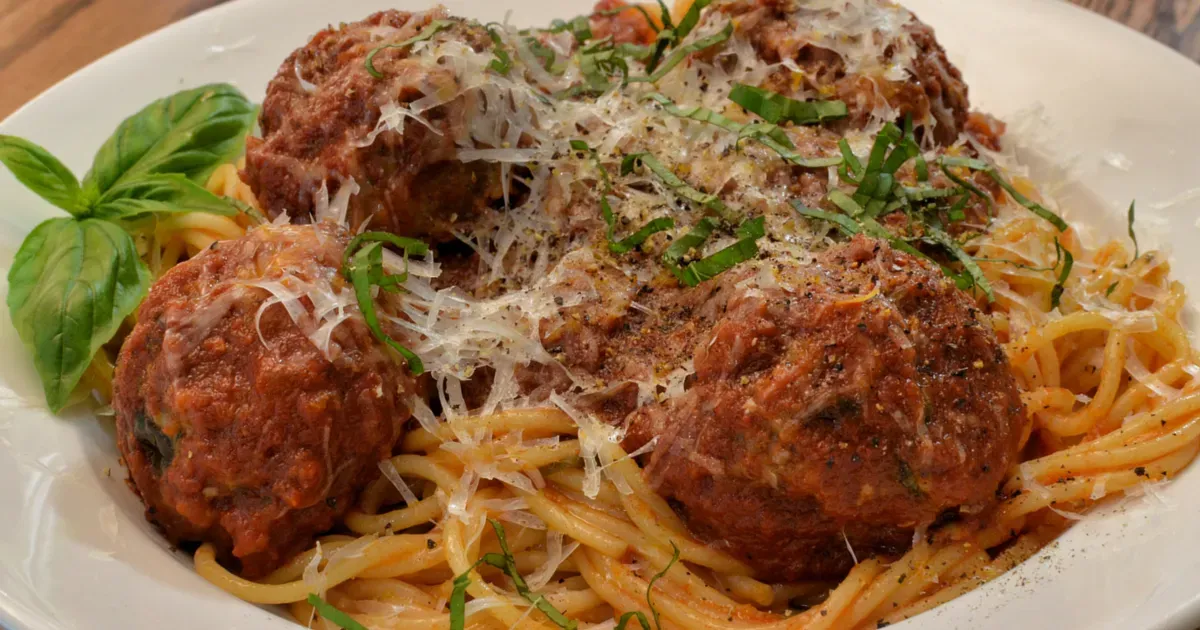
Ever feel like your meatballs are just... okay? You know, they’re fine. They satisfy the hunger, but they don't exactly make you close your eyes and do a little happy dance. Well, if you’ve ever tuned into 30 Minute Meals, you know Rachael Ray has a way of making "fine" feel like a felony. Her approach to a Rachael Ray meatball recipe isn't about some secret grandmother's diary found in a Tuscan cellar. It's about clever hacks, aggressive seasoning, and a few "secret" ingredients that most people skip because they’re in a rush.
The Nutmeg Secret and the Panade Power-Up
Most people just throw breadcrumbs and meat into a bowl. Stop doing that. Honestly, it’s why your meatballs end up like rubber bouncy balls. Rachael’s signature move—and she does this in almost every version of her meatball—is the "panade." You take your breadcrumbs (or better yet, torn-up stale rustic bread) and douse them in milk. Not just a splash. You want them to turn into a mushy paste.
And then there's the nutmeg.
It sounds weird, right? Nutmeg in meat? But just a few grates of it adds this earthy, savory depth that you can’t quite place, but you’d definitely miss if it wasn't there. It bridges the gap between the fat of the meat and the acidity of the tomato sauce. She also leans heavily into "meatloaf mix"—a blend of beef, pork, and veal. If you're just using 100% lean ground beef, you're missing out on the fat and tenderness that the pork and veal provide.
Breaking Down the Classic Components
If you're going for her "Ultimate" version, you’re looking at:
- The Meat: A pound of ground beef (usually 80/20 for fat content) mixed with a half-pound of ground pork. Some of her fancier "Sunday" versions use veal too.
- The Binder: 1 cup of breadcrumbs soaked in about 1/2 to 2/3 cup of whole milk.
- The Aromatics: Grated onion (grating it is key so you get the juice without big chunks), 4 fat cloves of garlic, and a "fat handful" of flat-leaf parsley.
- The Cheese: Don't be shy. She usually calls for a full cup of loosely packed Pecorino Romano and Parmigiano-Reggiano combined.
To Fry or To Roast? The Great Meatball Debate
In her 30-minute world, Rachael Ray often skips the stovetop splatter. Frying meatballs one by one is a mess. It takes forever. Instead, she frequently opts for roasting.
You crank your oven up to 450°F. Line a baking sheet with parchment paper. Roll those balls to about 2 inches—"the size of a large walnut"—and blast them for about 15 minutes. This gives you a nice crust without you having to stand over a hot pan of popping grease.
But here’s the kicker: they shouldn't be fully cooked in the oven. You want them "browned but not dead." You then drop them into the simmering sauce to finish. This "sauce-finishing" technique ensures the meatballs stay juicy and actually absorb some of the tomato flavor, rather than just sitting on top like an afterthought.
What Most People Get Wrong
One of the biggest mistakes home cooks make with a Rachael Ray meatball recipe is over-mixing. If you work the meat like you’re kneading bread, the proteins get tough. You want to use your hands—lightly, like you're mixing a salad—until things are just combined.
Another tip? The "garbage bowl." It’s a classic Rachael-ism. Keep a big bowl on the counter for all your onion skins, eggshells, and parsley stems. It keeps your workspace clean so you aren't constantly running back and forth to the trash while your sauce is bubbling over.
The "Stoup" Phenomenon
You can't talk about Rachael Ray's meatballs without mentioning "Stoup." Is it a soup? Is it a stew? It’s both. For her Spaghetti and Meatball Stoup, she uses smaller meatballs and shorter pasta or broken spaghetti.
In this version, the meatballs are simmered directly in a broth-heavy tomato base. It’s the ultimate comfort food for when you’re sick or it’s raining and you don't want the heaviness of a massive plate of dry pasta. She often adds a splash of beef stock or even beef bouillon cubes to the pasta water to "beef up" the flavor of the noodles themselves. It’s these little layers of flavor that make the recipe work.
Real Talk on Ingredients
Let's be real for a second. If you use the stuff in the green shaker can, your meatballs will taste like the 1980s. Use fresh Parmigiano-Reggiano. Also, "EVOO" (Extra Virgin Olive Oil) isn't just a catchphrase; it's a fat source. Drizzling a little into the meat mixture itself helps with the moisture, especially if your beef is on the leaner side.
Actionable Steps for Your Next Batch
Ready to stop making boring meatballs? Here is exactly what you should do next time you're in the kitchen:
- Grate your onion. Seriously. Use a box grater. The onion juice flavors the meat better than chopped bits ever could.
- Soak the crumbs. Use more milk than you think. The bread should be soggy.
- High heat roast. 425°F or 450°F for a quick 15-minute sear, then straight into the sauce.
- Reserve the water. Before you drain your pasta, grab a mug of that starchy, salty water. Stir it into the sauce. It acts like glue, helping the sauce actually stick to the meat and noodles.
Try adding a teaspoon of fennel seed or even a pinch of red pepper flakes to the meat. It gives it that "Italian sausage" vibe without the casing. Meatballs are meant to be fun, not a chore. Keep it quick, keep it messy, and don't forget the extra cheese at the table.