You’ve probably seen the glass bottles popping up in high-end health food stores or heard someone at the farmer's market raving about how it cured their bloating. People get weirdly passionate about this. It’s milk. But for some, it’s a "superfood," and for the FDA, it’s a public health risk. If we strip away the politics and the homesteading aesthetics, what are the raw cow milk nutrition facts that actually matter for your body?
It’s complicated. Honestly, it’s more than just a drink; it’s a biological fluid that hasn’t been tampered with by high-heat processing.
Most of us grew up on the plastic gallon jugs from the supermarket. That stuff is pasteurized and homogenized. Pasteurization involves heating the milk to kill bacteria like Salmonella, E. coli, and Listeria. It works. It saved thousands of lives in the early 20th century when dairy sanitation was, frankly, disgusting. But heat doesn't just kill pathogens. It changes the molecular structure of the liquid. When you look at the raw cow milk nutrition facts, you’re looking at a profile of vitamins, enzymes, and "good" bacteria that are largely absent or diminished in the stuff you find in the dairy aisle.
Why Raw Cow Milk Nutrition Facts Differ from the Grocery Store Gallon
The big draw for most people is the enzyme content. Raw milk contains phosphatase, lipase, and lactase. You might recognize that last one. Lactase is the enzyme that breaks down lactose, the sugar in milk that makes so many people run for the bathroom. This is why you’ll hear anecdotes from people who swear they are lactose intolerant but can drink raw milk without any issues. Their body isn't doing all the work because the milk is essentially "pre-digesting" itself.
Is there hard, peer-reviewed data on this? It’s thin. The medical establishment generally argues that the amount of lactase in raw milk isn't high enough to overcome a true clinical intolerance. Yet, the anecdotal evidence is massive. It’s a classic case of the lab not quite catching up to the lived experience of thousands of consumers.
Then there’s the vitamin situation. Heating milk to $161°F$ (the standard for HTST pasteurization) significantly reduces the levels of Vitamin C, B12, and B6. While milk isn't exactly our primary source of Vitamin C, the loss of B-vitamins is a bummer. Raw milk is also a rich source of fat-soluble vitamins like A, D, and K2, provided the cows are actually eating grass. If the cow is stuck in a stall eating soy and corn, those raw cow milk nutrition facts start looking a lot less impressive.
The fat matters. Raw milk is usually non-homogenized. In the factory, they blast milk through tiny holes at high pressure to break up fat globules so the cream doesn't rise to the top. This makes the milk "consistent." In its raw state, those fat globules are intact and protected by a membrane. Some researchers, like those contributing to the Journal of Dairy Science, have looked into whether these intact membranes help with gut signaling and cholesterol metabolism. It turns out, how your body perceives fat might change when that fat has been mechanically pulverized.
The Microbiome and the "Raw" Advantage
We live in a pro-probiotics world now. Everyone is chasing a healthy gut. Raw milk is basically a living community of microbes. It’s teeming with Lactobacillus and Bifidobacterium.
Think about the "Farm Effect." Several major studies, including the GABRIELA study which looked at over 8,000 children in Europe, found that kids who grew up drinking raw milk had significantly lower rates of asthma and allergies. This isn't just a coincidence. The theory is that the raw milk exposes the developing immune system to a wide array of microbial markers, "training" it not to overreact to pollen or pet dander.
But here is the catch.
Bacteria don't discriminate. The same environment that fosters "good" bacteria can also host Campylobacter. This is where the debate gets heated. Proponents argue that if the farm is clean and the cows are healthy, the risk is negligible. The CDC disagrees, pointing to data that shows raw milk is 150 times more likely to cause an outbreak than pasteurized milk. It’s a risk-reward calculation that every individual has to make. You’re trading safety for a more complex nutritional profile.
Breaking Down the Macros
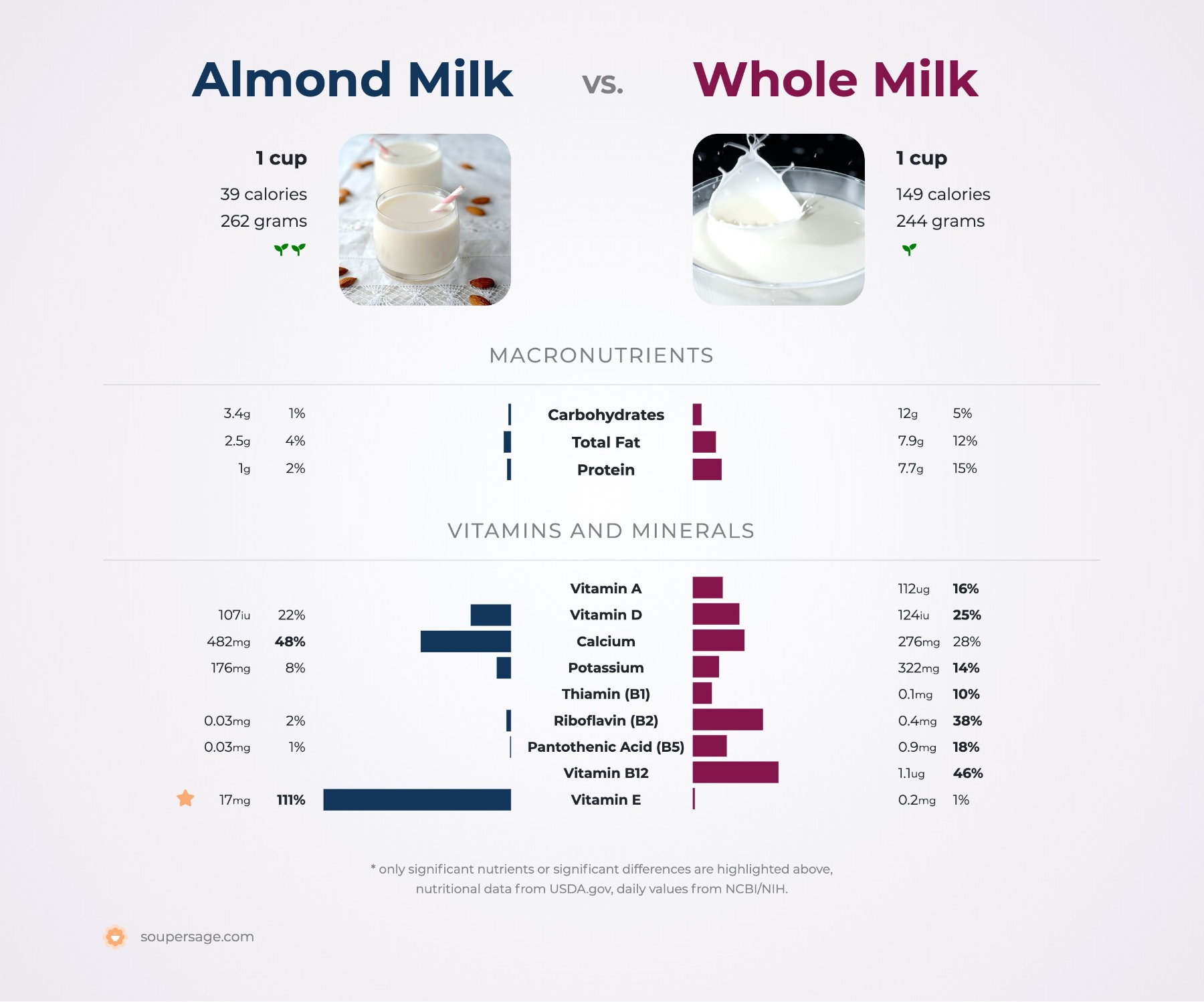
If you’re looking for a quick breakdown of what’s in a typical 8-ounce glass, here’s how it usually shakes out:
- Calories: About 150 to 160 (it varies based on the breed of the cow, like Jersey vs. Holstein).
- Protein: 8 grams. This is high-quality stuff, containing all essential amino acids.
- Fat: 8 to 9 grams. Most of this is saturated, but it includes Conjugated Linoleic Acid (CLA), which has been linked to heart health and weight loss.
- Carbohydrates: 11 to 12 grams, primarily from lactose.
- Calcium: About 300mg. The bioavailability is high because the minerals aren't heat-stressed.
You’ll notice the fat content is higher than the "Whole Milk" at the store. Standard whole milk is standardized to 3.25% fat. Raw milk from a Jersey cow can easily hit 5% or 5.5%. It’s thick. It’s yellow. It tastes like melted ice cream.
Minerals and Bioavailability
Calcium, magnesium, and phosphorus are the trio that make milk a bone-building staple. In raw milk, these minerals are held in a delicate balance with proteins called caseins. When you pasteurize milk, some of the calcium becomes insoluble. It doesn't disappear, but it's harder for your gut to grab it as it passes through.
Phosphorus is another big one. It works in tandem with calcium. If you don't have the right ratio, your body can't actually use the calcium to strengthen your skeletal structure. Raw milk naturally hits that "sweet spot" ratio.
We also have to talk about Vitamin K2. This is the "X-factor" that Dr. Weston A. Price talked about nearly a century ago. K2 acts like a traffic cop for calcium, making sure it goes into your bones and teeth instead of your arteries. You only get significant K2 if the cows are grazing on fast-growing green grass. Most commercial milk comes from cows that rarely see a pasture, meaning their K2 levels are abysmal. If you're looking at raw cow milk nutrition facts from a grass-fed source, you're getting a nutrient that is incredibly rare in the standard American diet.
The Enzyme Factor
It’s worth mentioning Alkaline Phosphatase. This is an enzyme naturally present in raw milk. Interestingly, the dairy industry actually uses the absence of this enzyme to prove that pasteurization was successful. If they test the milk and the phosphatase is gone, they know they heated it enough.
Why do we care? This enzyme is thought to help with the absorption of minerals and has anti-inflammatory properties in the gut. When we kill the pathogens, we kill the phosphatase. It’s a trade-off.
Is it Actually Better for You?
The answer depends on who you ask and how your body handles dairy. For some, raw milk is a "miracle" that cleared up their eczema and fixed their digestion. For others, it’s an unnecessary risk when pasteurized milk provides most of the same benefits with zero risk of a hospital stay.
One thing that is indisputable: the quality of the milk is entirely dependent on the farm. You can't just take "dirty" milk and leave it raw; that’s a recipe for disaster. Raw milk requires a level of hygiene that exceeds standard industrial dairy practices. The cows need to be tested for tuberculosis and brucellosis. The equipment has to be spotless.
Actionable Steps for the Curious
If you’re looking to incorporate the nutritional benefits of raw milk into your life, don't just buy a jar from a random person on the side of the road.
First, check your local laws. In some states, you can buy it in stores (like California or Pennsylvania). In others, you have to join a "herd share" where you technically own part of a cow.
Second, visit the farm. Look at the cows. Are they on pasture? Is the milking parlor clean? Ask the farmer for their latest somatic cell count and bacteria count (coliform) tests. A transparent farmer will be happy to show you.
Third, start slow. If your gut is used to highly processed foods, dumping a quart of raw milk into your system might cause some "adjustment" periods. Start with a small glass and see how your digestion reacts to the live enzymes and bacteria.
Finally, keep it cold. Raw milk is a living food. It will sour much faster than pasteurized milk. But unlike pasteurized milk, which rots and becomes putrid, raw milk just turns into "sour milk" or clabber, which you can actually still use for baking or making pancakes. It’s a completely different biological process.
Understanding raw cow milk nutrition facts requires looking past the "danger" labels and the "superfood" hype. It’s a nutrient-dense, enzymatically active food that reflects the health of the animal and the soil it grazed on. If you can find a clean source, it offers a profile of bioavailable vitamins and minerals that is simply hard to replicate with processed alternatives.
Key Takeaways for Your Next Gallon
- Check the source: Grass-fed is non-negotiable for Vitamin K2 and CLA levels.
- Watch the fat: Don't be afraid of the cream top; those milk fat globule membranes are gold for your brain.
- Temperature matters: Keep it at the back of the fridge, ideally at $38°F$, to preserve the enzyme integrity.
- Listen to your gut: If you feel better drinking it, the enzymes are likely doing their job, regardless of what the simplified labels say.