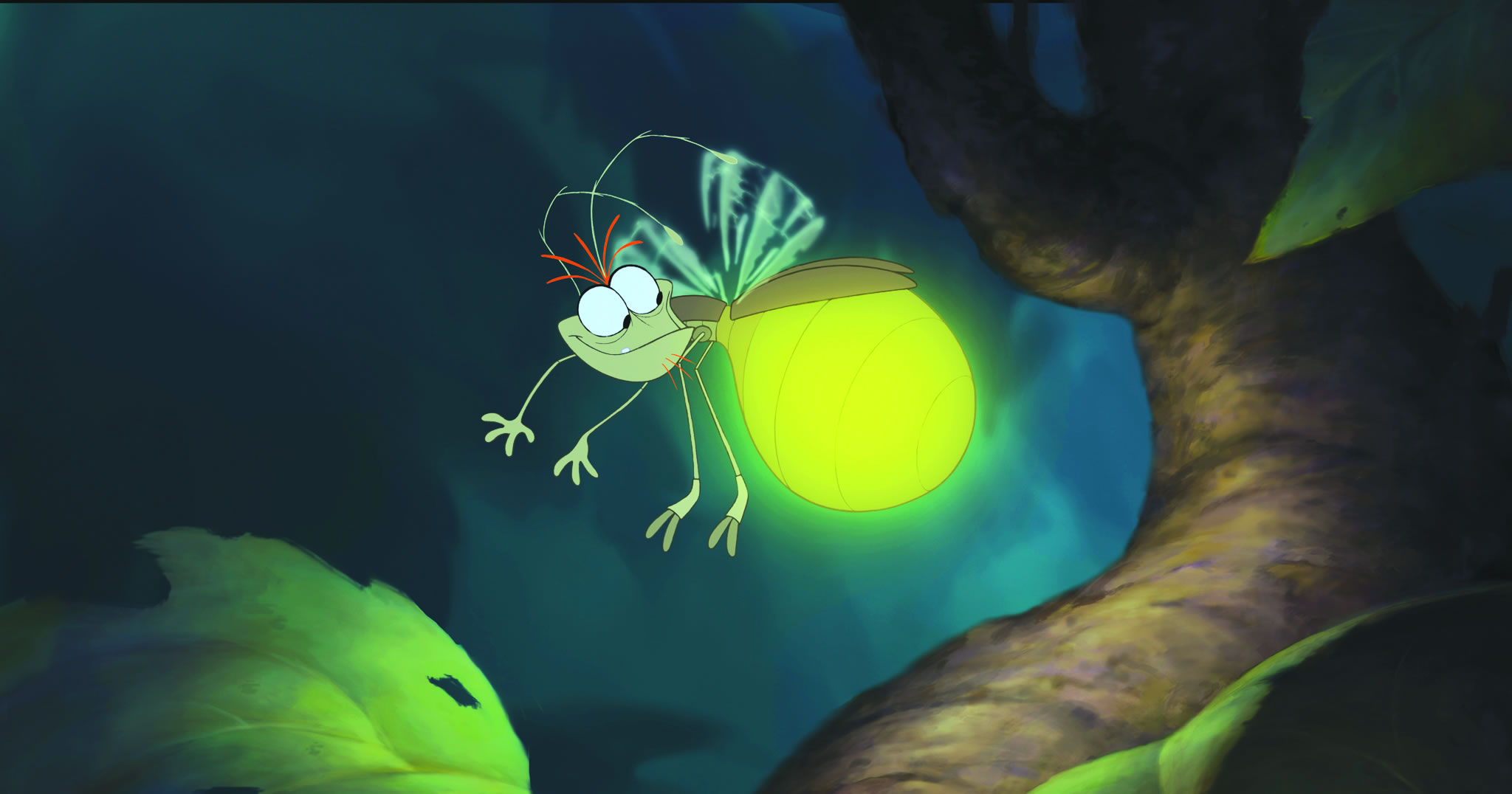
He’s a gap-toothed, Cajun-accented insect with a glowing backside. Not exactly the first thing you’d imagine when picturing a Disney icon. Yet, if you mention the lightning bug Princess and the Frog fans adore to any millennial or Gen Zer, you’re likely to get a watery-eyed reaction. Ray, or Raymond as he’s formally known, represents something much bigger than comic relief. He is the emotional heartbeat of the 2009 film.
Disney took a huge gamble with The Princess and the Frog. It was a return to 2D hand-drawn animation in an era dominated by CGI. It was also a massive cultural milestone, introducing Tiana as the first Black Disney Princess. But amid the jazz-filled streets of New Orleans and the high-stakes magic of Dr. Facilier, it’s a tiny firefly who carries the heavy theme of faith. Honestly, without Ray, the movie just doesn't hit the same way.
Ray isn't just a sidekick. He's a romantic. He’s a philosopher. He's a tragic hero.
The Design and Soul of Raymond
When you look at the lightning bug Princess and the Frog designers created, you see a masterclass in character animation. Directed by Ron Clements and John Musker—the same duo behind The Little Mermaid and Aladdin—the film needed a guide for the bayou. They didn't go for a sleek, "pretty" insect. Ray is scruffy. He’s missing a tooth. His wings look a bit battered.
Voice actor Jim Cummings brought Ray to life. You’ve definitely heard Cummings before; he’s the voice of Winnie the Pooh and Tigger. For Ray, he adopted a thick Cajun accent that felt authentic to the Louisiana setting. It wasn’t a caricature. It felt like a guy you’d actually meet while fishing in the swamp at 2:00 AM.
The animators, led by Mike Surrey, gave Ray a physical expressiveness that’s hard to pull off with a bug. His "butt" (the light organ) is more than just a lamp; it’s a mood indicator. It glows brighter when he’s happy and dimmers when he’s sad. This visual storytelling is why he resonates so deeply. We don't just hear his feelings; we see them illuminating the screen.
Evangeline: More Than Just a Star
The most famous part of Ray’s story is his "girlfriend," Evangeline. To everyone else, Evangeline is just the Evening Star—a bright celestial body in the night sky. To Ray, she’s the most beautiful lightning bug in the world.
This is where the movie gets surprisingly deep.
While Prince Naveen and Tiana are grounded in the "real world" of bills, work, and royal expectations, Ray lives in a world of pure belief. He doesn't care that his friends think he’s crazy. He loves a star. It’s a metaphor for faith. In the song "Ma Belle Evangeline," the film shifts into a dreamy, romantic sequence that slows down the frantic pace of the plot. It’s gorgeous. It’s also kinda heartbreaking because we, as the audience, know the truth. Or do we?
Why Ray’s Fate Changed Disney Movies Forever
If you haven't seen the movie in a while, you might have forgotten how dark things get. The Princess and the Frog doesn't pull punches. During the final confrontation with Dr. Facilier’s shadow demons, Ray steps up. He’s tiny. He’s outmatched. But he fights to protect Tiana and the charms they need to break the curse.
Then, the unthinkable happens.
Facilier steps on him.
It’s a brutal moment for a G-rated movie. Disney characters usually die off-screen or in "Disney deaths" where they fall from a great height (think Gaston or Frollo). But Ray’s death is intimate and slow. He’s surrounded by his family and friends in the bayou. He dies knowing he did the right thing.
This was a pivot for Disney. It showed that even in a magical fairy tale, there are real stakes. Ray's funeral is one of the most poignant scenes in the studio’s history. But the movie doesn't leave us in despair. As his family watches, a second star appears in the sky next to Evangeline. Ray finally joined his lady love.
Basically, the lightning bug Princess and the Frog gave us a lesson in the afterlife that was both gentle and profound. It wasn't just a happy ending; it was a transcendent one.
The Cultural Impact of the Bayou Firefly
People still talk about Ray because he represents the "unseen" parts of New Orleans culture. The bayou isn't just a setting; it’s a character. By making Ray a Cajun firefly, Disney acknowledged a specific community that often gets overlooked.
- Musical Legacy: Ray’s music, composed by Randy Newman, is steeped in Zydeco and Dixieland jazz. It’s catchy, sure, but it’s also technically complex.
- Merchandise and Parks: Even years later, you can find Ray in Disney parks. He’s a staple in parades and light shows because, well, he’s a light.
- The Power of the Supporting Cast: Like Olaf or Genie, Ray proves that the sidekick often carries the moral weight of the story.
Honestly, Ray is the reason Tiana and Naveen even work as a couple. He’s the one who shows them that love isn't just about what’s practical. It’s about what you believe in. He’s the bridge between Tiana’s hard-work ethic and Naveen’s desire for fun.
Common Misconceptions About Ray
Some people think Ray is just there for the kids. That’s a mistake. If you watch the film as an adult, his dialogue is actually pretty witty and sometimes a bit suggestive of the hard life he’s led in the swamp. He’s a survivor.
Another misconception? That his name is just "Ray." In the Cajun community, names are often long and formal, which is why he introduces himself as Raymond. It’s a small detail, but it adds a layer of respect to his character. He’s proud of who he is, despite being "just a bug."
How the Lightning Bug Redefined Disney Romance
Usually, Disney romance is about the Prince and the Princess. But in this movie, the most successful relationship is between a bug and a ball of gas millions of miles away.
Ray’s devotion to Evangeline is the gold standard for loyalty. He doesn't ask for anything back. He just loves. When Naveen is trying to figure out how to tell Tiana he loves her, he looks to Ray. The bug becomes the teacher.
It’s a weird dynamic, right? A frog learning about love from a lightning bug who is dating a star. But in the context of the New Orleans bayou, it makes perfect sense. It’s all about the magic of the "blue bayou."
Lessons from the Bayou: What Ray Can Teach Us Today
Looking back at the lightning bug Princess and the Frog gave us, there are some pretty solid life lessons buried in the swamp mud. Ray isn't just a cartoon; he’s a vibe.
Faith Over Logic
Ray didn't care about the physics of stars. He cared about how Evangeline made him feel. In a world that’s constantly telling us to be "realistic," Ray is a reminder that sometimes, believing in something impossible is what keeps us going.
Size Doesn't Determine Strength
Ray is the smallest character in the film. He’s also the one who takes on the "Shadow Man" directly. He doesn't win the physical fight, but he wins the moral one. He’s the reason the villain loses.
The Beauty in the Broken
Ray is "ugly-cute." He’s got the messed-up teeth and the big eyes. He’s a reminder that you don't have to be a perfect Prince Charming to be the hero of the story. Your flaws are what make you memorable.
Final Thoughts for the Fans
If you're planning a rewatch of The Princess and the Frog, pay close attention to the lighting whenever Ray is on screen. The way the animators used his glow to illuminate the faces of Tiana and Naveen is subtle but brilliant. It symbolizes how he is literally the light in their lives.
For those looking to dive deeper into the lore, check out the "Art of the Princess and the Frog" books. They show the early sketches of Ray, where he looked much more like a traditional insect. The decision to make him look more "lived-in" was a stroke of genius that helped him connect with audiences.
Next Steps for Enthusiasts:
- Listen to the Soundtrack: Re-listen to "Ma Belle Evangeline" with high-quality headphones. The orchestration is much more complex than your average Disney song, featuring a beautiful blend of accordion and strings.
- Visit the Bayou: If you're ever in Louisiana, take a swamp tour at night. Seeing real fireflies (lightning bugs) in the wild will give you a whole new appreciation for the atmosphere the film captured.
- Support 2D Animation: Ray was part of a dying breed of hand-drawn characters. Supporting independent 2D projects helps keep the art form that created Ray alive for future generations.
Ray might be a small part of a big universe, but his light shines as bright as any star. Or, at the very least, as bright as his beloved Evangeline.