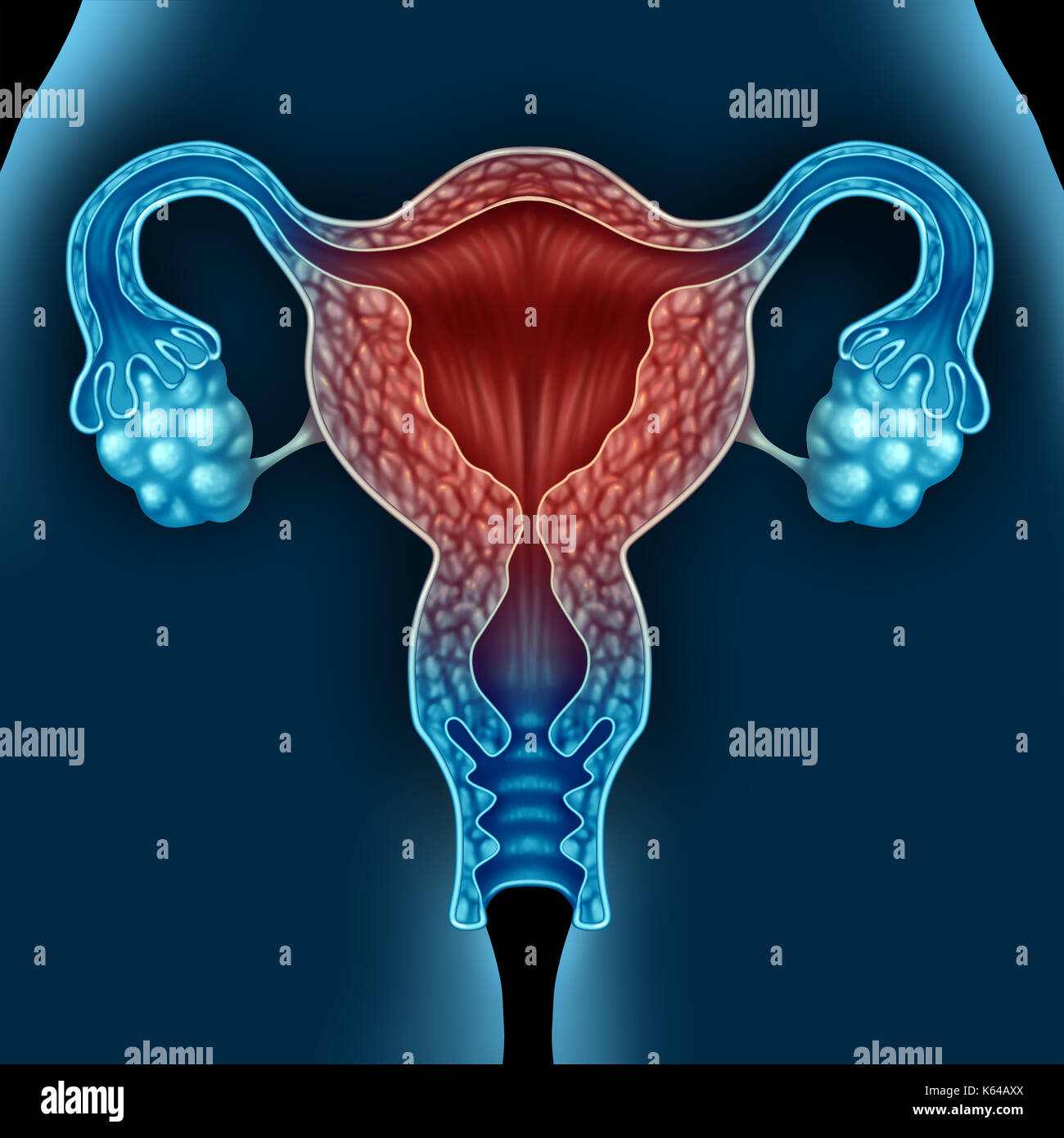
Most people think they know what a uterus looks like. You’ve seen the diagrams. It’s that pink, pear-shaped drawing with perfectly symmetrical tubes branching out like the handlebars on a bicycle. It looks neat. It looks tidy. Honestly, it looks nothing like the reality of a human body. When you actually look at real images of uterus taken during surgery or via high-definition imaging, the first thing that hits you is how messy, vibrant, and incredibly varied the organ actually is.
The color isn't "textbook pink." It’s often a deep, muscular red or a pale, pearly mauve, depending on the person's age and where they are in their menstrual cycle. It’s also rarely sitting perfectly straight. Most uteri are tilted. Some lean forward (anteverted), others lean back (retroverted), and some just sort of slouch to one side.
If you're searching for these images, you're likely trying to understand a diagnosis like fibroids or endometriosis, or maybe you’re just curious about what’s actually going on inside. Whatever the reason, the medical reality is far more complex than a 2D drawing. Real life has shadows, textures, and fluid.
What real images of uterus actually reveal about placement
We’re taught that the uterus is the center of the reproductive universe, sitting high and proud in the pelvic cavity. But in reality? It’s cramped in there. Real images of uterus from laparoscopic surgeries—where a tiny camera is inserted through the belly button—show the organ nestled tightly between the bladder and the rectum.
It’s a crowded neighborhood.
If the bladder is full, it pushes the uterus out of the way. If someone is constipated, the rectum might be pressing against it. This isn't a static organ. It moves. It shifts. Dr. Mary Jane Minkin, a clinical professor at Yale School of Medicine, often points out that the uterus is one of the most adaptable muscles in the human body. It’s not a "vessel" as much as it is a powerful, thick-walled muscular sac.
When you see a photograph of a healthy uterus during a laparoscopy, you'll notice the "serosa." That's the outer lining. It’s shiny. It looks almost wet because it’s covered in a thin layer of peritoneal fluid that allows it to slide against other organs without friction. If that shine is missing, surgeons often look for "adhesions," which are bands of scar tissue that make the uterus stick to the bowel or the abdominal wall. This is a common sight in patients with endometriosis. In those cases, the "real image" isn't a clean pear; it’s an organ anchored down by dark, rusty-looking lesions or web-like fibers.
The texture and color: Beyond the pink diagram
Let’s talk about the surface. A healthy uterus is relatively smooth, but it’s not perfectly uniform. It has a visible vascularity. You can see tiny, thread-like blood vessels spidering across the surface.
Then there are the fibroids.
If you look at real images of uterus affected by leiomyomas (the medical term for fibroids), the shape changes completely. It doesn't look like a pear anymore. It might look like a sack of potatoes. These tumors are benign, but they are dense. In a photo, a fibroid often looks paler than the rest of the uterine muscle—almost white or light tan—and it has a whorled, firm appearance.
The size is the other shocker. A "normal" non-pregnant uterus is only about 3 to 4 inches long and 2.5 inches wide. It’s small! Basically the size of a clenched fist or a small lemon. But when images are captured during a hysterectomy or an open abdominal surgery (laparotomy), the scale can be hard to judge because the surgeons are using tools that make everything look massive.
Why the "Bulky Uterus" looks different in images
You might have seen the term "bulky uterus" on an ultrasound report. This is a common phrase that causes a lot of anxiety, but it basically just means the uterus is larger than average. In a photograph, a bulky uterus looks heavier and thicker. The walls are dense. This is often caused by adenomyosis, a condition where the inner lining grows into the muscle wall.
Instead of a smooth, sleek muscle, a uterus with adenomyosis looks "boggy." It's a weird word, but it’s the one doctors use most. It looks slightly swollen and soft. In real-time imaging like a sonohysterogram, you might even see small pockets of blood trapped within the muscle itself. It’s fascinating, and kinda gross, and totally normal for millions of people.
Diagnostic imaging vs. surgical photos
There are two main ways we get real images of uterus: external/internal scans and direct visualization.
- Ultrasound (Sonography): This is the most common. It uses sound waves. You aren't seeing "color," obviously. You're seeing "echogenicity." Dense things like fibroids look dark (hypoechoic), while fluid (like in a cyst or the bladder) looks pitch black.
- MRI: These are the "sliced" images. They are incredibly detailed and show the "junctional zone," which is the border between the endometrium and the myometrium. If you've ever looked at your own MRI, the uterus looks like a dark, heart-shaped muscle with a bright white center (the lining).
- Hysterosalpingogram (HSG): This is an X-ray using dye. The "image" here is actually a map of the internal cavity. You see the dye fill the space, and if the tubes are open, the dye spills out like two tiny fountains.
- Laparoscopy: This is the gold standard for "real" photos. It’s a high-definition, 4K camera view of the pelvic floor. This is where you see the true reds, purples, and anatomical variations.
Misconceptions about the uterine cavity
Many people think the inside of the uterus is an open, empty room. Like a little cave waiting for a tenant.
It’s not.
The uterine cavity is a "potential space." This means the front and back walls are actually touching each other. Think of it like a deflated balloon or a Ziploc bag with the air sucked out. There is no "void" in there. When you see a "real image" of the uterine lining (the endometrium) through a hysteroscope—a camera inserted through the cervix—it looks like a plush, velvet rug.
During the first half of the cycle, it’s thin and yellowish-pink. After ovulation, it gets thick, fluffy, and vascular. It’s preparing for an embryo. If no pregnancy happens, that whole "velvet rug" breaks down and sheds. It’s a violent, bloody process on a microscopic level.
The cervix and the "Bottom" of the image
At the very bottom of the uterus is the cervix. In most images, it looks like a small, firm button with a hole in the center. The color should be a healthy, vibrant pink. If it’s pale, it might indicate anemia. If it’s bright red or looks "strawberry-like," it could be an infection.
Seeing real images of uterus often includes seeing the "External Os," which is the opening. If someone has had a baby, that opening isn't a perfect circle anymore; it’s more of a horizontal slit. These small details are what make real anatomy so much more interesting than the plastic models in a doctor's office.
Variations you should know about (The "Abnormal" Normal)
Not every uterus is shaped like a pear. About 5% of the population has a uterine malformation.
- Bicornuate Uterus: This is the "heart-shaped" uterus. In a surgical photo, it looks like the top of the organ is dipped in, creating two distinct horns.
- Septate Uterus: From the outside, it looks normal. But on an internal image, there’s a wall of tissue (a septum) running down the middle of the cavity.
- Didelphys: This is rare and incredible to see in images—it’s actually two separate uteri.
These variations often go undetected for years. People only find out when they have trouble getting pregnant or if they happen to have an unrelated imaging scan. It’s a reminder that "normal" is a very broad spectrum in human biology.
Why seeing these images matters for patients
There is a huge psychological benefit to seeing real images of uterus when you are sick. When a doctor says "you have a 5cm fibroid," it sounds scary. It sounds like a ticking time bomb. But when you see the image—when you see that it’s just a firm, round lump of muscle tissue—it becomes manageable. It becomes a "thing" that can be removed or treated, rather than a mysterious monster.
Real images also help debunk the "flat stomach" myth. Because the uterus sits behind the pubic bone, a "bulky" uterus or a pregnant one will naturally push the abdominal wall outward. Seeing the actual size and volume of the organ in a pelvic cavity explains why bloating is so common. There simply isn't a lot of extra room in there.
The role of the Fallopian Tubes and Ovaries
You can't really talk about the uterus without the supporting cast. In real-life photos, the fallopian tubes aren't stiff pipes. They are delicate, floppy, and almost translucent. They have these finger-like ends called fimbriae that "hover" over the ovaries.
The ovaries themselves? They don't look like smooth eggs. They look like lumpy, white almonds. If there's a "corpus luteum" (the spot where an egg was just released), it might look like a bright yellow or orange bruise. It’s raw. It’s active. It looks like it’s doing hard work, because it is.
Actionable steps for your pelvic health
If you are looking at real images of uterus because you are worried about your own health, don't just rely on Google Images. Context is everything. A photo of a "diseased" uterus might look identical to a "healthy" one to an untrained eye.
Here is what you should actually do:
- Request your own imaging reports: You have a legal right to your ultrasound or MRI images. Ask for them on a CD or via a digital portal.
- Ask your doctor to "point and describe": If you’re looking at a scan, ask, "What am I looking at right here? What is this texture?"
- Understand the "cycle timing": If you’re getting an ultrasound to check the lining, try to schedule it right after your period ends when the lining is at its thinnest. This gives the clearest view of any polyps or fibroids.
- Don't panic over "tilted" or "retroverted": If you see your uterus leaning backward in an image, remember that about 25% of women have this. It’s usually just a normal anatomical variation, like being left-handed.
- Focus on symptoms over "looks": A uterus can look "ugly" or "bulky" in an image but function perfectly. Conversely, a textbook-perfect uterus can be the source of chronic pain. Always prioritize how you feel over how the image appears.
The human body is messy, asymmetrical, and constantly changing. The more we look at real images of uterus, the more we can move away from the "perfect" diagrams and start appreciating the actual, functional reality of our anatomy. It’s not always pretty, but it’s pretty amazing.