Red is loud. In the animal kingdom, you don't wear red if you're trying to play it safe or hide in the shadows. It is a color of pure, unadulterated confidence. When we look at what animals are red, we aren't just looking at a palette choice; we are looking at a survival strategy that is either a massive "come hither" sign or a very clear "touch me and you’ll regret it" warning.
Evolution doesn't do things by accident. Every splash of crimson on a bird’s wing or the ruby shimmer on a beetle’s back is the result of millions of years of selective pressure. Sometimes it’s about sex. Sometimes it’s about poison. Most of the time, it’s about being noticed.
The High Stakes of Being a Red Bird
Birds are the most obvious answer to the question of what animals are red, but the "why" behind their color is actually a bit of a culinary mystery. Take the Northern Cardinal (Cardinalis cardinalis). You’ve seen them. They’re basically the mascots of winter. But a cardinal isn't born red. If you fed a male cardinal a diet completely devoid of carotenoids, he’d eventually turn a dull, depressing brownish-gray.
They get their color from their food. Specifically, they eat berries and seeds packed with yellow and red pigments, which their bodies then metabolize and deposit into their feathers. This is what biologists call an "honest signal." A bright red male is basically shouting to every female in the neighborhood, "Look at me! I’m so good at finding high-quality food that I have extra energy to turn my feathers this ridiculous color." It’s a fitness flex.
The Scarlet Ibis takes this to another level. Found in tropical South America and the Caribbean, these birds are so intensely orange-red they look like they’ve been dipped in neon paint. Their diet is heavy on shrimp and other crustaceans that contain astaxanthin. Interestingly, in many zoos, if the keepers don’t supplement the Ibis's diet with specific pigments, the birds will fade to a pale pink after their next molt. Nature is fickle like that.
Dangerous Reds in the Undergrowth
While birds use red to get a date, other animals use it to stay alive by looking terrifying. This is called aposematism. Basically, it’s nature's way of saying "don't eat me, I'm gross" or "don't eat me, you'll die."
The Strawberry Poison Dart Frog (Oophaga pumilio) is the poster child for this. It’s tiny. You could fit several on a postage stamp. But its bright red body and blue legs—often called "blue jeans"—tell predators that its skin is laced with toxic alkaloids. These toxins aren't produced by the frog itself; they're sequestered from the ants and mites the frog eats. It’s a fascinating chemical loop. If you keep one as a pet and feed it fruit flies, it actually loses its toxicity over time.
Then there’s the Red Velvet Ant. First off, it’s not an ant. It’s a wingless wasp. And honestly? They are nightmares. Covered in dense, bright red hair, they possess one of the most painful stings in the insect world, earning them the nickname "Cow Killer." They don't hide. They walk across open sandy patches in the sun because they know they’re invincible. Their red "fur" is a billboard for their stinger.
Deep Sea Crimson: The Invisible Color
This is where things get weird. In the deep ocean, red is actually the best camouflage.
Water absorbs different wavelengths of light at different depths. Red is the first to go. Once you get down a few hundred meters, red light essentially disappears. If you are a Strawberry Squid or a Blood-belly Comb Jelly, being red makes you invisible. Since there is no red light to reflect off your body, you just look like a black shadow to predators.
It’s a brilliant bit of physics. To us, on a boat under the sun, these animals look like bright jewels. In their actual home, they are ghosts.
- The Tomato Frog: A chunky, grumpy-looking amphibian from Madagascar that can secrete a numbing, glue-like substance from its skin.
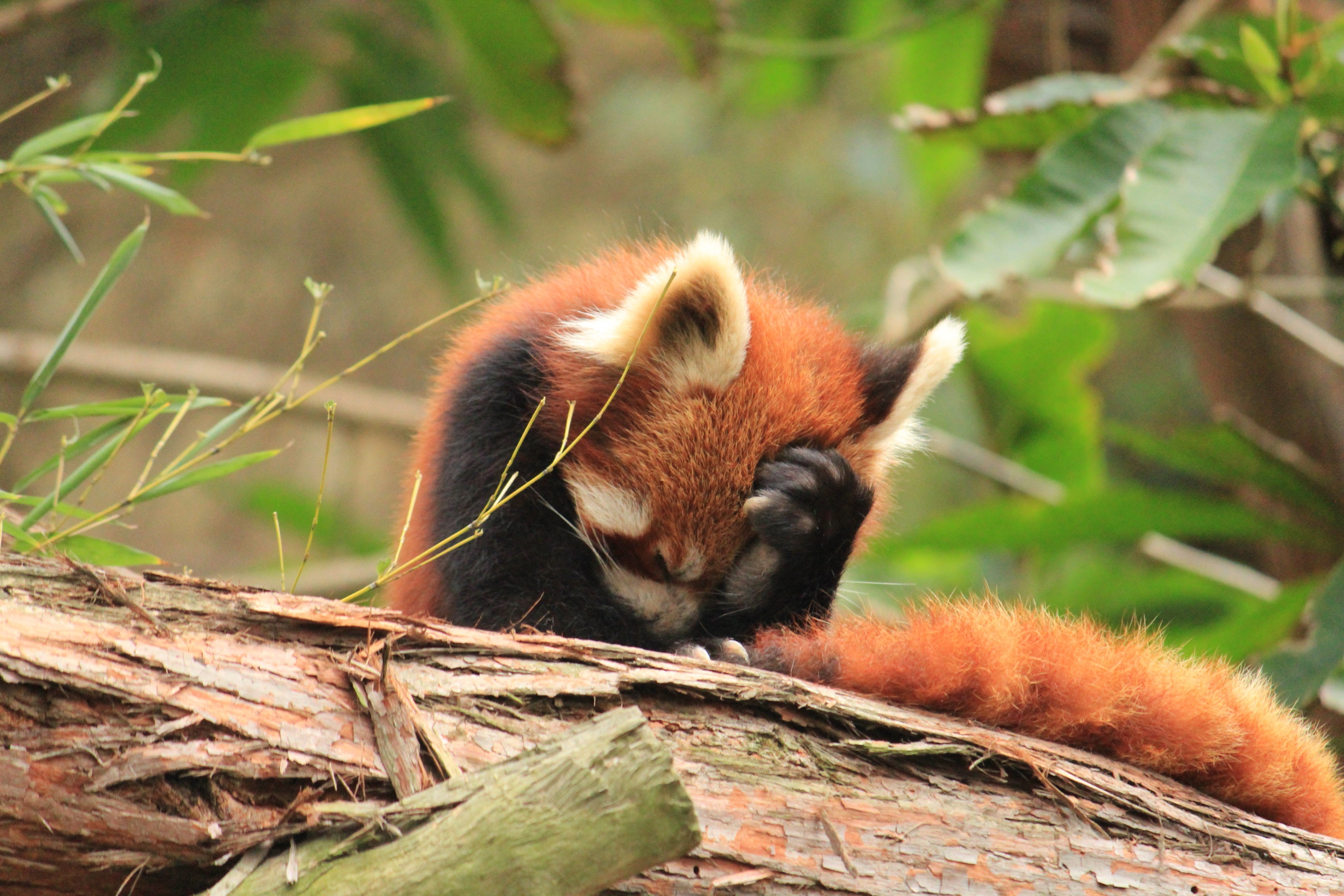
- The Red Panda: More cinnamon than true red, but their name is iconic. They use their color to blend into the red moss and lichen-covered trees of the Himalayas.
- Sockeye Salmon: These fish undergo a massive physical transformation when they return to fresh water to spawn, turning a deep, fleshy red while their heads turn green. It’s a one-way trip, a final burst of color before they die.
Why Some Red Animals Aren't Actually Red
We have to talk about the Red Panda and the Red Fox for a second. If you look at them, they’re mostly orange or rusty brown. So why do we call them red?
Historically, "red" was a much broader term in the English language. Before the word "orange" came into common use (which didn't happen until the fruit was widely available in Europe), people just used "red" for everything in that part of the spectrum. That’s why we have "redheads" instead of "orange-heads" and why the "Red Fox" kept its name despite looking like a sunset.
The Red Panda (Ailurus fulgens) is a particularly cool example of niche evolution. They are the only living species in their family, Ailuridae. They aren't closely related to Giant Pandas. Their red fur is actually incredibly effective camouflage in the high-altitude forests of the Himalayas, where the trees are draped in reddish-brown moss. When they curl up in a tree, they just look like a clump of vegetation. It’s a reminder that "bright" is relative to the background.
The Chemistry of Being Crimson
It usually comes down to three things: Carotenoids, Pteridines, or Porphyrins.
Most animals can't make red on their own. They have to steal it. Carotenoids are the most common; these are the pigments found in plants and algae. When a flamingo eats brine shrimp, it’s processing the carotenoids the shrimp ate from the algae. If a flamingo stops eating those shrimp, it turns white.
Pteridines are different. These are pigments that some insects and amphibians can actually synthesize themselves. This is how the Red-spotted Newt gets its vibrant hue. Then you have Porphyrins, which are related to the heme in our blood. This is what gives some owls and pigeons their reddish tints.
The complexity of animal color is mind-blowing when you realize that some animals see colors we can't even imagine. Many birds see into the ultraviolet spectrum. So, a red bird might not just look red to another bird—it might have UV patterns on its feathers that make it look even more "extra" than we can perceive with our puny human eyes.
Common Misconceptions About Red in Nature
People always think bulls hate the color red. They don't. Bulls are actually colorblind to red. In a bullfight, the bull is reacting to the movement of the cape, not the color. The cape is red mostly to hide the blood of the bull, which is a pretty grim reality of the "sport."
Another one: "Red touches yellow, kill a fellow." This rhyme refers to the Coral Snake. While it's true for North American species, it completely falls apart in Central and South America, where many venomous snakes have "red touches black" patterns. Relying on a rhyme to identify a red animal can literally be fatal. Evolution is messy, and mimics are everywhere.
Actionable Takeaways for Wildlife Enthusiasts
If you're looking to spot these animals or even attract them to your backyard, there are a few things you can do that actually work.
First, if you want red birds like Northern Cardinals in your yard, plant native berry-producing shrubs. Winterberry, Spicebush, and Dogwood are goldmines for them. Don't just rely on a birdfeeder with cheap sunflower seeds; they need those carotenoids from real fruit to keep their feathers vibrant.
Second, if you’re a photographer, remember that red is the hardest color for digital sensors to capture without "clipping." When you see a red animal, underexpose your shot slightly. This preserves the detail in the red channels so the animal doesn't just look like a blurry red blob in your final photo.
Lastly, respect the warning. If you see a bright red insect or amphibian in the wild, the rule is simple: look, don't touch. That color exists for a reason, and usually, that reason is to keep you at a distance. Whether it's the irritating hairs of a velvet ant or the toxic skin of a newt, the red is a polite "no thanks" from the natural world.
The world of red animals is a mix of high-stakes gambling and brilliant chemistry. From the depths of the ocean where red is a cloak of invisibility to the snowy forests where a cardinal stands out like a drop of blood, this color remains nature's most effective tool for communication.