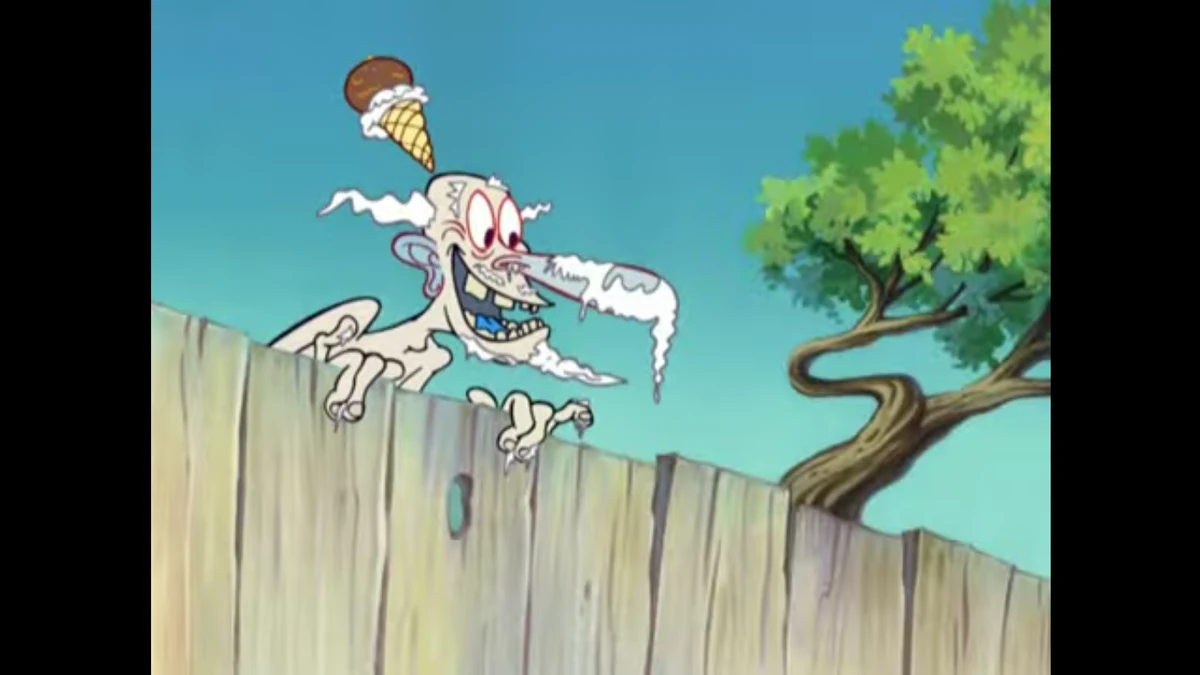
It was supposed to be the ultimate vindication for John Kricfalusi. After being fired from his own show by Nickelodeon in 1992, the creator of the most influential animation of the 90s finally got his "uncut" revenge. Spike TV gave him the keys to the kingdom. No more standards and practices. No more "no violence" or "no gross-out" notes from executives who didn't get the joke. The result was Ren and Stimpy Adult Party Cartoon, a show that almost everyone—fans and critics alike—wishes they could unwatch.
The 2003 revival didn't just push the envelope. It tore the envelope into tiny, wet shreds and then vomited on them.
Honestly, looking back at it now from 2026, the series feels like a fever dream. It’s a case study in what happens when an auteur is given total freedom without a single person around to say "no." While the original Nick series was a masterpiece of subversion and high-art animation hidden in a kids' show, the Spike TV reboot felt mean-spirited. It felt slow. It felt, quite frankly, like it was trying too hard to be "adult" by focusing on things that weren't actually funny.
Why the Spike TV Reboot Failed So Hard
Most people think the show failed because it was too gross. That’s not quite it. The original show was gross, but it had heart and timing. Ren and Stimpy Adult Party Cartoon lacked the frantic, manic pacing that made the 90s version a classic. Instead of snappy 11-minute shorts, we got bloated episodes that dragged on for what felt like hours.
Take the episode "Ren Seeks Help." It’s basically a psychological horror film disguised as a cartoon. We watch Ren systematically torture a frog and then descend into a psychotic breakdown. There are no jokes. Just a chihuahua being a sadist for twenty minutes. It’s uncomfortable to watch, and not in the "edgy" way the creators intended. It was just... boring.
Animation fans usually point to the lack of Bob Camp as a major factor. Camp was the "glue" that held the original production together at Games Productions after John K. was booted. Without a counter-voice to balance John’s more extreme impulses, the show lost its charm. The "Adult Party" version prioritized shock value over character, turning Ren into a literal psychopath and Stimpy into a punching bag with increasingly sexualized undertones.
The Production Nightmare
Behind the scenes, things were even worse. John K. is notorious in the industry for being a perfectionist. While that leads to beautiful drawings, it’s a nightmare for a TV schedule. Spike TV initially ordered several episodes, but because of massive production delays at Carbunkle Cartoons and Big Star, the network lost faith. Only three episodes actually aired during the initial 2003 run before the show was yanked off the air.
- "Ren Seeks Help"
- "Fire Dogs 2"
- "Naked Beach Frenzy"
The rest of the episodes, including the infamous "Altruists" and "Stimpy's Pregnant," didn't see the light of day until the DVD release years later. By the time people actually saw the full season, the consensus was clear: the magic was gone.
The Art was Incredible, But the Soul was Missing
We have to be fair here. Visually? Ren and Stimpy Adult Party Cartoon is stunning. It features some of the most fluid, expressive, and technically impressive hand-drawn animation ever produced for television. Kricfalusi’s commitment to "on-model is boring" meant every frame was a grotesque work of art.
But beautiful drawings can't save a script that hates its audience.
The humor in the original series was built on the "odd couple" dynamic. In the Adult Party version, the relationship became overtly sexual in a way that felt cynical. The episode "Fire Dogs 2" is a prime example. It spends an agonizing amount of time on gross-out gags involving Ralph Bakshi (voicing the fire chief) that just don't land. It felt like watching a brilliant artist have a public breakdown on screen.
Comparing Nick vs. Spike
- The Nick Era: Used "gross" as a punchline. It felt like a rebellious kid making a face behind a teacher's back.
- The Spike Era: Used "gross" as the entire plot. It felt like a middle-aged man screaming in a grocery store.
The pacing was the biggest casualty. Animation is about timing. In the original series, a close-up of a rotting tooth lasted three seconds. In Ren and Stimpy Adult Party Cartoon, that same shot might last thirty seconds while a character describes the smell. It drained the energy out of the room.
The Legacy of the "Adult Party" Disaster
You can't talk about this show without acknowledging the cloud that now hangs over the entire Ren and Stimpy legacy. Following the 2018 reports from BuzzFeed News regarding John Kricfalusi’s past behavior with underage fans, the "Adult Party" episodes took on an even darker, more predatory tone for many viewers. It became difficult to separate the creator's real-life actions from the content of a show that leaned so heavily into uncomfortable sexual taboos.
When Comedy Central announced a new reboot a few years ago (without John K.), the "Adult Party" era was the elephant in the room. It stands as a warning to networks: "Adult" doesn't just mean adding nudity and swearing. It requires even better writing because you can't rely on the innocence of the medium to carry the slack.
The show's failure effectively killed the "extreme" animation trend for a while. It proved that even with a legendary IP and a genius creator, you need a story. You need characters people actually want to spend time with. Ren and Stimpy were always jerks, but in the Adult Party version, they were just monsters.
Actionable Insights for Animation History Buffs
If you’re looking to dive into this era of animation history without losing your mind, here is how to approach it:
- Watch for the Technical Skill: If you can stomach the content, watch the show with the volume off. Observe the "pencil mileage." The sheer amount of detail in the character acting is a masterclass in traditional animation, even if the context is repulsive.
- Study the "Uncut" Myth: Use this series as a lesson in why constraints often breed better art. The "uncut" version of a project is rarely the best version. The tension between Nickelodeon's censors and the Spümcø team is what created the creative sparks of the 90s; without that tension, the fire went out.
- Contextualize the Creator: Understand that the show exists as a bridge between the 90s creator-driven boom and the modern era of adult animation. It represents the end of the "rockstar animator" era where creators were given blank checks based on reputation alone.
- Seek Out the Lost Episodes: If you want the full picture, look for "The Altruists." It’s arguably the most "cohesive" episode of the Adult Party run and shows glimpses of what the series could have been if it hadn't leaned so hard into pure shock.
The Ren and Stimpy Adult Party Cartoon remains one of the most fascinating failures in TV history. It is a loud, colorful, dripping reminder that "unfiltered" isn't always better. Sometimes, the filter is what makes the coffee drinkable.