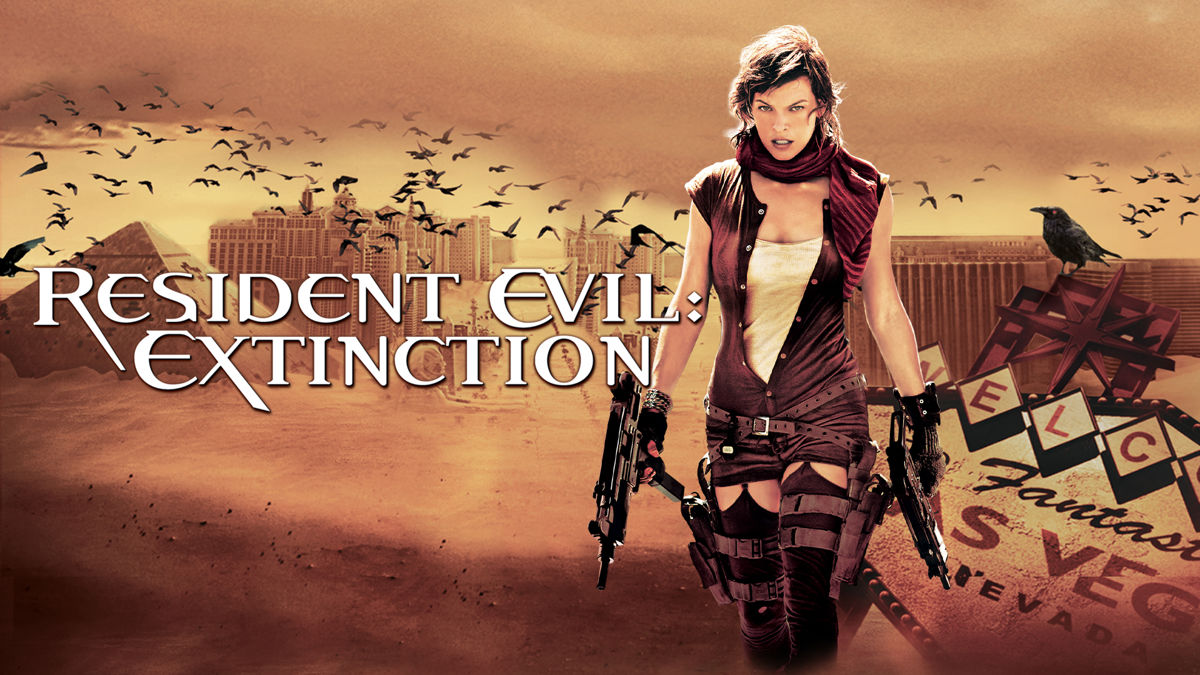
Dr. Sam Isaacs is basically the guy who took a bad situation and turned it into a literal global apocalypse. If you’ve watched the Paul W.S. Anderson movies, you know the T-Virus started the mess. But in Resident Evil: Extinction, Dr. Isaacs is the one who ensures there's no coming back from it. He's not just some corporate suit in a lab coat; he’s the architect of the Tyrant program and the man obsessed with "domesticating" the undead.
Honestly, he’s one of the most underrated villains in the franchise. While the games have Albert Wesker, the movies gave us Iain Glen’s portrayal of Isaacs—a man so high on his own supply that he thought he could control a virus designed specifically to consume everything.
Why the Resident Evil Extinction Dr Isaacs Version Hits Differently
In the first two films, the Umbrella Corporation felt like a massive, shadowy entity. By the time we get to Extinction, the world is a desert. The oceans have dried up. Civilization is toast. And where is Isaacs? He’s underground. He’s in a high-tech bunker near Las Vegas, playing god with clones of Alice.
This version of Isaacs is driven by a singular, delusional goal: finding a "cure" for the T-Virus that doesn't actually involve saving people. He wants to create a submissive zombie workforce. He thinks he can use Alice’s blood to stabilize the mindless "Gripers" and turn them into obedient soldiers. It’s classic mad scientist stuff, but Iain Glen plays it with this greasy, desperate intensity that makes you realize he’s actually terrified of his own superiors, specifically the Umbrella board and Wesker.
He's a mess.
His obsession with Alice is his undoing. He’s not just looking for a biological breakthrough; he’s looking for a trophy. He views Alice as his property because her body successfully bonded with the virus on a cellular level. To Isaacs, she is the "perfect" version of his work, and he’s the jealous creator who can’t stand that his creation is out in the wasteland kicking Umbrella’s teeth in.
The Tyrant Transformation and the Vegas Incident
The turning point for Resident Evil Extinction Dr Isaacs happens when he gets bitten. It’s a small moment that cascades into the final boss fight of the movie. Trying to capture Alice, he gets nipped by a "Super Undead"—one of his own enhanced test subjects.
Most people would just give up. Not Isaacs.
He injects himself with massive amounts of the anti-virus, hoping to counteract the infection. It backfires. Spectacularly. Instead of curing him, it triggers a massive, rapid mutation. This is where the movie pays homage to the games by turning him into the "Tyrant." But unlike the game Tyrants, which are often mindless bio-weapons, the Isaacs-Tyrant retains his ego. He keeps his intelligence. He still thinks he's the smartest guy in the room, even as giant tentacles are bursting out of his torso.
He kills the Umbrella leadership in the hive. He clears the deck. In his mind, he’s no longer an employee; he is the evolution of the human race. It’s a terrifying thought—a monster with a God complex and the physical power to level a building.
What Most Fans Miss About the Isaacs Clones
Here is where the lore gets a bit crunchy. If you’ve seen the later movies, like The Final Chapter, you know that the Isaacs we see in Extinction was actually a clone.
Wait. What?
Yeah, the "real" Dr. Isaacs was a religious zealot hiding in Raccoon City's ruins (or what was left of the Hive). The Isaacs in Extinction was a high-level biological duplicate who believed he was the original. This adds a weirdly tragic layer to his character. He was a copy of a madman, suffering from the same delusions of grandeur as his progenitor.
Think about that for a second.
He spent the whole movie trying to create the perfect clone of Alice, never realizing he was a lab-grown product himself. It explains why he was so disposable to the Umbrella board. It also makes his mutation into the Tyrant even more chaotic—his DNA was already synthesized, making the T-Virus reaction even more unpredictable.
The Laser Room: A Full Circle Moment
The final showdown between Alice and the mutated Isaacs takes place in the iconic laser room. This is a direct callback to the first movie. It’s poetic, in a gory way. Isaacs thinks he has Alice cornered. He’s faster, stronger, and has those nasty telekinetic powers.
Then the lasers start.
The scene is a masterclass in tension. You have two beings who are both "children" of the T-Virus in different ways. Alice is the successful symbiosis. Isaacs is the cancer. When the laser grid moves through the room, Isaacs thinks he’s won because he can technically regenerate. But the grid is too fine. It’s the "dice" effect.
He gets sliced into tiny cubes.
It’s one of the most satisfying villain deaths in the series because it uses Umbrella’s own security technology to take down the man who thought he owned it. He wasn't killed by a hero's sword or a lucky shot; he was deleted by the system he helped maintain.
Expert Analysis: Is Isaacs the Best Villain in the Series?
When you look at the landscape of horror cinema villains, Isaacs stands out because he represents corporate arrogance. He isn't a demon or a ghost. He’s a guy with a PhD and a massive budget who thinks nature is something you can put in a cage.
- Intelligence: High, but clouded by narcissism.
- Motivation: Pure ego and a desire for control.
- Legacy: He effectively ended the world by failing to contain the virus.
Compared to Albert Wesker, who is often portrayed as a cool, calculating superhuman, Isaacs is twitchy. He’s human. You can see him sweating when things go wrong. That makes him more relatable and, honestly, more loathsome. You’ve probably worked for a "Dr. Isaacs" before—someone who thinks they’re a genius while the project is literally burning down around them.
Real-World Influence and Tropes
The "Mad Scientist" trope is old as time, but Resident Evil: Extinction updated it for the 2000s. It tapped into the fear of biotechnology and corporate overreach. At the time, we were seeing real-world debates about cloning and stem cell research. Isaacs was the "dark mirror" version of those scientific leaps.
He also redefined the "Tyrant" for a mainstream movie audience. Before this, the Tyrant was just a big guy in a coat (Mr. X) or a monster with a heart on the outside. Making the villain a recognizable human character who becomes the monster mid-movie made the stakes feel more personal for Alice.
Critical Takeaways for Resident Evil Fans
If you're revisiting the series or diving into the lore for the first time, keep an eye on Isaacs’ interactions with the "White Queen" AI. Unlike the Red Queen, who was purely antagonistic in the first film, the White Queen actually tries to help Alice stop Isaacs. This shows how far off the rails Isaacs had gone—even the company’s own AI recognized he was a threat to the "greater good" of the Umbrella Corporation's (admittedly evil) plan.
Key things to remember about Dr. Isaacs:
- He is responsible for the "Super Undead" variant which made the zombies faster and more dangerous in the desert setting.
- His obsession with Alice’s blood was based on the fact that her DNA could actually bond with the virus rather than just being consumed by it.
- The mutation into the Tyrant was an accident caused by his own desperation, not a planned evolution.
- The "Extinction" Isaacs was eventually revealed to be a clone, which recontextualizes his entire arc as a puppet who thought he was the puppeteer.
If you want to understand the cinematic Resident Evil universe, you have to understand Isaacs. He is the bridge between the corporate thriller of the first movie and the full-blown post-apocalyptic madness of the later sequels.
What to do next:
To truly appreciate the character's descent, watch Resident Evil: Apocalypse followed immediately by Extinction. Pay close attention to how his demeanor shifts from a controlled scientist to a frantic, power-hungry monster. If you're into the games, compare his Tyrant form to the T-002 from the original 1996 game; you'll notice the visual cues in the claws and the height are a direct nod to the source material. Finally, check out the "Final Chapter" to see how the original Dr. Isaacs differed from the clone we grew to hate in the desert.