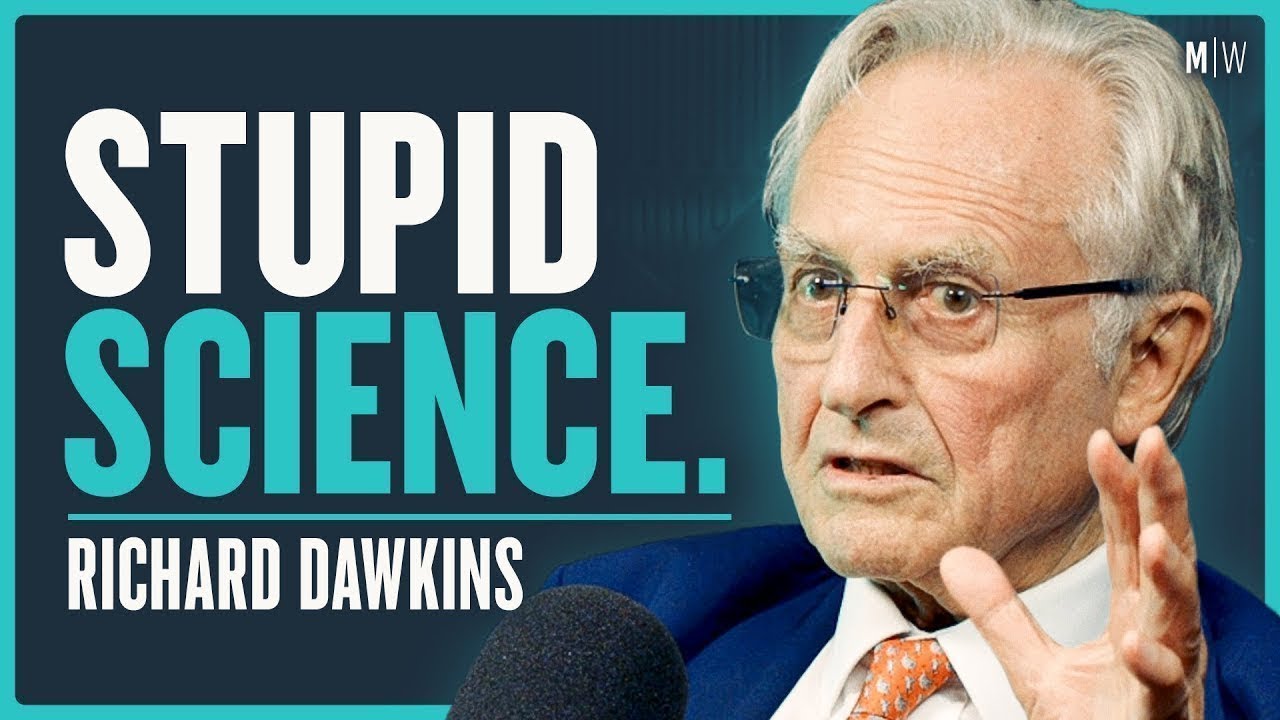
It was late 2006. Richard Dawkins had just released The God Delusion, a book that essentially became the manifesto for New Atheism. He was everywhere—lectures, talk shows, debates. Naturally, Trey Parker and Matt Stone were watching. They didn't just see a scientist; they saw a character.
Most celebrities get a quick jab on South Park. A few minutes of screen time, a crude joke about their appearance, and it's over. But the depiction of Richard Dawkins on South Park was different. It wasn't just a cameo; it was a two-part epic titled "Go God Go" and "Go God Go XII." It remains one of the most biting, layered, and weirdly prophetic satires the show has ever produced.
When Science Meets Mrs. Garrison
The plot is quintessential South Park chaos. Mrs. Garrison (who was transitioning at the time) is forced to teach evolution but hates it. She dismisses the entire concept as "retarded." The school board, in a rare moment of seeking actual expertise, brings in the world's most famous evolutionary biologist to handle the curriculum.
Enter the animated Richard Dawkins.
The show nails his distinctive British cadence and intellectual confidence. But the joke isn't really about his science. It's about his approach. The writers portray Dawkins as so smugly convinced of his own rightness that he manages to convert Mrs. Garrison to atheism not through data, but through a shared sense of superiority.
Then things get weird.
They start a romantic relationship. There is a montage set to "Burnin' for You" by Blue Öyster Cult. It is uncomfortable. It is hilarious. And it sets the stage for a much larger critique of how humans handle "The Truth."
The Future Without God (Is Still Messy)
While the present-day plot focuses on Dawkins and Garrison, the "Go God Go" arc spends a lot of time in the year 2546. Cartman has frozen himself because he couldn't wait three weeks for the Nintendo Wii. He wakes up in a future where religion has been completely eradicated.
You’d think a world based on the teachings of Richard Dawkins on South Park would be a peaceful, logical utopia.
Hardly.
The future is a war zone. Three different factions of atheists are engaged in a bloody, genocidal conflict. There's the Unified Atheist League (UAL), the United Atheist Alliance (UAA), and the Allied Atheist Allegiance (AAA). They aren't fighting over whether God exists—they all agree He doesn't. They are killing each other over the "Great Question": what is the most logical name for their group?
The AAA consists of sentient sea otters. They find the human atheist groups illogical because humans eat at tables when they have perfectly good tummies.
This is where the satire hits its stride. Parker and Stone weren't attacking Dawkins' biology. They were attacking the idea that removing religion would somehow remove human tribalism. They used Dawkins as the figurehead for the belief that "logic" and "reason" are immune to the same dogmatism that plagues faith.
The Real Richard Dawkins Responds
People always wonder if these celebrities actually watch their parodies. Dawkins did. And he wasn't exactly thrilled.
In various interviews and in his own writing, Dawkins has addressed his portrayal. He wasn't bothered by the atheist critique, per se. He’s a guy who handles debate for a living. What actually irked him was the "sexual antics" involving Mrs. Garrison. He famously remarked that while he can appreciate a good satire, the "shagging a transvestite" joke was low-hanging fruit.
He felt it distracted from the intellectual debate.
But that's the thing about South Park. It doesn't care about the intellectual debate. It cares about the ego behind the debate. By putting Dawkins in a ridiculous romantic subplot, they stripped away the "Professor Emeritus" shield and treated him like any other person with an ego.
Interestingly, Dawkins has also noted that he found the future-war premise somewhat amusing, even if he disagreed with the premise that atheism would lead to just as much conflict as religion. He maintains that science-based societies would be inherently more stable. South Park begged to differ.
Why the Satire Still Holds Up
Look at the internet today. Look at "Science Twitter" or the various ideological rifts within secular communities. The prophecy of the UAL versus the UAA feels remarkably accurate.
We see "Logical" thinkers forming tribes and excommunicating those who don't follow the specific brand of logic approved by the group. The sea otters screaming "Science damn you!" isn't just a funny line; it’s a reflection of how easily any system of thought can be weaponized.
The episode also tackled the "New Atheist" trend right at its peak. Today, that movement has largely fractured and evolved into different cultural sectors. Some went toward "Social Justice," others toward the "Intellectual Dark Web." The infighting is constant. Parker and Stone saw that coming twenty years ago.
Key Moments to Rewatch
If you’re heading back to Max to watch these episodes, keep an eye on these specific details:
- The chalkboard drawing: Dawkins' explanation of evolution to the class is intentionally simplified to the point of absurdity, reflecting how the public often consumes complex science.
- The "Logic" catchphrases: Notice how the future atheists use "Science" as a literal replacement for "God" in their expletives. It’s a subtle nod to how language dictates worship.
- The Wii obsession: Cartman’s singular focus on a gaming console amidst a world-changing philosophical shift is the perfect counterpoint to Dawkins' grand ambitions for humanity.
What We Can Learn From the Parody
Watching Richard Dawkins on South Park provides a few genuine takeaways for anyone interested in public discourse:
- Identity vs. Idea: People often adopt "Atheist" or "Scientist" as an identity rather than a methodology. When an idea becomes an identity, it becomes prone to tribalism.
- The Smugness Trap: The show suggests that being right isn't enough. If you’re right but insufferable about it, you lose the "average" person (represented by the South Park residents).
- Human Nature is Constant: Tools change—from Bibles to beakers—but the human impulse to fight over labels is seemingly hardwired.
To truly understand the impact of this parody, one should watch the "Go God Go" series alongside a contemporary interview with Dawkins from 2006. The contrast between the serious, high-minded intellectualism of the man and the feces-slinging sea otters of the show provides a perfect snapshot of the mid-2000s culture wars.
Check out the official South Park Studios website for behind-the-scenes clips on how they animated the Dawkins character. You can also read Dawkins' memoir, Brief Candle in the Dark, where he briefly touches on his life as a pop-culture icon—including the times he’s been drawn in 2D.
For those looking to dive deeper into the history of South Park parodies, compare the Dawkins episodes with the show's treatment of Christopher Hitchens or their later takes on Al Gore. It reveals a consistent pattern: the show doesn't hate the message; it just loves to humble the messenger.