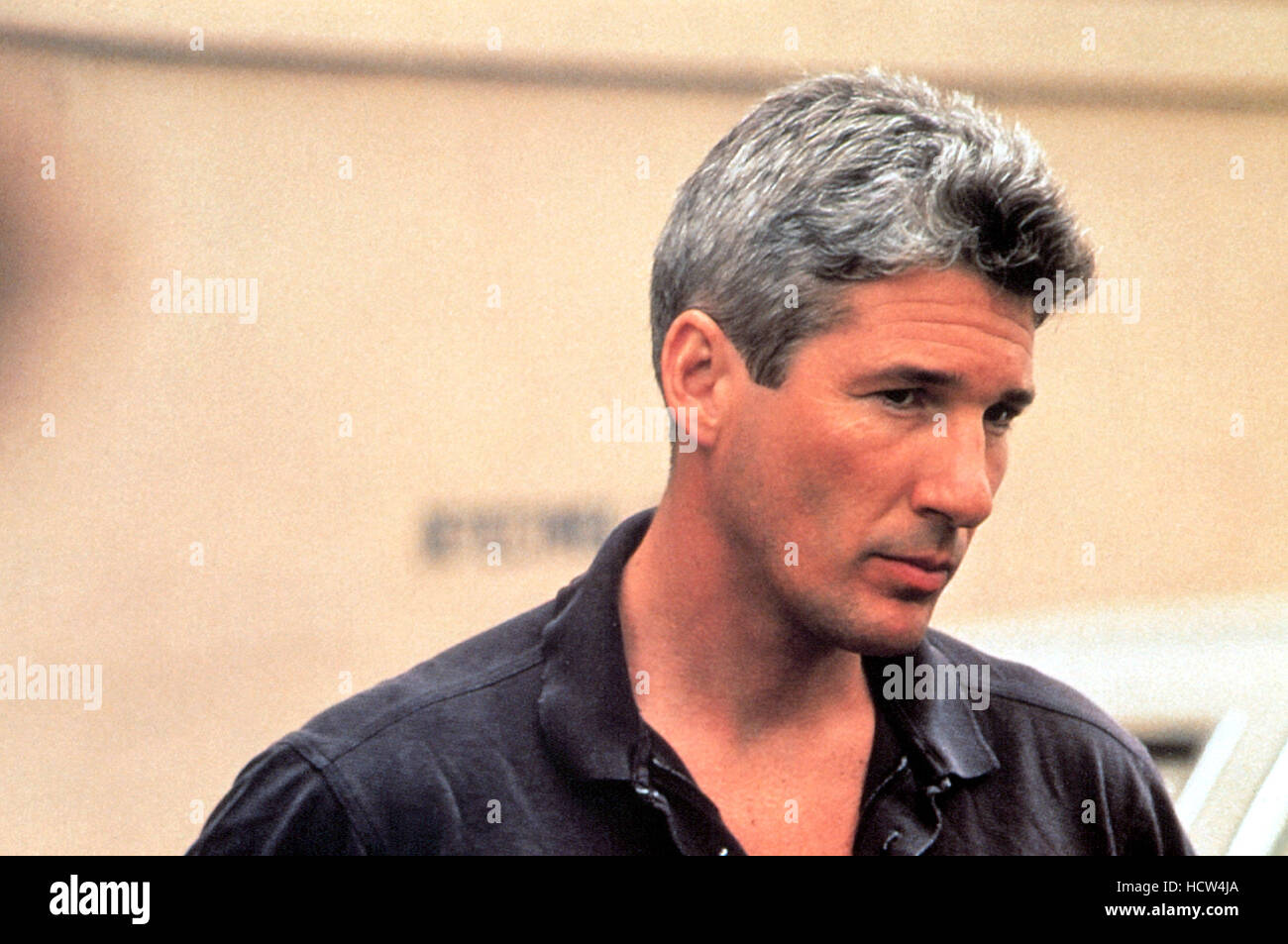
Honestly, if you look back at the late 1980s, Richard Gere was in a bit of a rut. He was the "pretty boy." The guy from American Gigolo who looked great in a suit but didn't necessarily have that dangerous, jagged edge that makes a legendary movie villain. Then 1990 happened. He took a role that basically set his romantic hero image on fire and danced in the ashes.
We're talking about Internal Affairs.
It’s a movie that feels grittier and more uncomfortable today than it did thirty-five years ago. While everyone remembers Gere for Pretty Woman (which, funnily enough, came out the same year), his performance as Dennis Peck is the real masterclass. It’s a deep dive into narcissism before that was a buzzword on social media.
Why Richard Gere Internal Affairs Changed Everything
Most people see a cop movie and expect a hero. This isn't that.
Gere plays Dennis Peck, an LAPD officer who is less of a public servant and more of a cult leader with a badge. He’s got eight kids, multiple ex-wives, and a paycheck that doesn't add up. He’s the "guy who knows a guy." If you’re a cop in trouble, Peck fixes it. But the price is your soul, or at least your loyalty.
The movie works because it pits Gere against a young, hungry Andy Garcia. Garcia plays Raymond Avilla, the guy from the Internal Affairs division who realizes Peck isn't just a dirty cop—he’s a virus.
What makes this film so different from your standard 90s thriller is the psychological warfare. Peck doesn't just try to outrun the investigation. He tries to dismantle Avilla’s life. He goes after his marriage. He gets into his head. It’s predatory in a way that feels genuinely dangerous.
The Performance That Refused to Be "Likable"
In Hollywood, stars usually want to be liked. They want the audience to root for them even when they’re playing a "bad" guy.
Gere didn't do that.
As Dennis Peck, he is chillingly calm. He uses his natural charm—that famous squint and the soft voice—to manipulate everyone around him. There’s a scene where he basically tells Avilla that he’s already slept with Avilla’s wife. He’s lying, but he says it with such casual confidence that it breaks Garcia’s character.
It’s brutal.
Director Mike Figgis really leaned into the noir elements here. He didn't want a shiny action flick. He wanted a story about how corruption is seductive. Peck isn't just taking bribes; he's building a web of people who owe him. He’s a provider. A patriarch. A killer.
A Turning Point for the "Pretty Boy"
Before Internal Affairs, Richard Gere was arguably struggling. His 80s run after An Officer and a Gentleman was... let’s say "mixed."
- King David was a disaster.
- The Cotton Club had a troubled production.
- Miles from Home didn't exactly set the box office on fire.
By the time he signed on for this, he needed a win. But instead of playing it safe, he played the most hatable man in Los Angeles. It worked. Critics were floored. They realized that beneath the "Sexiest Man Alive" exterior (a title he’d get just a year later), there was a serious, daring actor who wasn't afraid to look ugly.
He followed this up with Pretty Woman, and suddenly, Gere was the biggest star on the planet again. But if you ask film buffs which performance is more impressive, many will point to the sociopath in the LAPD uniform.
The Legacy of the "Dirty Cop" Archetype
You can see the DNA of Dennis Peck in almost every "corrupt officer" movie that followed.
Think about Denzel Washington in Training Day. Alonzo Harris is a louder, more explosive version of what Gere did in 1990. In fact, there have been rumors for years that the real-life inspirations for the two characters—real L.A. corruption scandals—overlap.
The film also gave us one of the best "partner" dynamics in cinema history. Laurie Metcalf (yes, Jackie from Roseanne) plays Amy Wallace, Avilla’s partner. She is arguably the smartest person in the entire movie. She’s the one who stays grounded while the two men are measuring their egos.
What Most People Miss
One of the weirdest things about Internal Affairs is the music.
Mike Figgis didn't just direct; he composed much of the score. He used weird, industrial sounds—literally recording people blowing into plastic plumbing pipes to get these low, haunting tones. It makes the movie feel like a fever dream. It’s not your typical orchestral "dun-dun-dun" suspense music. It’s uncomfortable.
Also, look at the cast. You’ve got a very young William Baldwin as a drug-addicted cop. You’ve got Nancy Travis playing a woman caught in the middle of a literal pissing contest. Even a tiny Elijah Wood shows up.
It’s a stacked deck.
Why You Should Watch It Now
We live in an era where we talk a lot about "toxic masculinity" and "institutional corruption." This movie was ahead of its time on both fronts.
It shows how a man like Peck uses his status as a "family man" and a "good cop" to shield himself from consequences. He uses his eight kids as a moral excuse for his crimes. "I'm just taking care of my own," he basically says. It’s a terrifyingly familiar logic.
If you’re a fan of Gere’s later work—things like Primal Fear or Arbitrage—you have to see where it started. This was the moment he stopped being a "lead" and started being a "character actor" in a lead's body.
Actionable Takeaways for Movie Buffs
If you're going to dive back into this 1990 classic, keep an eye on these specific things:
- The "Elevator Scene": Pay attention to the power dynamic. It’s not a fight; it’s an execution of someone’s dignity.
- The Wardrobe: Notice how Gere is often in these high-end, silky fabrics that look way too expensive for a patrolman. It’s a subtle hint at his corruption that the movie doesn't feel the need to explain with dialogue.
- The Supporting Cast: Watch Laurie Metcalf. She’s often overlooked in this film, but her performance is the anchor that keeps the movie from becoming too "macho."
- The Ending: It’s a bit more "Disney villain" than the rest of the film, which some critics hated. But look at how Gere plays the final moments—he stays in character until the very last second.
Richard Gere in Internal Affairs proved that he was more than just a handsome face. He was a force. He took the "bad cop" trope and made it intimate, personal, and deeply disturbing.
Start by looking for the 4K restoration that recently hit the market; the cinematography by John A. Alonzo (who did Chinatown) deserves the high resolution. It’s a masterclass in how to use light and shadow to tell a story about a man who has lost his way. From there, compare it to the "crooked cop" thrillers of today—you’ll realize just how much they owe to Dennis Peck.