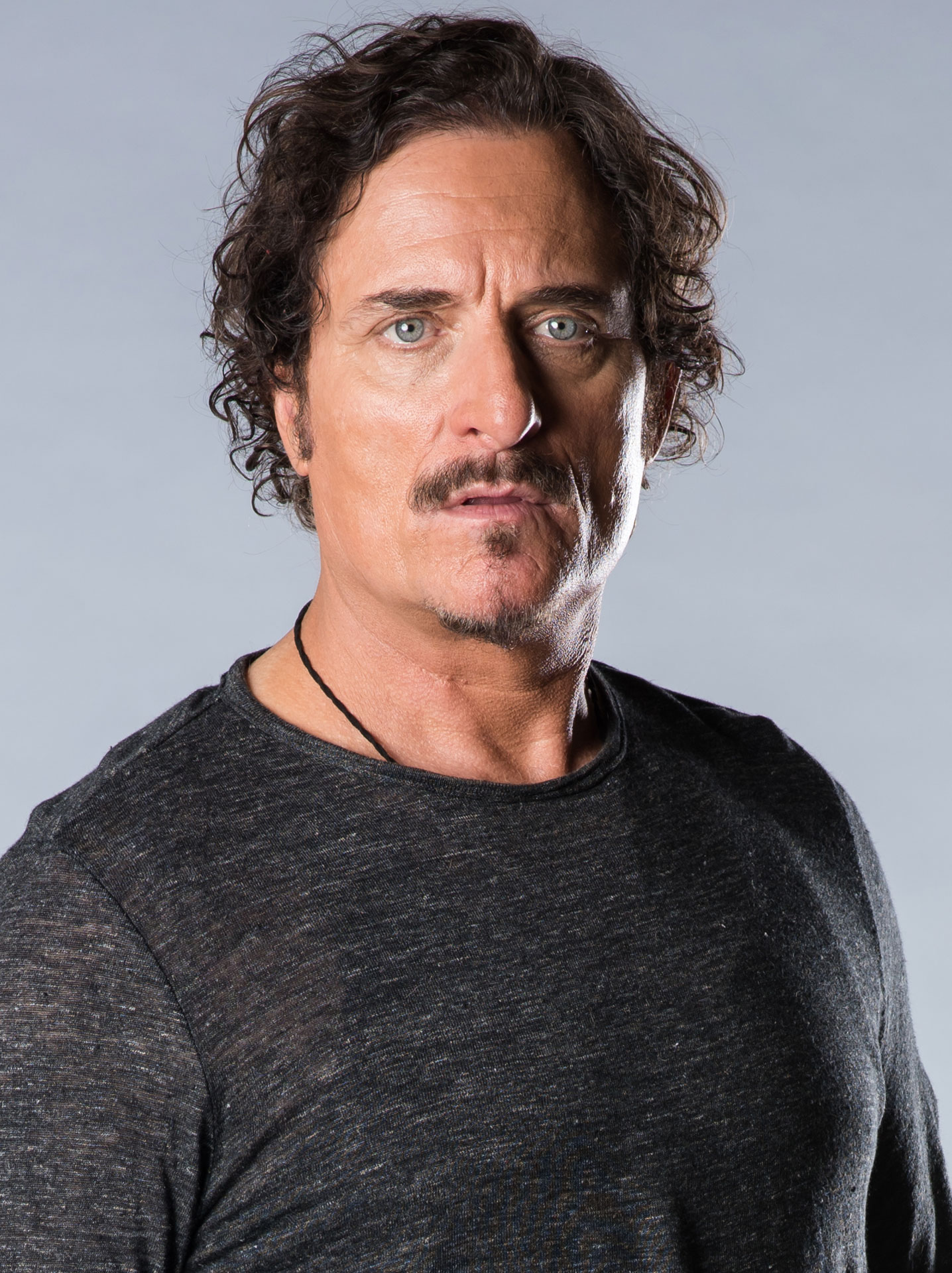
You know that feeling when you're watching a classic show and a face pops up that makes you do a double-take? That happened to a lot of people lately rewatching Prison Break. Before he was the leather-clad, impulsive, and occasionally terrifying Tig Trager on Sons of Anarchy, Kim Coates was playing a completely different kind of predator. He was Richard Sullins.
Honestly, if you only know him from SAMCRO, seeing him in a sharp suit with a clean-shaven face is kinda jarring. But his stint as the Internal Affairs bulldog is one of the most underrated parts of the show's peak years.
The Richard Sullins Factor: What Most People Get Wrong
People often remember Prison Break as just Michael Scofield staring at blueprints or T-Bag being, well, T-Bag. But the real tension in Season 2 didn't just come from the escapees. It came from the walls closing in on Alexander Mahone.
Enter Richard Sullins.
Kim Coates didn't play a villain in the traditional sense. Sullins was the guy sent to catch the guy who was catching the good guys. It's meta. It's messy. Basically, Sullins was the physical embodiment of Mahone’s crumbling conscience. While everyone else was worried about The Company or hidden millions in Utah, Sullins was the only one looking at the mounting body count behind Mahone and asking the right questions.
Most fans mislabel him as just another "government suit." That’s a mistake. Sullins had this weird, calculating energy. Coates played him with a specific kind of stillness that made you realize he was the smartest person in the room. He wasn't there to shoot anyone; he was there to ruin their lives with a briefcase and a transcript.
Why Kim Coates in Prison Break Still Matters Today
Look, the show was always a bit over the top. We're talking about a guy who tattooed an entire prison map on his torso. You need grounded characters to keep the stakes real.
Coates provided that. When he’s interrogating C-Note, offering him a way out in exchange for testimony against Mahone, you see the shift in the show's DNA. It stopped being a "manhunt of the week" and turned into a political thriller.
- The Sullins/Mahone Dynamic: This was pure gold. Mahone was unraveling, popping pills and hallucinating, and Sullins was the shark circling the blood in the water.
- The Ethical Gray Area: Sullins wasn't "good." He was bureaucratic. He was willing to use C-Note’s family as leverage. It showed that in the Prison Break universe, the "law" was often just as cold as the criminals.
- The Longevity: Most guest stars on this show ended up in a body bag within three episodes. Sullins stuck around from Season 2 all the way into the later arcs. He was the persistent itch that the conspiracy couldn't quite scratch away.
That C-Note Scene: A Masterclass in Quiet Intensity
There's a specific moment in the episode "Panama" that defines the Kim Coates Prison Break experience. He's sitting across from C-Note (Rockmond Dunbar). C-Note is at his absolute lowest. He's been told to kill himself to save his family.
Sullins walks in. No fanfare.
He offers the deal. It’s not a hero’s moment; it’s a transaction. Coates delivers these lines with a flat, almost bored tone that makes the situation feel even more desperate. He represents the "system" that Michael and Lincoln are fighting against, but he's doing it within the rules. It’s a fascinating contrast to the chaotic violence happening elsewhere.
You've gotta appreciate the range here. Most actors would play Sullins as a one-dimensional prick. Coates gave him a soul—albeit a very tired, cynical one.
The "Sons of Anarchy" Connection
It’s impossible to talk about this without mentioning Tig. If you watch Prison Break right after Sons of Anarchy, it feels like watching an alternate dimension version of the same man.
In Prison Break, Coates uses his eyes to show intellect and suspicion. In SOA, he uses them to show madness and loyalty. It’s the same actor, same intense gaze, but the "vibe" is 180 degrees different. It’s actually a great example for aspiring actors on how to use "stillness" versus "movement." Sullins is a statue; Tig is a caged animal.
What Really Happened With the Character?
Sullins eventually becomes an ally of sorts, or at least a "necessary evil." By the time we get to The Final Break, he’s helping investigate the murder of Sara Tancredi’s father (or at least the surrounding mess).
He’s one of the few characters who survives the entire series without becoming a total cartoon. He stays consistent. He’s the guy who wants the paperwork to match the reality. In a show about breaking rules, he was the guy obsessed with them.
Actionable Insights for Fans and Rewatchers
If you’re planning a rewatch or just diving into Kim Coates' filmography, here’s how to get the most out of his Prison Break run:
- Watch the eyes: Pay attention to how Coates watches William Fichtner (Mahone). There’s a silent battle of wills in every scene they share.
- Look for the "Sullins Smirk": He has this tiny, almost imperceptible smile when he knows he’s caught someone in a lie. It’s classic Coates.
- Contrast the seasons: Compare Sullins in Season 2 (the hunter) to his later appearances (the investigator). You can see the character getting more weary of the government's secrets.
- The Fichtner Connection: Kim Coates and William Fichtner are actually good friends in real life. Knowing that makes their onscreen animosity even more fun to watch.
Basically, Richard Sullins wasn't the guy who broke out of prison, but he was the guy who made sure the people inside had a very bad day. Kim Coates took a role that could have been forgettable and turned it into a cornerstone of the show's best seasons.
Next time you see him pop up in a suit, just remember: before he was riding a Harley, he was the only man in the FBI brave enough to stare down Alex Mahone.
To really appreciate the depth of his performance, go back and watch Season 2, Episode 8 ("Dead Fall") and Episode 20 ("Panama"). These are the pivot points where Sullins shifts from a background threat to a major player in the series' endgame. Focus on the interrogation scenes—that's where the real magic happens.
[/article]