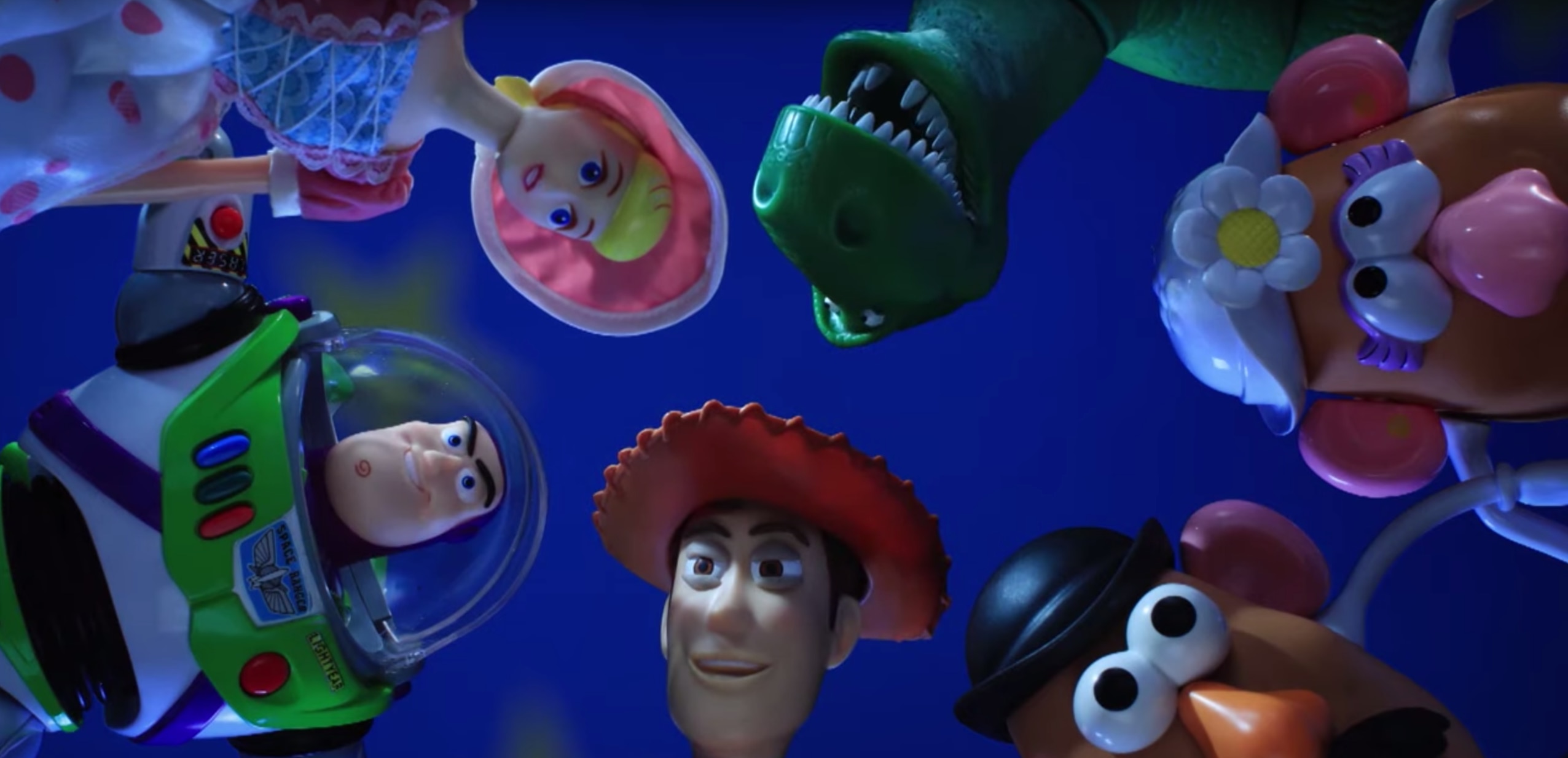
Adult Swim has a weird way of ruining your childhood, but doing it so well you can't really stay mad. If you grew up watching Woody and Buzz, seeing them get the Seth Green treatment was probably a bit of a shock to the system. It’s gritty. It’s crude. Honestly, it’s exactly what happens when you give a bunch of stop-motion animators a budget and a very dark sense of humor.
The Robot Chicken Toy Story sketches aren't just one-off jokes; they represent a specific era of "ruined childhood" comedy that dominated the late 2000s and early 2010s. While Pixar was busy making us cry over garbage incinerators and growing up, Robot Chicken was busy imagining what Buzz Lightyear would do if he actually had a mental breakdown that didn't involve Mrs. Nesbitt.
The Brutal Reality of Being a Toy
Think about the premise of Toy Story for a second. It’s terrifying. You are a sentient being whose entire existence depends on the whims of a giant toddler who could, at any moment, decide to rip your head off or leave you in a sandbox to rot. Pixar touches on this, sure, but they keep it "family-friendly." Robot Chicken goes for the jugular.
In the sketch "Toys Are Real," the show tackles the existential dread of being a toy that everyone knows is alive but has to pretend isn't. It’s a recurring theme in their parodies. They take the "Toy Rules" and apply them to the most cynical scenarios possible. Remember the scene where Sid is performing "surgery"? In the Robot Chicken version, the psychological trauma isn't played for a heartwarming rescue mission—it’s played for the absolute horror that it would actually be.
Seth Green and Matthew Senreich, the creators, have always had a knack for finding the one detail in a franchise that makes no sense and blowing it up. With Robot Chicken Toy Story segments, that detail is usually the toys' bizarre subservience to humans.
Why the Parody Hits Different
Most parodies just make fun of the character's voices or the plot holes. Robot Chicken uses the medium of stop-motion—using actual action figures—to create a meta-layer of irony. You are watching toys play toys. It adds a level of grit that CGI just can’t replicate. When you see a real-life Woody doll being put through a woodchipper in a sketch, there’s a tactile "thud" to the humor that makes it land.
It’s also about the voice acting. While they obviously don't get Tom Hanks or Tim Allen (usually), the sound-alikes are often so close that it creates this "uncanny valley" effect. You feel like you're watching a deleted scene from a version of the movie that was produced by HBO in the middle of a fever dream.
That One "Twisted" Buzz Lightyear Sketch
We have to talk about the way the show handles Buzz. In the original films, Buzz's arc is about accepting he’s a toy. In the Robot Chicken Toy Story universe, that realization usually leads to a complete psychotic break or a existential crisis involving the realization that his "laser" is just a LED bulb.
One of the more famous bits involves the toys dealing with the "new" versions of themselves. Every time a new Toy Story movie came out, Robot Chicken seemed to have a response ready. They tapped into the consumerist nightmare of being replaced by a more "articulated" version of yourself. It’s dark. It’s cynical. But it’s also a very honest look at what toy culture is like.
The Sid Factor
Sid Phillips is the unsung hero of Robot Chicken's inspiration. He was the original "toy distorter." The show essentially takes Sid’s philosophy and turns it into a production style. They’ve done sketches where Sid grows up and his "talents" for kit-bashing toys turn into something much more sinister—or surprisingly mundane.
There's an episode where they explore what happens to the mutant toys after the first movie ends. Instead of a happy ending, it’s basically a support group for entities that shouldn't exist. This is where the show excels: taking the "happily ever after" and showing the scar tissue underneath.
How to Watch the Best Robot Chicken Toy Story Moments
If you're looking to dive back into these, you aren't going to find a single "Toy Story Episode." Robot Chicken is a variety show, a rapid-fire assault on your attention span. The sketches are scattered across several seasons.
- Season 1 & 2: This is where the foundations were laid. The humor is raw and the animation is a bit choppier, which actually adds to the "basement hobbyist" feel of the Toy Story parodies.
- The Specials: Occasionally, they'll group themes together, but usually, you're looking for the short 30-second "stings" between larger segments.
- YouTube & Adult Swim Website: Honestly, the best way to see the Robot Chicken Toy Story highlights is through the official Adult Swim compilations. They’ve curated the best "childhood ruined" clips which almost always feature Woody and the gang.
The Cultural Impact of the Parody
It’s easy to dismiss this as "potty humor," but there's a reason it stuck. Robot Chicken bridged the gap between the kids who grew up with Toy Story in 1995 and the cynical adults they became by 2010. It allowed us to love the source material while acknowledging how weird the concept actually is.
The show also influenced how other parodies approached Pixar. Before Robot Chicken, most parodies were fairly gentle. Afterward, the "gritty reboot" parody became the standard. You can see the DNA of these sketches in everything from YouTube's early "Dorkly" videos to the more adult-themed LEGO parodies that pop up today.
The Animation Technique
If you look closely at the Robot Chicken Toy Story segments, the animators often use the actual "Thinkway" toys—the ones sold in stores. They have to modify them with wire armatures so they can hold a pose. This is why the characters look slightly different than their movie counterparts. Their joints are more visible. Their paint is sometimes scuffed. This "lived-in" look makes the parody feel more grounded in reality than the pristine digital world of Pixar.
The Complexity of Satire
Is it mean-spirited? Sometimes. But the creators of Robot Chicken are clearly fans. You can’t parody something that specifically without knowing the lore inside and out. They know about the "Andy's Mom" theories. They know about the specific way Woody’s pull-string works. The satire works because it’s built on a foundation of obsessive knowledge.
When Buzz Lightyear discovers he’s "made in China" in a sketch, the joke isn't just about the label; it’s about the crushing weight of globalism on a character who thinks he’s a space ranger. It’s surprisingly deep for a show that also features a humping robot.
What to Do Next
If you want to experience the "peak" of this style, look for the "Toy Story 4" parodies they did around the time the actual fourth movie was announced. They predicted the "existential toy" trend long before Forky ever showed up to tell us he was trash.
Actionable Steps for the Fan:
- Check out the "Robot Chicken: Star Wars" specials: If you like the way they handle Pixar, their treatment of Lucasfilm is even more detailed and legendary.
- Look into "SuperMansion": This is another project by the same team that takes the "depressing life of a hero" concept and runs with it for full episodes.
- Follow the animators: Stoopid Buddy Stoodios (the production house) often posts behind-the-scenes clips showing how they actually rig these toys. It'll give you a new appreciation for the work that goes into a 15-second joke about Mr. Potato Head's anatomy.
The Robot Chicken Toy Story legacy is one of beautiful, creative destruction. It took our most cherished childhood memories and put them through a blender, and honestly, we’re all better off for it. It reminded us that it’s okay to laugh at the things we love, even—or especially—when those things are plastic cowboys with deep-seated abandonment issues.
Next Steps for Deep Diving:
- Watch the Season 4, Episode 17 sketch "The Real World: Toy Story" for a perfect example of their ensemble parody work.
- Research the work of Dan Milano, one of the key writers/voice actors who helped shape the voice of the show’s most iconic parodies.
- Compare the stop-motion style to the original 1988 Pixar short Tin Toy to see where the "living toy" aesthetic actually began.