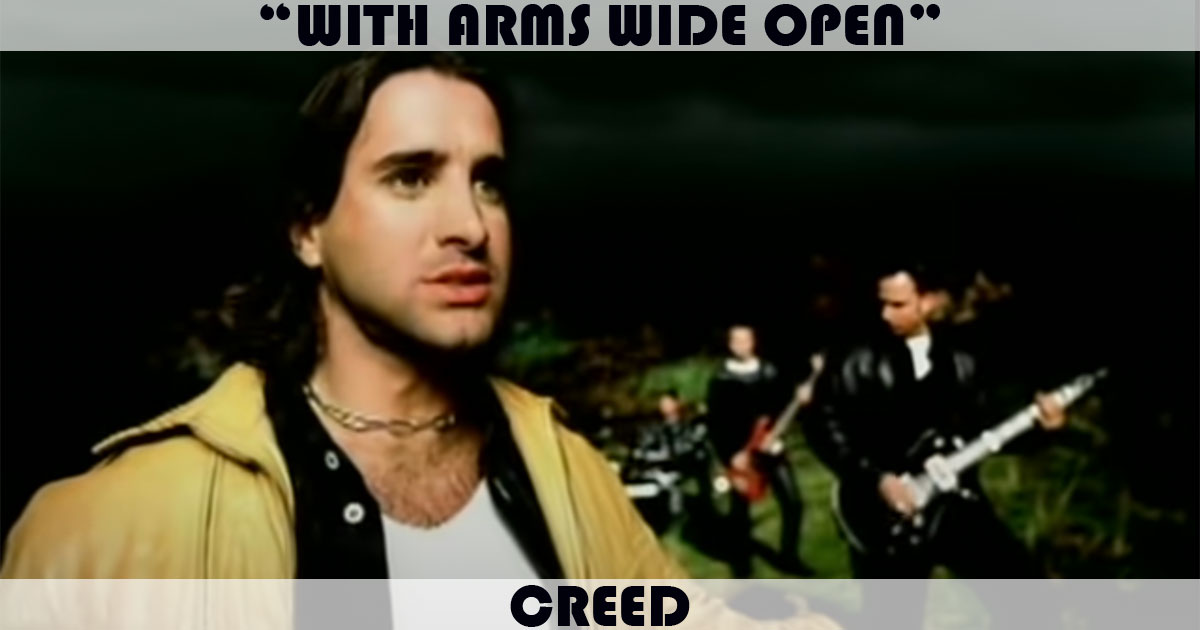
It’s 1999. You can’t go anywhere without hearing that baritone growl. Scott Stapp is everywhere. He's standing on a rock, the wind is blowing his hair, and he's singing about a child. Most people just call it the "Jesus song" or the "dad song," but the real history of Creed With Arms Wide Open is actually a lot more personal—and complicated—than the memes suggest.
Honestly, it’s one of those tracks that defined an entire era of post-grunge. You either loved it or you spent your time making fun of Stapp’s operatic "yarl." But for Creed, this wasn’t just a radio hit. It was the moment they went from being a successful rock band to a global phenomenon. It eventually snagged a Grammy for Best Rock Song in 2001, beating out legends like AC/DC and Lenny Kravitz. That’s wild when you think about it.
The Morning Everything Changed for Scott Stapp
The song wasn't some calculated attempt to top the Billboard Hot 100. It happened fast. Stapp was at a soundcheck during the My Own Prison tour when he found out he was going to be a father. His then-wife, Hillaree Burns, gave him the news, and the lyrics started pouring out almost immediately. He was overwhelmed. He was scared.
He sat down and wrote about his son, Jagger.
Most people think Creed With Arms Wide Open is a worship song because of the band's reputation and the "higher power" vibes of their lyrics. Stapp has always been open about his Christian upbringing and the influence of his faith, but this specific track is a letter to an unborn child. It’s about the shift from being a self-centered rock star to someone who has to protect a new life. He was basically asking, "How do I do this?"
Mark Tremonti, the guitarist who is often the unsung hero of Creed’s massive sound, provided that clean, arpeggiated riff that everyone tried to learn on acoustic guitar that year. Tremonti’s playing gave the song a vulnerability that balanced out Stapp's heavy delivery. It starts quiet. It builds. By the time the bridge hits, it's a full-on stadium anthem.
Why People Think it's a Religious Hymn
The confusion makes sense. The "Jesus Creed" association comes from the band's name and the biblical imagery Stapp uses constantly. "Creed" itself refers to a statement of faith. If you listen to the lyrics of Creed With Arms Wide Open, you hear lines about "the light" and "created a life." It sounds liturgical.
But if you look at the 2000s rock landscape, Creed was in a weird spot. They weren't a "Christian band" in the way DC Talk or Jars of Clay were. They were a secular rock band with spiritual themes. This distinction drove the band crazy for years. They were too religious for the grunge purists and too "rock and roll" for the church crowd.
Stapp's lyrics were often a struggle between his demons and his desire for grace. In this song, he’s looking at his son as a clean slate. He wanted his son to have a better life than he had. It's a universal "dad" sentiment, but wrapped in the aesthetic of late-90s alternative rock.
The Impact of the Video
The music video is where the "Jesus" comparisons really took off. Directed by Dave Meyers, it features Stapp in a desert landscape that looks suspiciously like a vision from the Book of Revelation. There are meteors falling. There’s a giant flood. Stapp is standing on a cliffside, arms literally wide open, looking like a messianic figure.
It was peak 1999 CGI.
Actually, it was pretty expensive for the time. It helped propel the album Human Clay to diamond status. That means over ten million copies sold in the US alone. Think about that. Ten million people bought a physical CD that featured Creed With Arms Wide Open. It’s a level of commercial success that almost doesn't exist anymore in the streaming age.
The Backlash and the Legacy
Success breeds contempt. It's just how the music industry works. By 2003, Creed had become the band everyone loved to hate. Critics called them "Pearl Jam lite." They mocked Stapp’s stage presence. The sincerity of Creed With Arms Wide Open started to feel cheesy to a new generation of listeners who wanted something grittier or more ironic.
But here’s the thing: the song survived the hate.
If you go to a karaoke bar today, someone is going to sing it. If you look at TikTok, there’s a whole new generation of Gen Z fans discovering Creed unironically. They don’t care about the 20-year-old feuds between Creed and Foo Fighters. They just like the melody. They like the drama of it.
What the Song Actually Accomplished
- It raised millions for the With Arms Wide Open Foundation, which Stapp founded to help underprivileged children and families.
- It bridged the gap between post-grunge and pop-rock, making "power ballads" okay again.
- It gave Mark Tremonti a platform to eventually become one of the most respected guitarists in metal with his band Alter Bridge.
People forget how massive this was. It stayed at the top of the Mainstream Rock tracks for weeks. It crossed over to the Adult Top 40. It was the soundtrack to every high school graduation and baby shower for three years straight.
What Most People Get Wrong About the Lyrics
There's a specific line: "If I had just one wish, only one demand, I hope he is not like me, I hope he understands."
That’s the core of the song. It’s not a song of triumph; it’s a song of regret and hope. Stapp was dealing with his own issues—addiction, mental health struggles, and the pressure of fame. He was genuinely terrified that his son would inherit his flaws.
When you listen to Creed With Arms Wide Open through that lens, it stops being a "corny" radio hit and starts being a pretty raw confession. He’s basically saying he’s a broken person trying to be better for someone else.
Actionable Takeaways for Music Fans
If you're revisiting this track or exploring Creed’s discography for the first time, keep a few things in mind to get the full context of why this song hit so hard.
Check out the "Strings Version"
Most people only know the radio edit. There is a version of Creed With Arms Wide Open featuring a full string section that emphasizes the cinematic quality of the track. It’s much more "epic" and highlights the composition's structure.
Look into Mark Tremonti’s guitar work
Don't just listen to the vocals. Tremonti uses an open tuning (D-A-D-A-D-D) for many Creed songs, which gives that ringing, bell-like quality to the acoustic parts. It’s a great study for aspiring songwriters on how to make a simple chord progression sound massive.
Research the With Arms Wide Open Foundation
If the song's message resonates with you, look into the actual charity work it funded. The foundation has been active for over two decades, focusing on pediatric health and supporting military veterans. It's a rare case where a "celebrity song" actually led to long-term philanthropic results.
Watch the 2024 Reunion footage
Creed recently reunited for the "Summer of '99" cruise and a massive tour. Watching them play Creed With Arms Wide Open in 2024 is fascinating. Stapp’s voice has aged, but the crowd's reaction is even more intense than it was twenty years ago. It’s a masterclass in nostalgia.
The reality is that whether you view it as a spiritual anthem or a dad’s letter to his son, the track remains a cornerstone of American rock history. It’s loud, it’s earnest, and it’s unapologetically dramatic. In a world that’s often too cool to care, there’s something kind of refreshing about a song that just goes for it. Regardless of the memes, the song's impact on the charts and on the lives of the people who find comfort in it is undeniable.
Practical Next Steps
- Listen to the full Human Clay album: To understand the song, you need to hear the tracks surrounding it, like "Higher" and "What If," which provide the darker context of the record.
- Compare the live versions: Watch the performance from "VH1 Storytellers" (2000) versus their recent 2024 reunion shows. You can see how the band's relationship with the song has evolved from a "new hit" to a "legacy anthem."
- Explore the gear: If you're a musician, look at the PRS (Paul Reed Smith) guitars Tremonti used during this era. That specific tone is a huge part of why the song felt so "expensive" and polished on the radio.