If you’ve spent any time in the anime community over the last decade, you know the Seven Deadly Sins (Nanatsu no Taizai) has had a wild ride. From the high-octane early seasons produced by A-1 Pictures to the—let’s be honest—fairly controversial animation shift in later years, fans have been through a lot. But then came Seven Deadly Sins Cursed by Light. Released in 2021, this film wasn't just another cash-grab side story. It was marketed as the "final" adventure of Meliodas and his crew before the torch officially passed to the Four Knights of the Apocalypse.
Honestly, it’s a bit of a weird one.
It sits in this strange space between a canon epilogue and a high-budget fanservice reel. If you’re a fan who felt the original series ending was a bit rushed, or if you were confused about where the Supreme Deity had been hiding for 100 episodes, this movie exists specifically for you. It tries to tie up the dangling threads of the Holy War while giving us a glimpse of what peace actually looks like in Britannia.
The Problem with the Original Ending
The manga ended, the anime followed, and yet, a lot of people felt... empty? The Demon King was the "big bad" for so long that his defeat felt like the end of the world. But the lore always established a balance. If there is a Demon King, there is a Supreme Deity. In the main series, the Goddess Clan’s leader was almost an afterthought. She was mentioned, feared, and then basically ignored during the final showdown.
Seven Deadly Sins Cursed by Light fixes that. It’s basically a correction.
The plot kicks off shortly after the end of the main series. Meliodas and Elizabeth are preparing for their wedding—finally—but the world isn't quite ready to let them be happy. Suddenly, an army of fairies and giants starts attacking everyone. Why? Because they think the Seven Deadly Sins are "filthy" for ending the Holy War instead of winning it for the "light." It’s a classic JRPG trope: the gods are actually the jerks.
Who are Dahlia and Dubs?
The movie introduces two figures that lore nerds had been curious about for years: Dahlia, the second Fairy King, and Dubs, the master craftsman of the Giant Clan. These aren't just random villains. Dubs is the guy who literally created the Coffin of Eternal Darkness and Meliodas's Lostvayne. Seeing him on screen gives a weird sense of closure to the world-building.
Dahlia is equally interesting. He doesn't look like King or Gloxinia. He’s huge. He’s buff. He looks more like a wrestler than a fairy. Their motivation is simple: they are under the influence of the Supreme Deity, who believes that a world without eternal conflict is a world that has failed. It's a bit grim, but it fits the established lore that the gods in this universe are essentially ego-driven monsters.
Why the Animation Matters Here
We have to talk about Studio Deen and Marvy Jack. The later seasons of the TV show became a meme because of "white blood" and weirdly proportioned characters. It was a rough time for the fandom. Luckily, Seven Deadly Sins Cursed by Light looks significantly better.
It’s not Demon Slayer level, sure. But the colors are vibrant, the line work is stable, and the final battle actually feels like a final battle. The scale is massive. You get to see the Sins using their full power without the distraction of melting character models. For many fans, this was the "visual apology" they needed after the disappointment of Season 3 and 4’s production quality.
The Zeldris and Meliodas Dynamic
The real heart of this movie isn't the fight against the Supreme Deity. It’s the bromance. Or, well, the actual brotherhood between Meliodas and Zeldris. For hundreds of chapters, these two were at each other’s throats. Zeldris hated Meliodas for "betraying" the demon clan, and Meliodas was too burdened by his curse to be a real big brother.
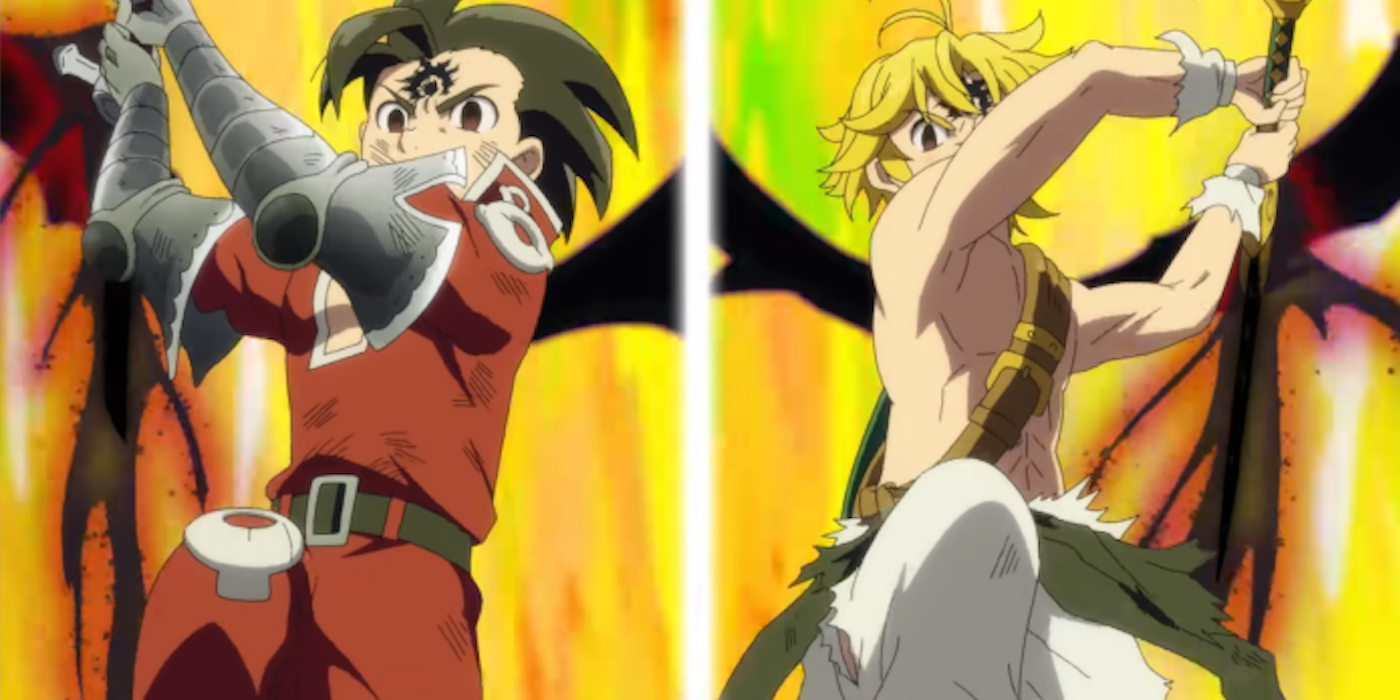
In this film, they are forced to work together. Seeing them combo their attacks—Full Counter and Ominous Nebula—is peak fanservice in the best way possible. It feels earned. There’s a specific scene where they’re just walking and talking, and you realize that for the first time in 3,000 years, they’re just... siblings. No curses. No father issues. Just two guys trying to save their wives and their world.
Is it Actually Canon?
This is the big question. Short answer: Yes.
Nakaba Suzuki, the original creator, wrote the story for the film. It bridges the gap between the end of Nanatsu no Taizai and the beginning of Four Knights of the Apocalypse. It explains why the age of gods ended and why humanity (and the mixed-race children like Tristan) became the focus of the next era.
If you skip this movie and jump straight into the sequel series, you’ll be fine, but you’ll miss the emotional transition. You’ll miss seeing how the world transitioned from a constant battlefield into the kingdom of Liones we see later. It’s the connective tissue.
Breaking Down the Supreme Deity
Let's get into the weeds of the villain. The Supreme Deity is basically a manifestation of "order" taken to a psychotic extreme. She doesn't hate the demons because they are evil; she hates the peace because it's "static."
- She views the Holy War as a necessary cycle.
- Her power, "Grace," is the polar opposite of the Demon King’s "Commandments."
- She considers Elizabeth a failure for choosing love over her divine lineage.
When the Sins finally face her, it’s a thematic conclusion. They aren't just fighting a god; they are fighting the very idea that their lives are predestined or controlled by higher powers. It’s the ultimate "humanity (and demons/fairies/giants) fuck yeah" moment.
What Most People Get Wrong About the Movie
A lot of critics complained that the movie felt rushed. And yeah, it’s about 80 minutes long. It moves at a breakneck pace. But I think people mistake "fast-paced" for "unimportant."
The movie isn't trying to be a deep philosophical treatise. It's a victory lap. It’s the celebration after the hard work is done. If you go into it expecting the complexity of the Golden Age arc from Berserk, you’re going to be disappointed. If you go into it wanting to see Ban be a cool dad and Meliodas finally smile without a hidden sadness in his eyes, it hits perfectly.
Practical Takeaways for Fans
If you're planning to watch or re-watch, keep these things in mind to get the most out of the experience:
Watch the Post-Credits
Don't turn it off the second the music starts. There are glimpses of the future that are essential for setting up the next generation of characters.
Pay Attention to the Background Characters
You see a lot of the minor Holy Knights and side characters getting their happy endings in the background. It’s subtle, but it shows the creator’s love for the wider cast.
Context is Key
Remember that this takes place after the "final" chapter but before the "epilogue" chapter of the manga. It fits into a very specific window of time.
Understand the "Cursed by Light" Title
The title refers to the irony that the "Light" (the Goddess Clan) was just as oppressive and cursed as the "Darkness" (the Demon Clan). It’s about breaking free from both extremes to find a middle ground—grey, human, and free.
The Seven Deadly Sins has always been a story about breaking cycles. Meliodas broke the cycle of his resurrection. Elizabeth broke the cycle of her reincarnation. In Seven Deadly Sins Cursed by Light, the entire world finally breaks the cycle of the Holy War. It’s not a perfect movie, but it’s a necessary one for anyone who spent years following the journey of the Sins. It’s the "happily ever after" that was bought with 3,000 years of blood and tears.
To fully wrap up your journey with this series, your next step should be to watch the two-part Seven Deadly Sins: Grudge of Edinburgh films on Netflix. These are CGI-based and follow Meliodas's son, Tristan, directly picking up the narrative threads established at the end of Cursed by Light. After that, you are officially ready to dive into the Four Knights of the Apocalypse anime or manga, which is the true ongoing future of the franchise.