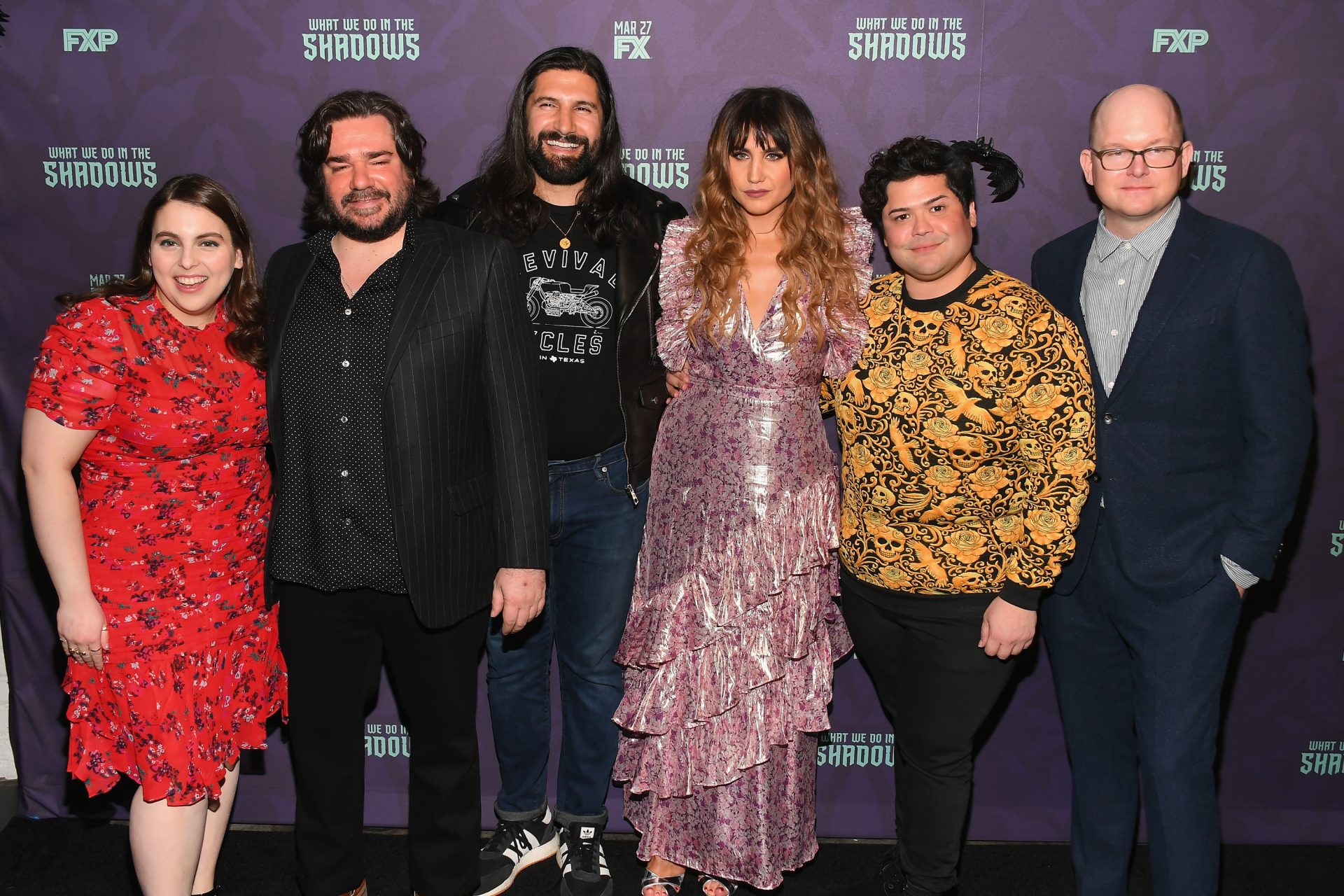
Let's be real: most people watching What We Do in the Shadows are there for Nandor’s relentless pining or Nadja’s chaotic screaming matches with her ghost doll. It makes sense. Those are the big, flashy elements that get the TikTok edits and the Emmy nominations. But if you’re looking for the character who actually holds the emotional weight of the "human" side of the show—the one who represents what happens when you get sucked into the vampire's orbit and actually manage to keep your soul—you have to talk about Shanice.
Played by the brilliant Jade Elle James, Shanice isn't just a background character. She’s a survivor.
She first pops up in the first season as a member of the Mosquito Collectors of the Tri-State Area. At first glance, you’d think she’s just another piece of cannon fodder for a show that thrives on killing off side characters in increasingly gruesome ways. But Shanice sticks. She lingers. She represents the grit that the vampires lack. While Laszlo is busy turning into a bat or obsessing over topiary, Shanice is actually out there doing the work.
The Reality of Shanice in What We Do in the Shadows
Most fans remember the "vampire hunter" arc as Guillermo’s big coming-out party. We see him struggle with his Van Helsing lineage. It’s dramatic and funny. But Shanice’s entry into this world is arguably more grounded. She’s part of that ragtag group of amateur hunters who meet in a secret basement. It's funny because it's so DIY. They aren't professional assassins with high-tech gear; they’re regular people who have realized something is deeply wrong in Staten Island.
Shanice is basically the voice of reason in a room full of people who are out of their depth. Think about it. When the group—led by the well-meaning but slightly incompetent Claude—tries to raid a vampire nest, it's total chaos. Shanice is the one who seems to actually understand the stakes. She isn't doing it for glory. She’s doing it because she’s seen what these monsters do.
There’s a specific vulnerability in her performance. Jade Elle James brings this "I've seen too much" energy to the role that balances the show's absurdity. Without characters like her, the vampires’ killings would just be a joke. With Shanice, you remember that these victims have friends. They have people who miss them. They have people who are willing to pick up a crossbow and fight back.
Why the Jenna Connection Matters
You can't talk about Shanice without talking about Jenna, played by Beanie Feldstein. Their friendship is one of the few genuine human bonds we see early on. When Jenna starts her transformation into a vampire, Shanice is the one left behind. It’s a classic horror trope flipped on its head.
Usually, the friend who gets turned is just "gone." But Shanice’s reaction to Jenna’s disappearance is what fuels her drive to join the Mosquito Collectors. It's personal. She doesn't just hate vampires because they're scary; she hates them because they stole her best friend.
Honestly, the show handles this with a surprising amount of heart. While the vampires are debating the logistics of a "Superb Owl" party, Shanice is grieving. This contrast is the secret sauce of What We Do in the Shadows. It’s a comedy, sure, but it works because the world feels lived-in. Shanice makes the world feel dangerous again.
Breaking Down the Mosquito Collectors Arc
The Mosquito Collectors are a parody of every "specialized task force" you’ve ever seen in a movie. They are essentially a group of hobbyists. But for Shanice, this isn't a hobby. It’s a mission.
One of the best moments involving the group is when they finally encounter the vampires. The power dynamic is hilarious. You have these ancient, powerful beings who are genuinely confused by a group of humans with silver-sprayed stakes.
- The Incompetence Factor: Most of the hunters are terrible at their jobs.
- The Shanice Factor: She’s the only one who doesn't seem like she's playing a game.
- The Guillermo Factor: His secret role as a bodyguard/vampire hunter makes the interaction with Shanice's group even more tense.
The show rarely gives us a perspective from the outside looking in. We spend 90% of our time inside the mansion. When we see the vampires through the eyes of Shanice, they aren't "lovable idiots." They are terrifying predators who live in a literal murder house. That shift in perspective is vital for the show's longevity. It keeps the stakes high. If the vampires are never in danger, the show loses its edge. Shanice and her crew provide that edge.
Whatever Happened to Shanice?
This is the question that plagues the subreddit. After the initial seasons, the hunter arc sort of faded into the background as Guillermo's personal journey took center stage.
Many fans feel like Shanice was a missed opportunity for a recurring rival. Imagine a world where Shanice becomes the "Blade" of Staten Island while the vampires are just trying to figure out how to pay their cable bill. The chemistry between Jade Elle James and the main cast was understated but effective.
There's a gritty realism to her character that would have been a great foil for the increasingly supernatural plots of the later seasons. While the show moved toward "The Guide" and the Vampire Council, Shanice represented the street-level reality of living next door to the undead.
The Impact of Jade Elle James’ Performance
We should talk about the acting for a second. In a show filled with over-the-top character actors like Matt Berry and Kayvan Novak, it’s easy to get drowned out.
Jade Elle James plays it straight.
That is incredibly hard to do in a mockumentary. If you play it too serious, you kill the vibe. If you play it too funny, the danger disappears. She hits that sweet spot of "convinced this is a life-or-death situation" which actually makes the comedy land harder. When she looks at the camera with a "is anyone else seeing this?" expression, she’s the audience’s avatar.
Her performance grounded the show during its formative years. She helped establish that the world of What We Do in the Shadows isn't just a cartoon. It's a place where actions have consequences.
Comparisons to Other Human Characters
If you compare Shanice to someone like Sean (the neighbor), the difference is stark. Sean is the "dumb human" who gets brain-scrambled constantly. He’s a victim of the vampires’ shenanigans.
Shanice is the opposite. She isn't a victim. She’s an adversary.
She represents the human spirit's refusal to be sheep. Even if her group is a bit of a mess, the fact that they exist at all is a testament to the idea that humans in this universe aren't just food. They are capable of fighting back. This makes the world-building much richer. It suggests a whole underground network of people who know the truth.
What We Can Learn From the Shanice Arc
The beauty of Shanice's character is that she reminds us that the "normal" people are often the most interesting ones in a supernatural story.
You don't need to be able to turn into a cloud of mist to be compelling. You just need a motivation. Shanice’s motivation was loyalty to her friend. That’s more relatable than anything Nandor has done in four centuries.
Her presence in the show served as a bridge. She connected the high-concept vampire tropes to the mundane reality of Staten Island. Whether she was scouting a house or mourning a lost friend, she felt real.
Practical Takeaways for Fans and Writers
If you're a fan of the show, go back and re-watch the Mosquito Collectors episodes. Look at the background. Look at the way Shanice reacts to the absurd things happening around her. It adds a whole new layer to the comedy.
For writers, Shanice is a masterclass in how to use "straight" characters in a high-concept comedy. She doesn't need jokes to be funny; her reactions to the madness provide the humor.
- Valuing the Outsider Perspective: Use characters like Shanice to show how the world perceives your protagonists.
- Emotional Weight: Don't be afraid to let a character be genuinely sad or angry, even in a comedy.
- The Power of Small Roles: A character doesn't need 40 minutes of screen time to leave a lasting impression.
Moving Forward With the Shadows Universe
As the show wraps up its run, looking back at characters like Shanice reminds us of how far the series has come. We've gone from local hunters to international vampire politics. But there's something special about those early days in Staten Island.
The struggle of a few humans trying to take down a house full of ancient vampires was the core of what made the show feel fresh. Shanice was the heart of that struggle. Even if we don't see her in the final episodes, her impact on the show's tone is undeniable. She proved that the humans in this world are just as tough—if not tougher—than the monsters.
If you're looking for more deep cuts from the show, keep an eye on how the "human" world reacts to the vampires in the final season. The legacy of characters like Shanice is everywhere. It’s in the way the town is shaped, the way the neighbors act, and the way Guillermo eventually finds his own path.
The reality of the situation is simple: the vampires might have the immortality, but the humans like Shanice have the drive. That's what makes the dynamic work. That's why we keep watching.
To truly appreciate the writing of the series, pay attention to the characters who don't get the big catchphrases. They are usually the ones doing the heavy lifting for the plot. Shanice is a prime example of this. She isn't a caricature; she's a person caught in an impossible situation, doing her best to make it right. That is a story worth telling, even in a show about people who sleep in dirt.
Next time you're scrolling through your favorite episodes, give the Mosquito Collectors arc another look. You’ll find that Shanice isn't just a side character—she’s the soul of the resistance in Staten Island.
Actionable Insight: If you're a content creator or writer, analyze how "The Straight Man" or "Straight Woman" archetype functions in mockumentaries. Characters like Shanice in What We Do in the Shadows or Jim in The Office serve as the anchor for the audience. Without them, the absurdity becomes untethered and eventually loses its impact. Study her scenes to see how silence and reaction shots can be more powerful than dialogue.