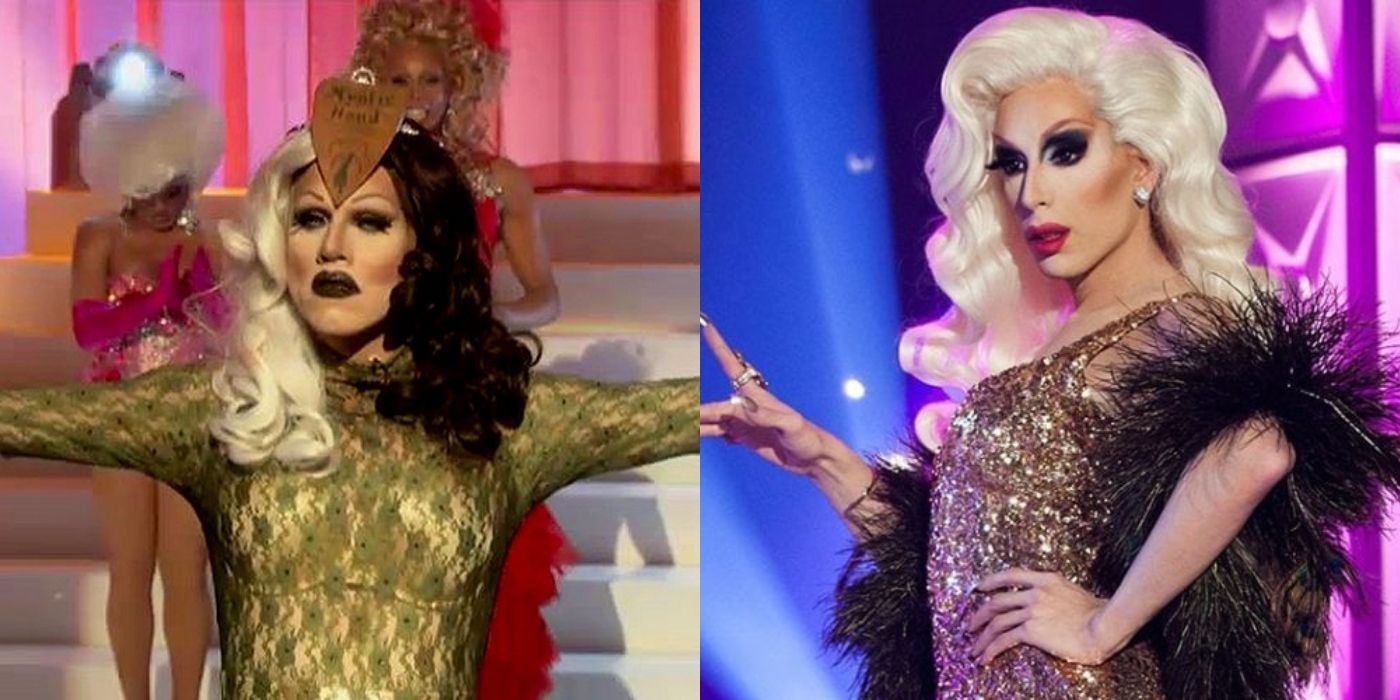
Winning a crown usually means you’re on top of the world. For Sharon Needles, it was just the start of a very messy, very public descent from grace. Honestly, if you watched Season 4 of RuPaul’s Drag Race back in 2012, you remember the "spooky" revolution. She didn't just win; she changed the entire DNA of the show.
Before her, drag on TV was mostly about being "fishy" or pageant-perfect. Then this punk from Pittsburgh walks in with a bleeding mouth and a hat from Party City. It was iconic.
But fast-forward to 2026, and the conversation around her has shifted from "trailblazer" to "cautionary tale." It’s complicated. It’s dark. And it’s definitely not the Hollywood ending fans expected when they watched her beat out Chad Michaels and Phi Phi O'Hara.
Why Sharon Needles Still Matters to Drag History
You can't talk about the evolution of Drag Race without mentioning the "Sharon effect." Basically, she proved that being a weirdo could be profitable. She was the first queen to win four maxi challenges in a single season—a record that stood for a long time.
Her aesthetic was a middle finger to the status quo. She drew from horror icons like Elvira and musicians like Marilyn Manson. People loved it because it felt authentic to the "outsider" experience.
After her win, she released PG-13 in 2013. That album actually did numbers, debuting at 186 on the Billboard 200. For a drag queen in the early 2010s, that was huge. She was even the face of a PETA campaign. Pittsburgh City Council even declared June 12, 2012, as "Sharon Needles Day."
She was the blueprint for the "alternative" queens we see now, like Yvie Oddly or Willow Pill. Without Sharon, the show might have stayed stuck in its pageant roots much longer.
The Controversies That Tainted the Crown
Here is where things get heavy. While she was winning fans, she was also losing them just as fast due to some pretty shocking behavior.
For years, rumors swirled about her use of racial slurs. It wasn't just rumors, though. Several of her Season 4 castmates, including Dida Ritz, have spoken out about her using the N-word on set. Apparently, production just laughed it off back then. Different times? Maybe. But for the queens of color on that stage, it was a toxic environment that was never addressed.
Then there was the imagery. Sharon often pushed "shock art" to the limit, sometimes wearing swastikas or performing in blackface. Her defense? She was a "social-commentary midnight clown." She argued that if you didn't like it, you could just look away.
But the biggest blow to her reputation came in 2020 and 2021.
A fan named Annecy, who was only 15 when they first started talking to Sharon online in 2013, came forward with some disturbing allegations. They claimed Sharon encouraged self-harm and was physically abusive during a Drag Race cruise. The Daily Beast did a massive exposé on this.
Sharon’s legal team denied everything, but the damage was done. Most of the "Drag Race" world essentially ghosted her.
A Quick Look at Her Career Milestones (The Highs and Lows)
- 2012: Wins Season 4 of RuPaul's Drag Race.
- 2013: Releases PG-13, featuring collaborations with RuPaul and Alaska.
- 2013: Ends high-profile relationship with Alaska Thunderfuck.
- 2015: Releases Taxidermy, solidifying her goth-pop sound.
- 2020: Major allegations of abuse surface on social media.
- 2022: Releases Absolute Zero, though with much less fanfare than previous work.
Life After the Spotlight
What's she doing now? It's a bit of a ghost town. While she still performs and releases music—like her 2022 album Absolute Zero—she’s no longer the "A-list" drag celebrity she used to be.
She lives in Pittsburgh. She’s been open about her struggles with alcohol and drugs over the years. Some fans on Reddit and other forums have pointed out that she seems "lost" or that the industry has rightfully moved on.
It’s a weird spot to be in. On one hand, you have a performer who genuinely innovated an art form. On the other, you have a person accused of some truly harmful things. The drag community is still divided on whether her impact justifies her presence, though the general consensus has leaned toward accountability.
What Most People Get Wrong About the Legacy
Many people think Sharon was just "cancelled" by a sensitive modern audience. That’s a bit of a simplification. The issues with Sharon weren't just about one bad joke; they were about a pattern of behavior that spanned over a decade.
If you’re looking to understand the full picture of RuPaul’s Drag Race Sharon Needles, you have to look at both the art and the artist. You can appreciate the "Post-Apocalyptic" runway look while also acknowledging that the person behind the makeup has a deeply troubled history.
How to Navigate Her Content Today
If you're a new fan catching up on old seasons, here’s how to approach the Sharon era:
- Watch Season 4 with Context: Recognize that the "shock" factor was celebrated in 2012 in a way that wouldn't fly today.
- Research the Allegations: Don't just take one side. Read the Daily Beast report and Sharon’s official responses to get the full scope.
- Support Alternative Drag: If you liked her aesthetic, check out queens like Pythia, Charity Kase, or Landon Cider (from Dragula). They carry the torch of "spooky" drag without the problematic baggage.
- Listen to Her Music Separately: If you can separate the art from the artist, her discography is actually quite influential for the "drag-pop" genre.
Honestly, Sharon’s story is a reminder that being a "rebel" doesn't give you a pass to be a bully. She broke the mold, but she might have broken too many people in the process.
To get a better sense of how the drag scene evolved after her, look into the careers of her Season 4 sisters like Latrice Royale and Willam, who managed to stay relevant by adapting to the times rather than fighting them.