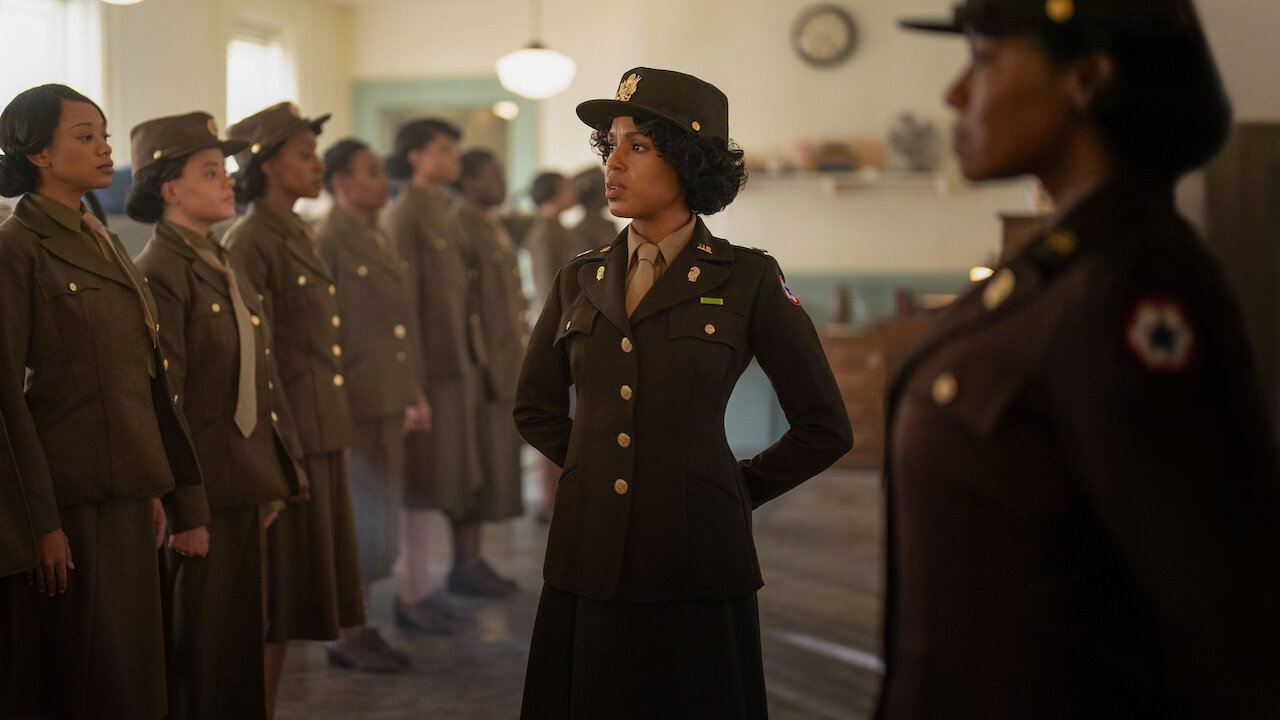
Honestly, history has a weird way of burying the most interesting people. You probably didn't grow up hearing about the 6888th Central Postal Directory Battalion in your high school history books. I didn't. But Tyler Perry’s six triple eight Netflix film changes that dynamic completely. It isn't just another war movie. It’s a story about 855 Black women who went to Europe during World War II not to carry rifles, but to fix a broken communication system that was literally destroying soldier morale.
They had a simple, brutal motto: "No mail, low morale."
Think about that for a second. Imagine being thousands of miles from home, stuck in a muddy trench, and not hearing from your mom or your wife for two years. That was the reality for millions of Americans. The backlog was insane. We’re talking about warehouses filled to the ceiling with undelivered letters. Some were addressed to "Junior, US Army." Good luck finding that guy. The six triple eight Netflix project highlights how these women organized that chaos in record time, all while dealing with the stinging reality of Jim Crow-era segregation from their own side.
The Real Story Behind Six Triple Eight Netflix
The movie stars Kerry Washington as Major Charity Adams. She was a powerhouse. Real talk—she was the first Black woman to be a commissioned officer in the Women’s Army Corps. When you watch her on screen, you're seeing a portrayal of a woman who had to be twice as good as her white counterparts just to be treated with a shred of basic dignity.
The situation in Birmingham, England, was a total mess.
When the battalion arrived in 1945, they found unheated, rat-infested warehouses. The windows were blacked out so the Nazis wouldn't see the light during air raids. They worked in three shifts, 24 hours a day, seven days a week. It was freezing. They wore layers of long johns and coats just to keep their fingers from going numb while sorting through millions of pieces of mail. They were given six months to clear the backlog.
They did it in three.
Why the "Six Triple Eight" Name?
It sounds like a code. It basically was. The 6888th was the only all-Black, all-female battalion sent overseas during the war. They weren't just "postal workers." They were logistics experts. They had to track down soldiers who were constantly moving across the front lines. They had to deal with mail addressed to people who were already dead, which is a level of emotional labor most of us can’t even wrap our heads around.
The six triple eight Netflix adaptation doesn't shy away from the fact that while they were saving the Army's communication lines, they weren't allowed in the same social clubs as white WACs. They had to build their own hair salons and their own kitchens because the local facilities were often off-limits or just plain hostile.
Tyler Perry’s Pivot to Serious Drama
People have a lot of opinions about Tyler Perry. Usually, you think of him and you think of Madea or high-octane soap operas. But with six triple eight Netflix, he’s clearly swinging for something more prestigious. He spent years researching this. He actually met with some of the surviving members of the battalion before they passed away.
That matters.
The film feels different than his usual work. It’s more grounded. It’s got a massive ensemble cast including Oprah Winfrey and Susan Sarandon. But the heart of the movie is Kerry Washington’s performance. She captures that rigid, military discipline that Charity Adams used as a shield against the racism of the era. There's a famous story—which the movie depicts—where a white general threatened to send a "white colonel" to show her how to run her unit.
Her response? "Over my dead body, sir."
She didn't blink. That’s the kind of energy the six triple eight Netflix film brings to the forefront. It’s about the fight for respect within a system that was designed to deny it to you.
Accuracy vs. Hollywood Flair
Look, every movie takes liberties. It's how movies work. But the core beats of the six triple eight Netflix story are surprisingly accurate to the historical record. The battalion really did have to process 65 million pieces of mail. They really did face a massive investigation from the Red Cross because they refused to use segregated facilities.
One thing people often get wrong is thinking these women were just "secretaries."
Nope.
They were trained for overseas combat zones. They went through gas mask drills. They did long marches with heavy packs. They were soldiers. The film does a decent job showing that they weren't just sitting at desks; they were operating a massive industrial engine in a war zone.
The Long Road to Recognition
It’s kind of depressing how long it took for these women to get their flowers. For decades, the 6888th was a footnote. It wasn't until 2022 that President Biden signed the "Six Triple Eight" Congressional Gold Medal Act. By then, only a handful of the original 855 women were still alive to see it.
The six triple eight Netflix movie is part of this larger cultural "correction." We're finally seeing stories that aren't just about the guys on the beaches of Normandy. We’re seeing the people who made sure those guys knew what they were fighting for.
What to Look Out For While Watching
If you’re planning to stream it, pay attention to the production design. The warehouses look claustrophobic for a reason. They were. Also, listen to the soundtrack. It’s got that 1940s swing, but there’s an underlying tension that mirrors the internal struggle of the characters.
- Charity Adams’ Leadership: Watch how she manages the internal politics of the group. It’s a masterclass in leadership under pressure.
- The Mail Itself: The sheer volume of paper is staggering. It gives you a sense of the scale of the task.
- The Interaction with Locals: The British public was often more welcoming to the Black WACs than their own American commanders were, which is a historical nuance the film captures well.
The six triple eight Netflix release is also significant because it marks a shift in how we consume "Black history" on screen. It’s not just about trauma; it’s about competence. These women weren't victims; they were the solution to a problem the Army couldn't solve without them.
Practical Takeaways from the 6888th
If you're looking for some inspiration or just a reason to care, here’s what we can actually learn from the 6888th.
Efficiency is a weapon. The battalion proved that specialized units with a clear mission can outperform massive, disorganized bureaucracies. They cut a six-month backlog in half. That’s a lesson in focus.
Resilience is quiet. You don’t always have to be shouting to be revolutionary. Sometimes, just doing your job perfectly in a system that expects you to fail is the loudest protest you can make.
Check your history sources. If you enjoyed the six triple eight Netflix movie, go read One Woman's Army by Charity Adams Earley. It’s her memoir. It’s even more gritty and detailed than the movie. It’s important to see the real words of the woman who lived it.
The movie is a great entry point, but the real history is where the real depth lies. Don't just watch the film and think you know the whole story. Use it as a jumping-off point to look into the Women’s Army Corps and the massive role Black women played in winning the war. They earned that Congressional Gold Medal every single day they were in those freezing warehouses.
For your next steps, start by looking up the 6888th monument at Fort Leavenworth. It was dedicated in 2018 and lists the names of every woman in the battalion. If you have family members who served in WWII, ask if they ever heard of the "Postal Battalion." You might be surprised by the stories that come out when you start digging into the actual logistics of the 1940s.
Stream the film, but keep the tab open for the real history. It’s worth the deep dive.