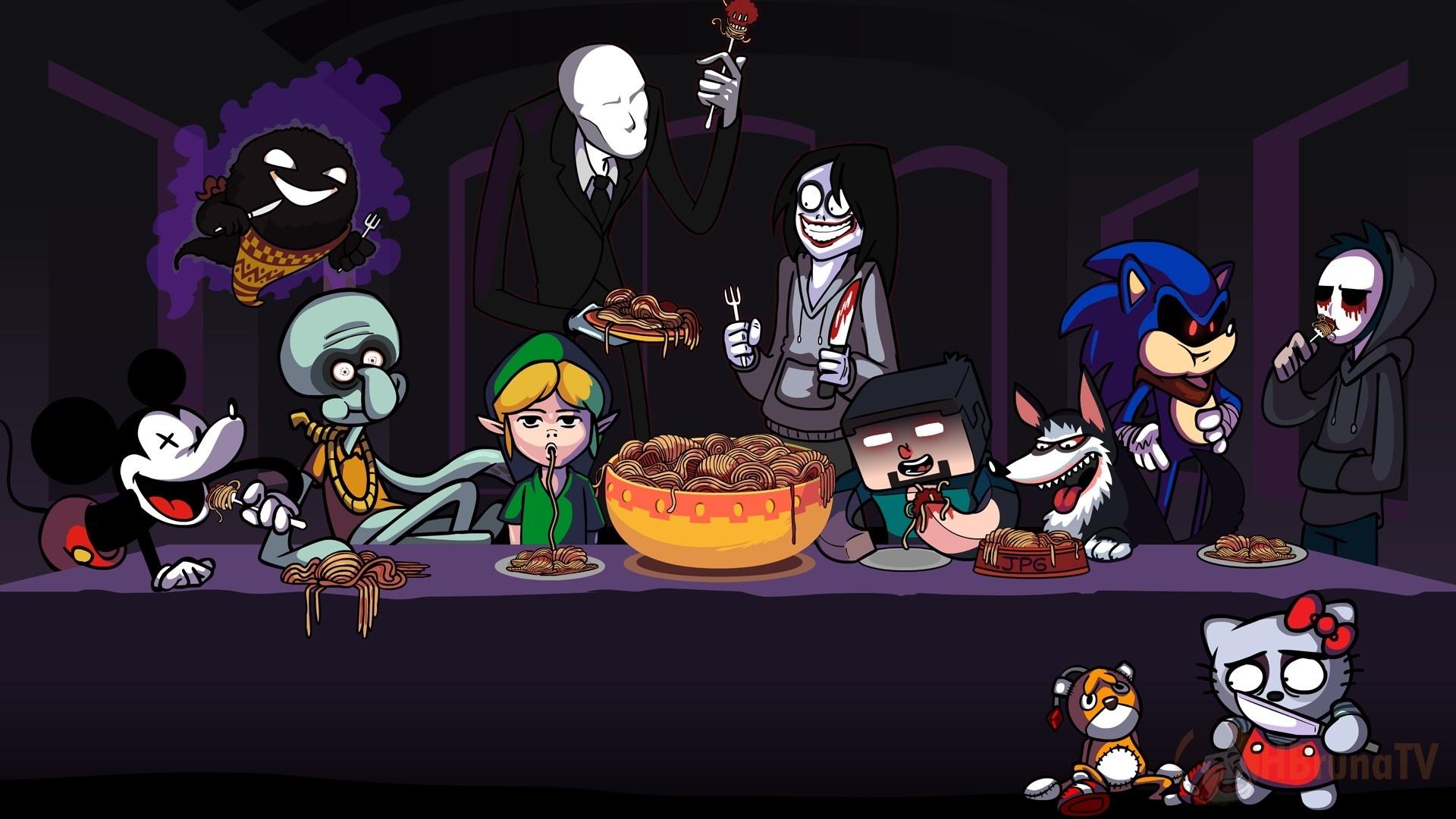
You’ve probably seen the image late at night while scrolling through some dusty corner of Reddit or a 2010-era creepypasta forum. It’s a grainy, red-tinted photo of a Siberian Husky. But the dog isn’t just sitting there. It’s grinning with a row of disturbingly human-looking teeth, and there’s a pale, bloody hand reaching into the frame from the side. This is Smile Dog, or Smile.jpg, and it is arguably one of the most persistent urban legends the internet has ever birthed.
It feels real. That’s the problem.
The story usually goes like this: there’s a file out there called smile.jpg. If you see the "true" version of the image, you lose your mind. You start seeing the dog in your dreams. It demands that you "spread the word"—basically, you have to send the image to someone else, or the dog will eventually manifest in your room and kill you. It’s a digital chain letter with a body count. But where did this actually come from, and why, nearly two decades after it first appeared, are people still genuinely creeped out by a poorly photoshopped dog?
The Origin Story Nobody Can Quite Pin Down
Most people assume Smile Dog started on 4chan’s /x/ board around 2008. That’s a fair guess, but the roots actually go back a bit further into the early 2000s Usenet groups and proto-forums. Unlike Slender Man, which has a very clear "birth certificate" (created by Eric Knudsen on the Something Awful forums in 2009), Smile Dog is a bit more of a ghost. It belongs to the "crepless" era of the web.
The lore is centered on a fictional writer who visits a woman named Mary E. in 2007. Mary is a shut-in who allegedly saw the image and became obsessed. The narrator describes the image in a way that’s almost more frightening than the picture itself. He talks about the "unnaturalness" of the teeth.
Honestly, the writing in the original creepypasta is better than most. It doesn't rely on jump scares. It relies on the idea of an "infohazard"—a piece of information or an image that can actually hurt you just by knowing it exists.
Why the Image Works (The Uncanny Valley)
There is a psychological reason why Smile Dog sticks in your brain. It’s the Uncanny Valley. This is a concept often discussed in robotics and CGI, but it applies perfectly to horror. When something looks almost human, but not quite, our brains trigger a "danger" response.
A dog with a human smile is a biological impossibility.
When you look at the most famous version of the image—the one with the red saturation—your brain tries to map the human teeth onto the canine snout. It fails. This creates a cognitive dissonance that translates to physical unease. It’s the same reason people are afraid of clowns or wax figures. The "Smile Dog" phenomenon tapped into this long before "Analog Horror" became a popular genre on YouTube.
Separating the Real Image from the Hoax
Let’s be clear: there is no "original" file that causes insanity.
The image most people associate with the story is actually a second-generation version. The first version was a much clearer, less "hellish" looking dog that was clearly a photo of a Husky with a polar bear's mouth or human dentures edited in. Over time, the internet did what it does best: it deep-fried the image.
The version that went viral—the one with the heavy red tint and the skeletal hand—is a masterpiece of "lo-fi" horror. The graininess hides the Photoshop mistakes. It makes it look like a "found" photo, something taken on a cheap disposable camera in 1994.
The Legend of the "True" Smile.jpg
There is a recurring rumor that the images we see on Google are all "fakes" and the real smile.jpg is still out there, hidden on a hard drive or the dark web. This is a classic creepypasta trope. It’s a way to keep the legend alive even after the mystery has been debunked.
If the image you see doesn't make you go crazy, then it must not be the real one, right?
It’s a perfect self-sustaining logic. Researchers like those at the Know Your Meme database have tracked the image’s evolution, and the truth is that the "true" image is likely just a specific edit of a stock photo of a Husky. But the internet loves a mystery. We want to believe there’s a cursed file out there because it makes the world feel a little more Victorian-ghost-story and a little less Silicon-Valley-corporate.
Smile Dog’s Legacy in Modern Internet Culture
Smile Dog basically paved the way for everything we see now in the world of internet horror. Without it, we might not have the SCP Foundation or "The Backrooms." It established the idea of "viral" horror—quite literally.
- The Chain Letter Element: It modernized the old "send this to 10 people or you'll die" trope for the digital age.
- The Infohazard Concept: It popularized the idea that an image can be "cursed" or "toxic" to the viewer's mental health.
- Visual Minimalism: It showed that a single, striking image is worth more than 10,000 words of backstory.
You can see the influence of Smile Dog in modern "Analog Horror" series like The Mandela Catalogue. Those series use the same distorted facial features and grainy textures to evoke that same primal fear.
What Most People Get Wrong About the Story
The biggest misconception is that the story is just about a scary picture.
If you actually read the original text, it’s a story about guilt. The narrator eventually receives the image. He starts having the dreams. He realizes that the only way to save himself is to "spread the word"—to ruin someone else’s life by passing the curse along.
It’s a metaphor for how we handle trauma or bad news. Do we keep it to ourselves and suffer, or do we pass the burden to someone else? That’s the real "horror" of Smile Dog. It’s not the teeth; it’s the choice you have to make.
How to Engage with Creepypastas Safely
Look, I know it’s all fiction. You know it’s all fiction. But the human brain is a funny thing. If you spend three hours reading about Smile Dog at 3:00 AM, you’re probably going to feel a little jumpy when your own dog starts staring at you from the hallway.
The best way to enjoy this stuff is to treat it like a digital campfire story.
Don't go looking for "cursed" files on the deep web—mostly because you'll just end up with a virus on your laptop, not a ghost in your room. If you find yourself getting actually anxious about these stories, take a break. The internet is built to keep you scrolling, and horror content is specifically designed to trigger your "fight or flight" response.
Actionable Steps for Horror Fans
If you're fascinated by the Smile Dog lore and want to explore more, here is how to dive deeper without losing your mind:
- Check out the "Smile Dog" entry on the Creepypasta Wiki. It’s the definitive version of the text and includes many of the community-written sequels and spin-offs.
- Look into the "Uncanny Valley" effect. Understanding why something is scary can often take the power away from it. When you realize it's just your brain misidentifying a biological signal, the dog looks more like a bad art project and less like a demon.
- Explore the "Lost Media" community. A lot of people treat the "original" Smile Dog image as a piece of lost media. Subreddits like r/lostmedia often have fascinating discussions about the real-world origins of these photos.
- Practice digital hygiene. If an image or story is genuinely messing with your sleep, use a site blocker or just stay off those specific forums for a few days. Your brain needs time to "reset" from the adrenaline.
Smile Dog is a relic of a different internet. It’s a reminder of a time when the web felt like a vast, unexplored wilderness where you could actually stumble across something dangerous. Even if the "curse" isn't real, the impact the story had on horror culture is undeniable.
Next time you see that red-tinted Husky, just remember: it's just a bunch of pixels and a really clever bit of writing. Probably.