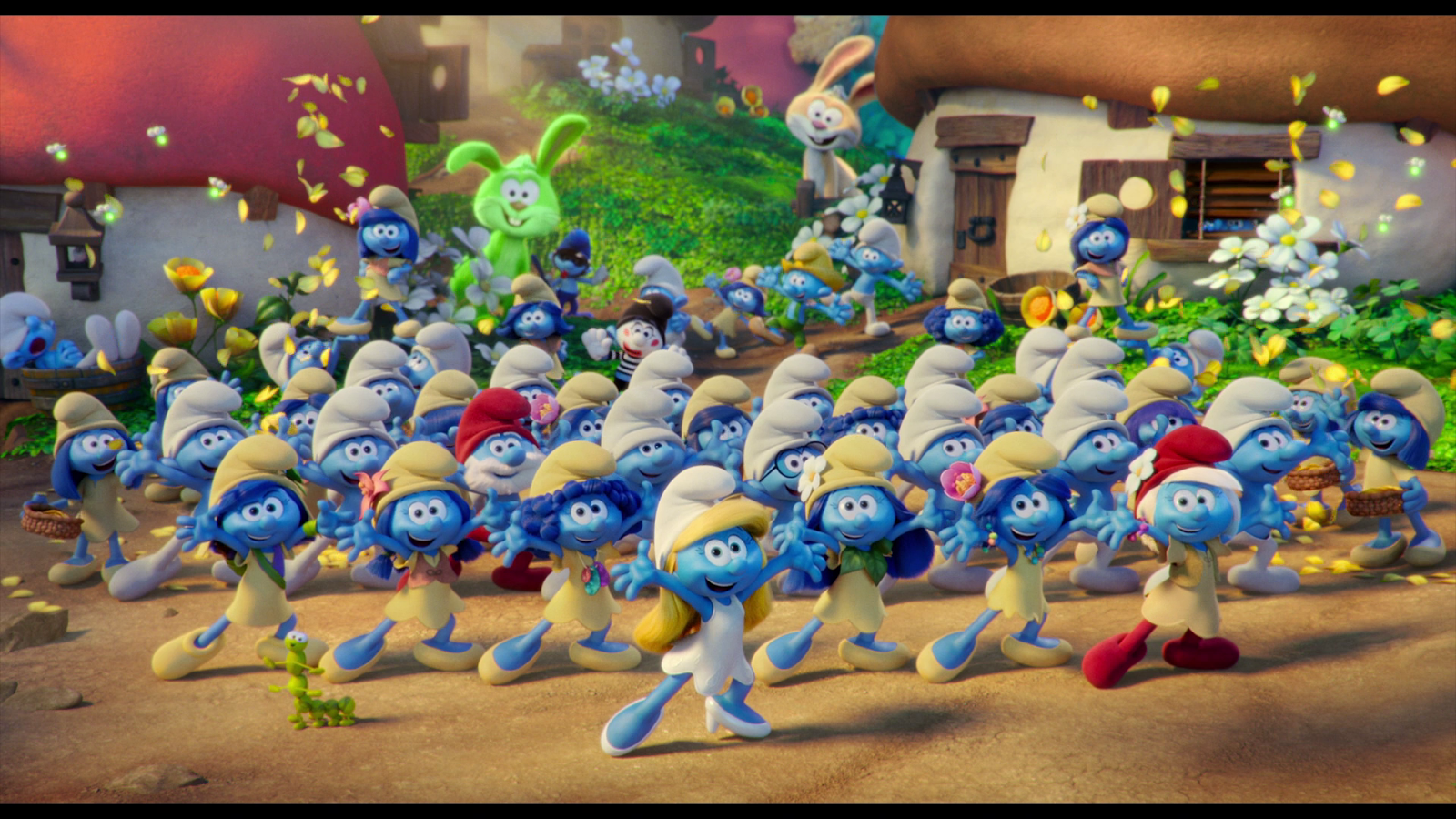
Smurfette was always the odd one out. For decades, we just accepted that she was the "girl Smurf," a creation of Gargamel designed to sow discord in an otherwise all-male utopia. But the Smurfs Lost Village ending finally stops treating her like a side character in her own life. It flips the script. Honestly, if you grew up watching the 80s cartoon, the finale of this 2017 Sony Pictures Animation film might feel like a massive relief or a total shock.
It’s not just about finding a new village. It’s about identity.
Most people think the movie is just a colorful road trip through the Forbidden Forest. They're wrong. The stakes get surprisingly heavy once Smurfette, Hefty, Brainy, and Clumsy cross the wall. They find the Smurfy Grove, a village of female Smurfs led by Smurfwillow (voiced by Julia Roberts). But the real meat of the story happens when Gargamel catches up.
What Really Happens During the Smurfs Lost Village Ending
The climax kicks off when Gargamel invades the Grove. He uses a "freeze ball" to capture all the Smurfs. It's a classic villain move, but the twist lies in Smurfette's choice. Since she wasn't born a "natural" Smurf—remember, she was made from a lump of blue clay and a bunch of dark magic—she realizes she can do something the others can't.
She tricks Gargamel.
She pretends to turn back to his side. She absorbs his magical energy. In a massive burst of light, she releases a blast that sends Gargamel and his cat Azrael flying back to their swamp. But there’s a cost. Because she used up all her life force or "Smurf-ness" to save her friends, she turns back into a lifeless lump of blue clay.
It’s a genuinely sad moment. The movie slows down. You see Papa Smurf and Smurfwillow mourning over a literal pile of mud. The other Smurfs circle around, and their collective grief and love eventually spark a magical reaction. Smurfette comes back to life, but this time, she isn't just a creation of Gargamel. She’s a "real" Smurf because she chose to be one.
Why Smurfette Turning Back to Clay Matters
The clay scene is the most important part of the Smurfs Lost Village ending because it addresses the "Smurfette Principle." This is a term coined by Katha Pollitt back in 1991. It describes how media often features a group of male characters and exactly one female character, defined only by her gender.
By turning her back into clay and then having her "reborn," the filmmakers essentially rebooted her origin story. She is no longer a tool of the patriarchy (or a wizard's experiment). She’s a self-made hero. It’s a bit metaphorical, sure, but for kids watching, it conveys a message about self-determination. You aren't defined by where you came from, but by what you do.
The Cultural Impact of the Two Villages
The film ends with the two villages—the original Smurf Village and Smurfy Grove—merging their cultures. It’s a huge shift for the franchise.
For fifty years, the Smurfs were a boys' club. Suddenly, there’s an entire civilization of female Smurfs who are warriors, scouts, and leaders. This wasn't just a random plot point. Director Kelly Asbury mentioned in various interviews during the press tour that they wanted to expand the world beyond the narrow confines of the Belgian comics created by Peyo.
The ending establishes a new status quo:
- Smurfette is now the bridge between two worlds.
- The "Forbidden Forest" is no longer forbidden; it's a shared territory.
- Gargamel is defeated, but as always, he's left stewing in his own incompetence.
Was the Ending Too Dark?
Some parents at the time thought the "death" of Smurfette was a bit much for a PG movie. Seeing a beloved character dissolve into a pile of dirt can be jarring. However, animation has a long history of this—think The Iron Giant or Big Hero 6. The "sacrifice and resurrection" trope is a staple because it works. It forces the audience to value the character's existence.
The technical execution of this scene was handled by Sony’s VFX team to look "magical" rather than "biological." It wasn't gory. It was ethereal. The blue sparkles and the soft lighting helped soften the blow before the inevitable happy ending.
Beyond the Screen: What This Means for the Franchise
The Smurfs Lost Village ending basically wiped the slate clean. It moved away from the live-action/CGI hybrid disasters of the early 2010s and returned to a fully animated look that mimicked Peyo's original art style.
Actually, the shift was necessary. The 2011 and 2013 movies felt like generic New York comedies. Lost Village felt like a Smurf story. By the time the credits roll, the world is much larger. We see a montage of the male and female Smurfs teaching each other skills. The girls show the boys how to use dragonflies for transport, and the boys share their inventions.
It’s a functional society. No more "one girl" rule.
Moving Forward With the Smurfs
If you're looking to dive deeper into the lore after seeing how Smurfette found her place, there are a few things you can do to see how this ending changed the brand's trajectory.
First, check out the Smurfs TV series that debuted on Nickelodeon in 2021. It carries the torch from Lost Village. It keeps the female characters like Smurfstorm and Smurfblossom as series regulars. The dynamic is much more balanced now.
Second, compare this ending to the original comic "The Smurfette." In the 1960s comic, Smurfette actually leaves the village at the end because her presence causes too much jealousy among the men. The 2017 ending is a direct response to that outdated narrative. It says she stays because she belongs.
Lastly, pay attention to the upcoming Smurfs movie projects currently in development (including the one featuring Rihanna). The "Lost Village" template is clearly the blueprint. They aren't going back to the single-gender village ever again. The ending of the 2017 film was a permanent evolution of the brand.
If you're revisiting the movie, look closely at the color palette in the final scene. The blending of the classic Smurf blue with the vibrant, neon colors of the Grove represents the "new" Smurf world. It's a world that is inclusive, expansive, and honestly, way more interesting than the one we had in the 80s.