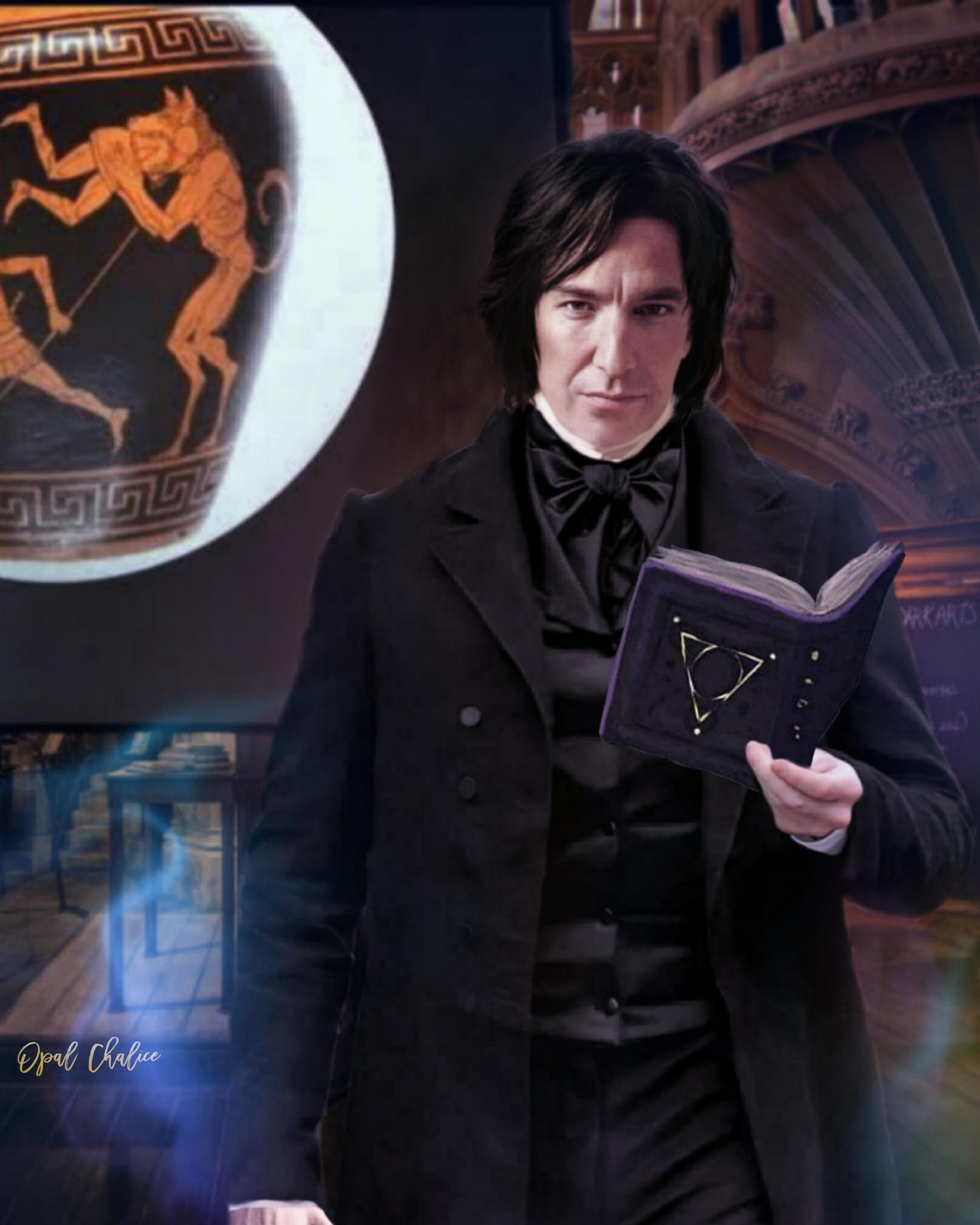
You can hear it. Right now. That low, drawling baritone, dripping with enough condescension to wilt a Mandrake. "Turn to page 394." It’s probably the most quoted line in the entire Harry Potter franchise, yet it’s a line that technically doesn’t exist in the way we remember it.
Honestly, if you go back to the books, you’re in for a bit of a shock. Most fans treat this scene as a holy relic of Severus Snape's sassiness, but the reality of how it became a cultural phenomenon is way more interesting than just a grumpy teacher giving a reading assignment. It’s a mix of Alan Rickman’s sheer brilliance, a very specific movie change, and a fandom that turned a page number into a secret handshake.
The Secret History of Snape Turn to Page 394
In the film Harry Potter and the Prisoner of Azkaban, the scene is iconic. Snape storms into the Defense Against the Dark Arts classroom, slams the shutters closed with his wand, and takes over for an "indisposed" Professor Lupin. He wants the class to study werewolves. Why? Because he’s a petty, brilliant jerk who wants the students to figure out Lupin’s secret.
But here’s the kicker: in the book, the dialogue is actually different. In J.K. Rowling's original text, Snape tells them to turn to page 394 on page 171 of the UK edition. Wait, let me rephrase that. He does say the number, but the legendary delivery—the "three-nine-ty-four" cadence—is entirely a creation of the late, great Alan Rickman.
Rickman had this way of stretching vowels until they snapped. He took a mundane instructional sentence and turned it into a threat.
The movie version also adds a level of visual flair that the book couldn't quite capture. Remember the slide projector? That rhythmic clack-clack-clack as the images of werewolves flash on the screen? It created a sensory experience that burned the number 394 into the brains of a generation.
Does the Page Number Actually Mean Anything?
Potterheads love a good conspiracy. For years, people have scoured every edition of the books to see what actually happens on page 394. If you look at the US hardcover of Prisoner of Azkaban, page 394 isn't about werewolves at all. It’s actually near the end of the book, during the scene where Harry and Hermione are using the Time-Turner.
Some fans think J.K. Rowling chose the number 394 as a hidden Easter egg. The theory goes that across the various books, page 394 often features a moment of "unrequited love" or a "shattered relationship."
- In Deathly Hallows, page 394 (US version) deals with the Hallows symbol in Dumbledore’s letter to Grindelwald.
- In Half-Blood Prince, it’s often near the reveal of the Prince’s identity.
Is it a deliberate pattern? Kinda doubtful. Page numbers shift wildly between hardcovers, paperbacks, and international translations. What's page 394 in a New York printing is page 280 in a London one. Most likely, the scriptwriter Steve Kloves just picked a high number that sounded "late in the textbook," and Rickman did the rest of the heavy lifting.
Why This Specific Quote Went Viral
You've probably seen the memes. It’s the ultimate "if you know, you know" for the wizarding world. But why this line? Why not "Always" or "Turn to page 10"?
It’s about the power of the substitute teacher energy. Everyone has had that one teacher who walks in, ignores the lesson plan, and demands you do something incredibly difficult just because they’re in a bad mood. Snape is the patron saint of academic spite.
When Rickman passed away in 2016, snape turn to page 394 became a digital memorial. Fans started a "Page 394 Challenge" where they would pick up whatever book they were currently reading, turn to that page, and share a quote in his honor. It transformed from a snide remark into a badge of remembrance.
The Technical Brilliance of the Scene
Director Alfonso Cuarón brought a much darker, more tactile feel to the third movie. Look at the way Snape moves in this scene. He doesn't just walk; he glides like a giant bat. The cinematography uses deep shadows and sharp transitions.
When Snape magically flips Ron Weasley's book pages, it's a small flex of power. It tells the audience that Snape isn't just a teacher; he’s an apex predator in a cardigan. The "werewolves" reveal is handled with such delicious malice that you almost forget he's technically endangering a colleague's job.
Breaking Down the Werewolf Lesson
Snape’s motivation here is purely "malicious compliance." He can't outright say "Lupin is a werewolf" because of Dumbledore’s orders. So, he assigns a massive essay on how to recognize werewolves. He’s basically handing the students a magnifying glass and pointing it directly at Lupin’s chest.
Hermione, being Hermione, immediately clocks what's happening. She tries to point out they haven't even finished "Red Caps and Hinky-punks." Snape shuts her down with the "insufferable know-it-all" comment, which—interestingly—Ron actually agrees with in the movie ("He's got a point, you know"), whereas in the book, Ron defends her.
This change makes the movie version of the scene feel more like a comedy of errors and less like a targeted bullying session. It’s why we find it so quotable. It’s mean, sure, but it’s theatrical mean.
Actionable Insights for Fans and Collectors
If you're looking to dive deeper into the lore of this specific moment, here is what you should actually do:
- Check your editions: Grab every copy of the Harry Potter books you own. Turn to page 394 in each. You’ll find that the "werewolf" chapter almost never aligns with that page number in the real world. It’s a movie-logic quirk that has rewritten our collective memory.
- Watch the "Rickman Pause": Go back and watch the scene on 0.5x speed. Notice how he waits exactly the right amount of time before saying "four." That’s master-class acting. He wasn't just saying a number; he was controlling the room's oxygen.
- The script vs. the screen: If you can find a copy of the Prisoner of Azkaban screenplay, notice how little direction is given for that line. The "iconic" status was built in the editing room and on the set, not necessarily on the writer's desk.
The next time someone tells you to snape turn to page 394, remember that you’re participating in one of the most successful bits of accidental branding in cinema history. It’s a testament to how a single actor can take five words and turn them into a permanent part of the cultural lexicon.
To really appreciate the depth of the character, try reading the "Snape's Grudge" chapter in the book right after watching the movie scene. The contrast between the two versions reveals a lot about how the films softened Snape's sharper edges to make him the tragic hero we eventually came to love.