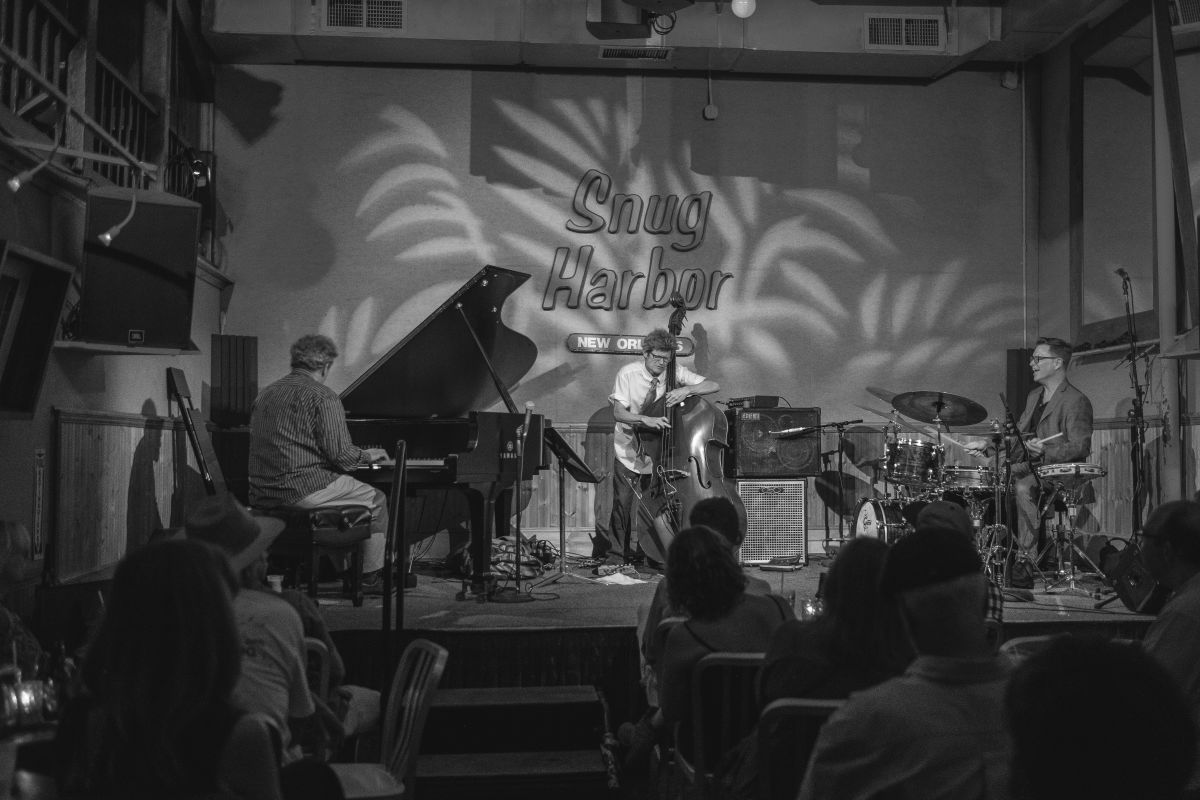
If you walk down Frenchman Street on a Tuesday night, the air smells like a mix of humidity, stale beer, and the kind of fried catfish that makes you forget your diet. It's loud. Brass bands are busking on the corners, tourists are holding plastic cups of lukewarm pilsner, and the neon lights of the Marigny are reflecting off the rain-slicked pavement. But if you want to actually hear the music—the kind of jazz that sticks to your ribs—you head to 626 Frenchmen Street.
Snug Harbor Jazz Bistro New Orleans isn't some flashy, new-money club designed for Instagram. Honestly, it’s a bit of a relic, and that is exactly why it’s essential.
New Orleans is a city of ghosts and legends, but Snug Harbor is very much alive. It’s been sitting there in a renovated 1800s storefront for decades. While Bourbon Street slowly turned into a theme park for bachelorette parties, Snug Harbor stayed the course. It’s the premier room in the city. If a Marsalis is in town, they’re probably playing here. If a local legend like Charmaine Neville or James Andrews is looking to stretch out, this is the stage they choose.
It’s small. Intimate. Some people might even call it cramped. But when the lights go down and the first chord hits, the room shrinks until there is nothing left but the vibration of the upright bass.
The Layout Most People Get Wrong
People walk into Snug Harbor and expect a massive concert hall. They’re usually surprised. It’s actually three distinct spaces mashed together into one experience. You’ve got the bar, the dining room, and the music room.
The bar is where the locals hang out. It’s dark, wood-heavy, and feels like a place where you could successfully hide from a debt collector. Then there’s the dining room. Look, people come for the music, but they stay for the Monaco Burger. It’s basically a rite of passage. It’s a burger topped with ham and cheese, and for some reason, eating it while waiting for a 10:00 PM set feels like the most "New Orleans" thing you can do.
The music room—the "Great Room"—is the holy of holies.
It’s a two-level listening room. This isn't a "chat over your drinks" kind of place. If you start talking loudly during a solo, the regulars will give you a look that could melt steel. It’s about the respect. The acoustics are tight. Because the room is small, every seat is basically a front-row seat. You can see the sweat on the drummer's forehead. You can hear the click of the saxophone keys.
Why the Music Here Hits Differently
We have to talk about the programming. George Brumat, who founded the place, had a vision that wasn't about "tourist jazz." He wanted a space for the heavy hitters.
When you look at the calendar for Snug Harbor Jazz Bistro New Orleans, you’ll see names that defined the genre. For years, the late Ellis Marsalis—the patriarch of the most famous family in jazz—had a residency here. It was his home base. Every Friday night, you could walk in and see a literal architect of modern jazz playing just a few feet away from you.
That legacy hasn't faded.
The club focuses on modern jazz, blues, and R&B, but it leans heavily into the "listening room" vibe. You aren't going to hear "When the Saints Go Marching In" for the tenth time today. Instead, you’re going to hear complex improvisations, experimental structures, and the kind of technical proficiency that makes other musicians feel like they should have practiced more.
The Real Cost of a Night Out
Let’s be real about the price. This isn't a $5 cover charge spot.
Tickets usually run between $25 and $40, depending on who is playing. For a city where you can hear world-class music for free on the street, that might seem steep. But you aren't paying for background noise. You’re paying for a seated, focused performance.
- Showtimes: Usually 8:00 PM and 10:00 PM.
- Reservations: Absolutely necessary. If you show up at the door hoping for a seat on a weekend, you’re probably going to end up standing at the bar watching a closed-circuit TV of the stage.
- The Vibe: Dressy-casual. You’ll see guys in suits and college kids in t-shirts. Nobody cares as long as you’re quiet during the set.
Navigating Frenchmen Street
Frenchmen Street has changed. Ten years ago, it was the "secret" alternative to Bourbon Street. Now, it’s the main event.
Snug Harbor sits at the gateway of this madness. It acts as a sort of anchor. While the street outside gets rowdier, Snug Harbor remains a bastion of professional, high-level performance. If you’re planning a night here, give yourself time. Parking in the Marigny is a nightmare—honestly, just take a rideshare or walk from the French Quarter.
One thing people overlook is the food. Most jazz clubs serve "club food," which is usually a code word for "thawed out in a microwave." Snug Harbor is actually a bistro. The Creole-inspired menu is legit. If you aren't feeling the burger, the fried green tomatoes or the stuffed baked potatoes are solid choices. Eating dinner in the dining room before your ticketed show time is the smartest way to do it. It guarantees you’re already inside the building when the crowd starts swarming the entrance.
Common Misconceptions About the Club
People often think Snug Harbor is "stuffy."
I get why. The "no talking" rule can feel a bit intense if you’re used to the rowdy bars down the street. But it’s not about being elitist. It’s about the fact that jazz is a conversation between the musicians. If you’re talking about your flight home, you’re interrupting that conversation.
Another myth is that it’s only for "hardcore" jazz fans. You don't need a music theory degree to enjoy a night at Snug Harbor Jazz Bistro New Orleans. You just need to like soul. You just need to be willing to sit still and let the sound wash over you. There is something deeply therapeutic about being in a room where everyone is focused on one thing.
The Technical Side of the Sound
If you’re a gear head or an audiophile, you’ll appreciate the setup. The room is designed with tiered seating. This means even if you're in the back, your line of sight isn't blocked by the person in front of you.
The soundboard is tucked away, and the engineers there are some of the best in the city. They know how to balance a room that small so the brass doesn't blow your eardrums out but the bass doesn't get lost in the mud. It’s a delicate balance.
Waitstaff are ninjas. They’ve mastered the art of delivering a drink in total silence. It’s impressive, honestly. You’ll be mid-progression, mesmerized by a piano solo, and a fresh cocktail will just... appear.
How to Do Snug Harbor the Right Way
If you want the best experience, don't just pick a random night. Look at the schedule weeks in advance.
- Check for Residencies: Certain artists play the same night every week or every month. If you can catch Delfeayo Marsalis or the Uptown Jazz Orchestra, do it.
- The 10:00 PM Set: The 8:00 PM set is often the "tourist" set. It’s great, but the 10:00 PM set is where things usually get a bit looser. The musicians are warmed up. The crowd is a bit more settled.
- The Balcony: If you can snag a seat on the small balcony overlooking the stage, take it. It offers a bird's-eye view of the fingerwork on the piano and the communication between the band members.
- Order the Potato: I know I mentioned the burger, but their loaded baked potatoes are legendary for a reason. They are massive.
What to Avoid
Don't be the person who tries to film the whole show on their phone. The light from your screen is distracting to the performers and the people behind you. Take a quick photo, then put the phone away.
Also, don't expect a dance floor. This isn't a swing club. There is no room to move. You are there to sit, listen, and drink. If you want to dance, head over to The Spotted Cat or DBA after the show.
Is It Worth It?
In a world where everything is becoming a digital experience, Snug Harbor is stubbornly physical. It’s the smell of old wood and the sound of a real snare drum. It’s a place where the history of New Orleans isn't a museum exhibit; it's a living, breathing thing that happens every night.
Yes, it costs more than a dive bar. Yes, you have to be quiet. But for ninety minutes, you get to be part of a tradition that has survived hurricanes, economic collapses, and the changing whims of the music industry.
When you walk out of those doors back onto Frenchmen Street, the noise of the city will feel a bit different. Your ears will be tuned to a different frequency.
Actionable Next Steps
- Book Now: If you are visiting New Orleans during Jazz Fest or a holiday, book your Snug Harbor tickets at least 3-4 weeks out. They sell out fast.
- Listen Before You Go: Look up the artist on Spotify or YouTube. Knowing their style helps you appreciate the live improvisations so much more.
- Dining Strategy: Make your dinner reservation for 90 minutes before your show time. This gives you plenty of time to eat without rushing to get into the music room.
- Carry Cash: While they take cards, tipping the bartenders and the band (if there’s a tip jar) in cash is always appreciated in the NOLA service economy.
Snug Harbor isn't just a club; it's the heartbeat of the Marigny. If you miss it, you haven't really heard New Orleans.