You probably remember the awkward car ride. Peter Parker, dressed in a suit that doesn't quite fit, sitting in the back of a pristine SUV while his date's dad—who just happens to be a high-tech arms dealer—threatens him with a "dad talk" that is actually a death threat. That’s the moment most modern fans think of when they hear the name Liz Allan. Or is it Liz Toomes?
In the MCU, she was the "unattainable" senior. In the comics, she was the girl who laughed at Peter before she loved him. Honestly, Liz Allan is one of the most misunderstood figures in the entire Spider-Man mythos. She isn't just a "placeholder" love interest before Gwen Stacy or Mary Jane Watson showed up. She’s a character whose life has been consistently wrecked by being adjacent to superheroes and villains.
Basically, if you’re a friend of Peter Parker, your life insurance premium is going through the roof. Liz is the living proof of that.
The Liz Allan Evolution: From Mean Girl to CEO
Most people don't realize that Liz Allan goes all the way back to the beginning. She was there in Amazing Fantasy #15 (1962). Back then, she wasn't the sweet, intellectual captain of the decathlon team we saw Laura Harrier play. She was kind of a jerk.
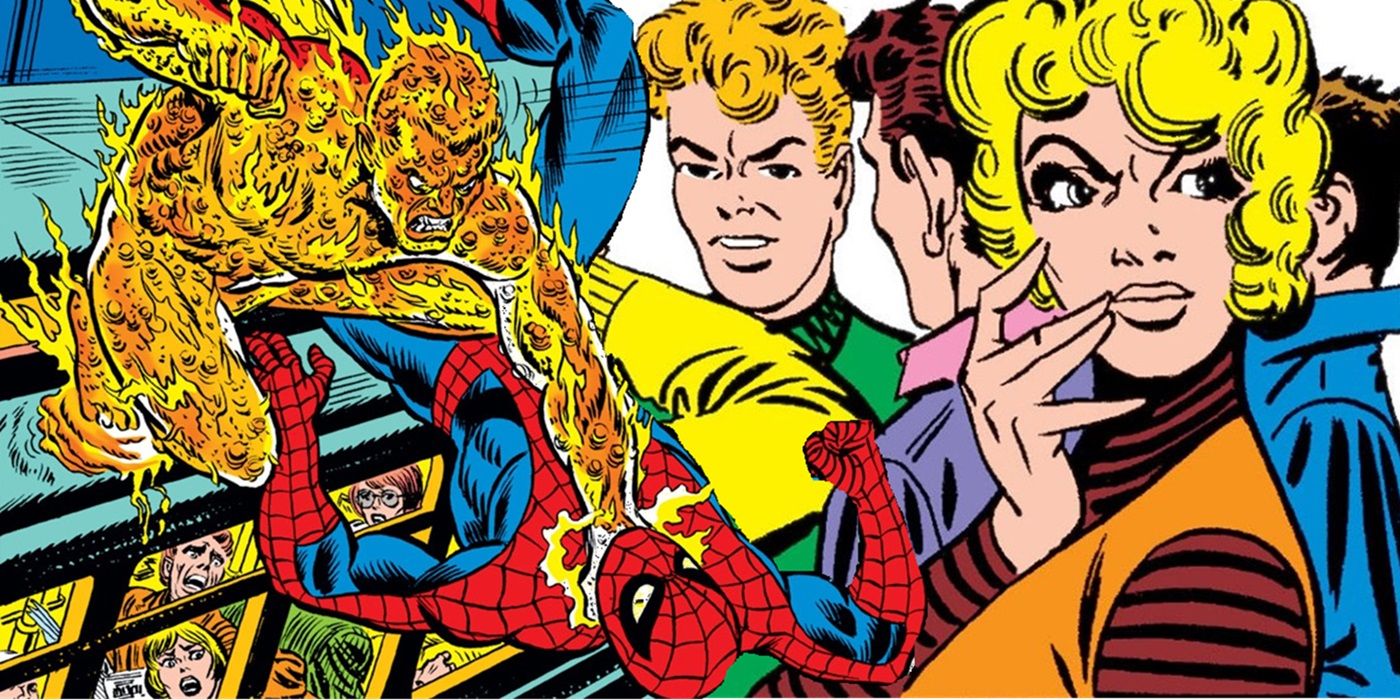
She was the popular girl who dated Flash Thompson and spent most of her time participating in the collective roasting of "Punyparker." It was classic 1960s high school drama. But something shifted. As Peter started gaining confidence (thanks to that radioactive spider bite), Liz started noticing him. It’s a bit ironic—she only really became interested in Peter once he stopped caring about her opinion and started dating Betty Brant.
Her comic book history is honestly a bit of a tragedy. After high school, she eventually married Harry Osborn. You know, the guy who becomes the Green Goblin and loses his mind every other Tuesday.
Life with the Osborns
Imagine being married into that family. Liz didn't just deal with a husband who had a chemical-induced identity crisis; she also had a father-in-law, Norman Osborn, who is essentially the devil in a green suit. She had a son, Normie Osborn, and spent years trying to give him a normal life while her husband was being "resurrected" or relapsing into villainy.
Eventually, Liz got tired of being the victim. She didn't just fade into the background. She became the CEO of Alchemax. This wasn't just a title—she became a powerhouse in the corporate world, often crossing lines that Peter Parker definitely wouldn't approve of. She went from the girl who cared about being popular in the hallway to the woman who controlled one of the most dangerous megacorporations in the Marvel Universe.
What Spider-Man: Homecoming Got Right (and Wrong)
When Spider-Man: Homecoming hit theaters in 2017, the writers pulled a massive bait-and-switch. They changed her last name to Toomes. Why? To set up that "Vulture is the dad" twist that left audiences gasping in the theater.
In the movie, Liz is a much more sympathetic character than her early comic counterpart. She's smart. She's driven. She actually likes Peter for his brain, not because he's suddenly "cool." But the ending is where it gets heavy. Peter does the "right thing" by stopping Adrian Toomes, but in doing so, he effectively destroys Liz’s life. Her dad goes to prison, her family is shamed, and she has to move across the country to Oregon.
It’s one of the few times a Spider-Man movie really sits with the fact that being a hero has collateral damage. Peter "won," but he lost the girl, and more importantly, he broke her heart in a way that had nothing to do with a breakup.
The Misery Transformation
If you haven't kept up with the comics lately, Liz’s story took a very dark, very "Marvel" turn. She’s no longer just a corporate executive. She bonded with a hybrid symbiote—a mix of Anti-Venom and Carnage—and took the name Misery.
It’s a fitting name, honestly.
After decades of being the "damsel" or the "ex-wife" or the "worried mother," she now has the power to fight back. But in the world of Spider-Man, power always comes with a massive downside. As Misery, she’s a formidable anti-hero, but she’s also further removed from the "normal life" she once represented for Peter.
Why She Still Matters to the Story
Liz Allan represents the "road not taken" for Peter Parker. If he had never been bitten, maybe he would have stayed the nerdy kid who eventually won over the popular girl. They would have had a quiet life in Queens.
Instead, her presence serves as a constant reminder that Peter’s two lives can never truly be balanced. In every version of the story—whether it's the Spectacular Spider-Man cartoon (where she’s arguably the best love interest) or the MCU—Liz is the person who gets caught in the crossfire.
Key Takeaways for Fans:
- She’s not a background character. Liz has been a staple of Marvel since 1962 and has one of the longest-running arcs of any supporting character.
- The MCU Twist was unique. Making her the Vulture's daughter was a movie-only invention, but it captured the spirit of her comic history (being related to villains like the Molten Man).
- She is currently a "Supers." In the current comic continuity, she’s operating with symbiote powers as Misery.
- The "Pedro" thing. In the Spectacular Spider-Man show, she calls Peter "Pedro" as a nickname. The MCU referenced this by having Adrian Toomes call Peter "Pedro" during the drive to the dance.
If you want to understand the full weight of Peter Parker’s journey, you have to look at the people he leaves behind. Liz Allan isn't just a high school crush; she’s a reflection of the cost of being a hero.
If you're looking to dive deeper into her current status, check out the Cult of Carnage: Misery miniseries. It gives her the spotlight she’s deserved for about sixty years. It's gritty, it’s complicated, and it finally lets Liz be the one holding the power rather than the one hiding from it.