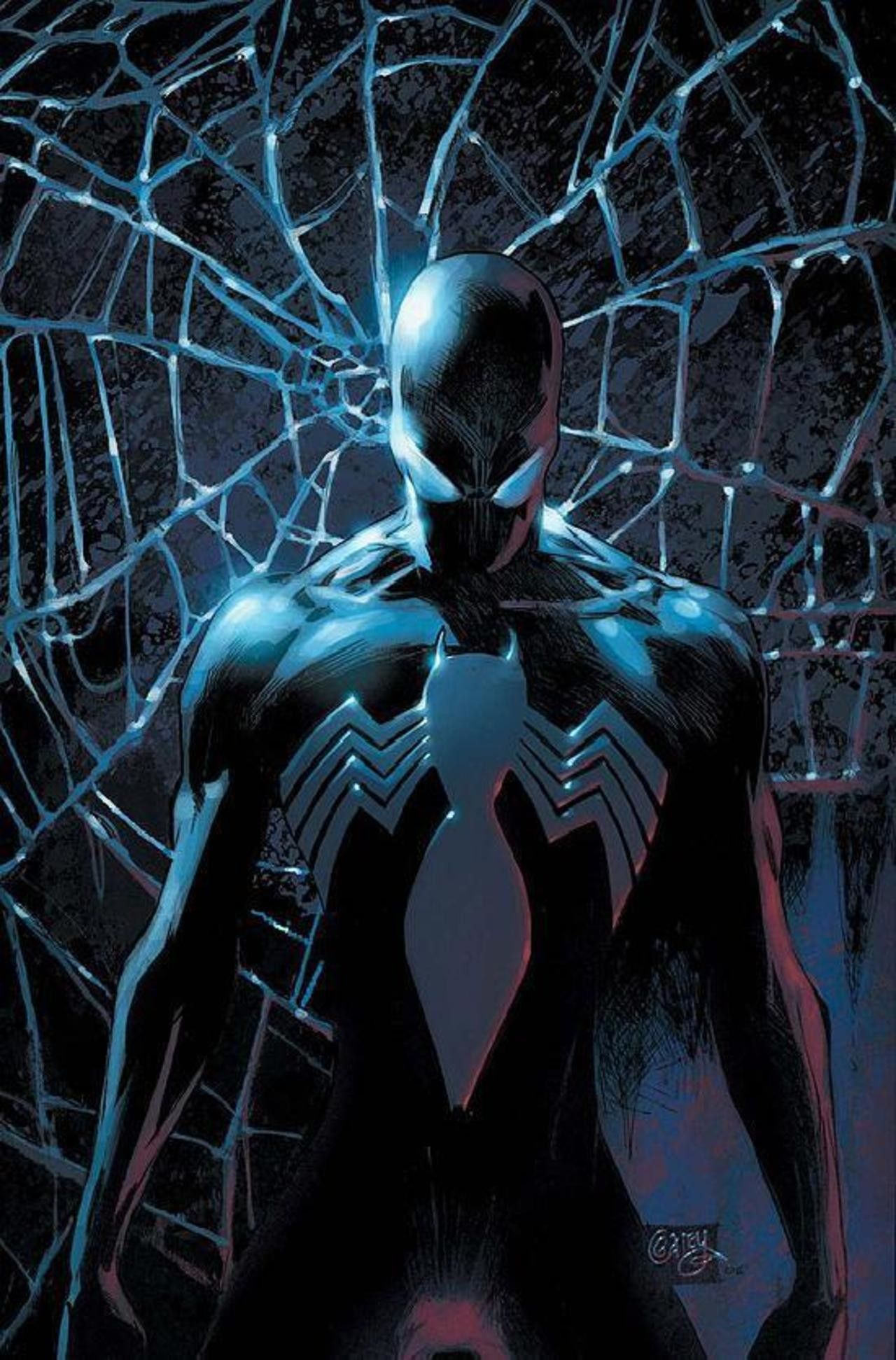
It happened in 1984. Marvel needed something big for Secret Wars, so they let a fan’s idea change comic history forever. For $220, Jim Shooter bought the concept of a sleek, dark upgrade from a reader named Randy Schueller. That’s how we got the Spider Man black outfit, and honestly, the franchise has never been the same since.
Peter Parker thought he found a high-tech sewing machine on a distant planet. It wasn't. It was a living, breathing alien parasite that wanted to bond with his soul.
Most people think the black suit immediately turned Peter into a jerk. That’s actually a bit of a Mandela Effect caused by the 90s cartoon and the Sam Raimi movies. In the original comics, Peter wore the suit for months without realizing it was alive. He just thought it was convenient because it responded to his thoughts and had infinite webbing. The real drama started when he realized the "fabric" was taking his body out for a spin while he slept. Imagine waking up more tired than when you went to bed because your clothes were out fighting crime without you.
The Spider Man Black Outfit: Fact vs. Fiction
The suit didn't actually boost Peter's strength in the original 616 Marvel universe.
Wait. Let me clarify that because it sounds wrong to anyone who grew up with Spider-Man 3. In the source material, the symbiote provided organic webbing and shape-shifting abilities—Peter could turn it into a tuxedo or civilian clothes instantly—but it didn't make him "Super Spider-Man." The personality shift was also way more subtle than the aggressive "Bully Maguire" vibes we see on screen. It was more about fatigue and the suit’s growing obsession with him.
Eventually, Reed Richards of the Fantastic Four used a "sonic blaster" to help Peter ditch the clingy alien. This led to one of the most famous visual gags in comics: Peter having to swing home in a spare Fantastic Four costume with a paper bag over his head.
Why the Design Stuck
It’s just cool. Mike Zeck designed the visual look, and it’s a masterclass in minimalism. No boots. No belt. Just a giant, wraparound white spider on a field of pure ink. It’s the polar opposite of the classic red-and-blues, which are busy and bright. The Spider Man black outfit represented a loss of innocence. It looked like a shadow, which was fitting for a character who was starting to deal with much darker themes in the 80s, like the death of Jean DeWolff.
Even after Peter got rid of the alien, the look was so popular that Mary Jane actually made him a cloth version of the black suit. He wore that for a long time, right up until Venom (Eddie Brock) showed up and scared the life out of MJ. She couldn't stand the sight of the black suit anymore, so Peter went back to the classic colors to make his wife feel safe. That’s the kind of grounded, human detail that makes these stories work.
From Secret Wars to the Big Screen
The transition to film was... rocky.
When Sam Raimi brought the black suit to life in 2007, fans were divided. The movie version wasn't a sleek, smooth surface; it looked like a recolored version of the standard suit with web patterns. People wanted that liquid, oily look. Still, it gave us the "Emo Peter" memes that have survived nearly two decades of internet culture.
Then came Spider-Man 2 on the PS5.
Insomniac Games finally gave us the version we wanted. The Spider Man black outfit in the game feels heavy. It sounds "goopy" when it moves. They nailed the idea that the suit is an addiction. When you're playing as Peter in the black suit, the combat gets more brutal. You aren't just webbing guys up; you're slamming them into the pavement with tendrils.
Key Differences Across Media
- The Comics: The suit is a silent stalker. It wants to be Peter. It doesn't really have a "voice" until much later.
- The 90s Animated Series: This is where the "anger" trope started. The show needed a clear way to show kids that the suit was bad, so they made Peter aggressive and short-tempered.
- The MCU: We haven't seen Tom Holland in the full symbiote suit yet, but the end of No Way Home left a little piece of Venom behind in a bar. It's coming. You know it is.
The Psychology of the Dark Suit
Why does this specific costume resonate so much?
Psychologically, the black suit represents the "Shadow Self." We all have parts of us we suppress—anger, resentment, the urge to just stop being the "good guy" for five minutes. Peter Parker is the ultimate "good guy." He carries the weight of the world. When he puts on that black suit, he’s giving himself permission to stop pulling his punches.
It’s a cautionary tale about power without responsibility.
The suit offers a shortcut. Why spend hours sewing your costume when the suit can fix itself? Why struggle with web shooters when the suit makes its own? But the shortcut has a cost. In Peter’s case, it was his autonomy. The suit didn't just want to help him; it wanted to replace him.
Modern Variations
Nowadays, you can’t throw a rock in a comic shop without hitting a version of the black suit.
- Miles Morales has his own iconic black and red look, which is technically his default.
- Agent Venom (Flash Thompson) turned the symbiote into a tactical, military-grade weapon.
- Superior Spider-Man (Otto Octavius in Peter’s body) used a black and red design to show his "efficiency."
But none of them have the weight of the original 1984 debut.
Real-World Impact: Collecting and Value
If you're looking to own a piece of this history, it’s going to cost you. The Amazing Spider-Man #252 (the first appearance of the suit in the main title) and Secret Wars #8 (the origin story) are holy grails for collectors.
Prices for a high-grade Secret Wars #8 can range from $200 to over $1,000 depending on the CGC rating. In 2022, a single page of original art from Secret Wars #8 sold for a staggering $3.36 million. That’s not a typo. Three million dollars for one page of ink and paper. That is the power of the Spider Man black outfit.
It isn't just a costume change. It's a cultural touchstone.
How to Dive Deeper into the Black Suit Lore
If you're actually trying to understand the full arc of the symbiote without reading 40 years of back issues, there are a few specific places to start.
First, go find the Birth of Venom trade paperback. It collects the essential issues where Peter first finds the suit and eventually battles Eddie Brock. It clears up a lot of the misconceptions about how the suit actually behaved in the beginning.
Second, if you're a gamer, play the "Symbiote" missions in Spider-Man 2 (2023). It’s probably the best adaptation of the "addiction" metaphor ever put to paper or code. Pay attention to the way the music shifts when the suit is on; it goes from heroic brass to low, menacing strings.
Finally, keep an eye on the current Venom runs by writers like Al Ewing. They’ve expanded the lore to include the "King in Black," which explains the cosmic origins of the symbiote species (the Klyntar). It’s a bit "out there," but it adds a layer of ancient history to that black suit Peter found in a machine back in the 80s.
Actionable Next Steps
- Check Your Attic: Look for Secret Wars #8 or Amazing Spider-Man #252. Even mid-grade copies are worth significant money now.
- Watch the Evolution: Compare the "Alien Costume" saga from the 1994 Spider-Man: The Animated Series with the 2007 film. Notice how the "aggressive Peter" trope evolved.
- Read the Source: Grab a digital subscription to Marvel Unlimited and read Amazing Spider-Man #252-300. It’s the definitive era for this look and explains the MJ/Peter dynamic perfectly.
The black suit is more than a fashion choice. It's a reminder that even the best heroes have a dark side—and sometimes, that dark side looks incredibly cool. Peter Parker always goes back to the red and blue, but the shadow of the symbiote is never really gone. It’s always waiting in the wings, ready for another round.