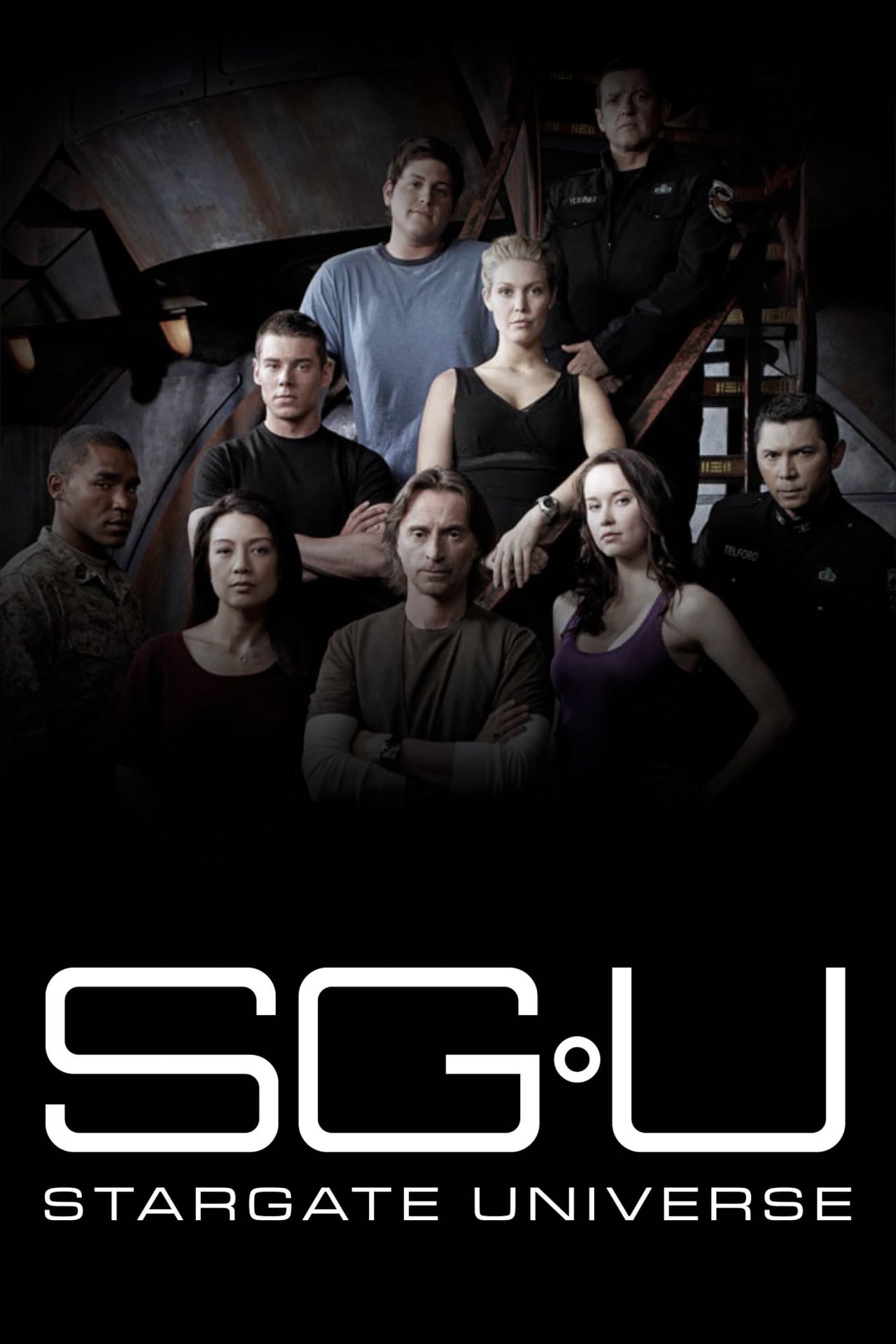
Let’s be real: when Stargate Universe first hit Syfy back in 2009, half the fanbase wanted to throw their remote at the TV. It wasn't the goofy, MacGyver-in-space vibe we'd grown to love with Jack O'Neill. Instead, we got this moody, dimly lit, "everyone hates each other" survival drama that felt more like Battlestar Galactica had a baby with Lost.
It was jarring.
People felt betrayed. Stargate Atlantis had been canned to make room for this, and the tonal shift was like jumping into an ice bath after a warm sauna. But here’s the thing—looking back from 2026, Stargate Universe was actually miles ahead of its time. It ditched the "alien of the week" trope for something much more visceral.
What Stargate Universe Was Actually Trying to Do
Most Stargate shows follow the same blueprint: a team of heroes goes through a ring, meets a village of people in burlap sacks, fights a guy with a glowing snake in his head, and makes it home for dinner. Stargate Universe (SGU) threw that blueprint into a supernova.
The premise is basically a nightmare. A secret base gets attacked, and a group of people—most of whom weren't supposed to be there—dive through the Stargate using a "nine-chevron" address. They end up on Destiny, an Ancient ship billions of light-years from Earth.
The ship is falling apart. Life support is a joke.
And the crew? They aren't the "best of the best." You've got a brilliant but borderline sociopathic scientist in Dr. Nicholas Rush (played by a phenomenal Robert Carlyle), a stressed-out Colonel Young (Louis Ferreira), and Eli Wallace (David Blue), a college dropout who solved a math problem in a video game.
They weren't a team. They were survivors.
The Destiny: A Ship With a Soul
One thing people often miss about the Stargate Universe tv show is that the ship itself is a character. Destiny wasn't a shiny Enterprise. It was a billion-year-old relic with flickering lights and rusted-out hulls. It moved through FTL (faster-than-light) travel, but not the way we saw in SG-1.
The ship had a mission. It wasn't just wandering; it was following a path laid out by the Ancients to find a pattern in the cosmic microwave background radiation. Basically, the Ancients found proof of an "intelligence" behind the Big Bang. That is a heavy, philosophical hook that the show was just starting to sink its teeth into before the axe fell.
Why the Fanbase Was So Split
Honestly, the drama was a bit much for some. In the first season, it felt like every episode involved someone crying in a corner or trying to stage a coup. We went from the camaraderie of SG-1 to a show where people used "communication stones" to inhabit bodies back on Earth and have messy affairs.
It was gritty.
Maybe too gritty for 2009. Fans called it "Gate-lite" or "Battlegatigate." Syfy didn't help matters by moving the time slot to Tuesday nights, where it had to compete with huge network shows.
The Turning Point in Season 2
If you stopped watching during Season 1, you missed when the show actually became great. By the second season, the "survival of the week" stuff calmed down. The crew started acting like a crew.
We got the Lucian Alliance invasion, the introduction of the robotic Drones, and that incredible "Twin Destinies" episode where two versions of the crew meet. The stakes shifted from "how do we breathe?" to "what is our purpose in the cosmos?"
And then, right as Dr. Rush and Eli finally started to trust each other, the show was cancelled. It ended on one of the most haunting cliffhangers in sci-fi history: the crew entering stasis for a multi-year jump between galaxies, with Eli left alone on the bridge, staring out into the void.
Breaking Down the Cast and Their Messy Dynamics
The acting in this show was objectively higher-tier than its predecessors. Robert Carlyle brought a Shakespearean weight to Dr. Rush. You never knew if he was trying to save the crew or just using them as fuel to reach the "Beginning."
- Dr. Nicholas Rush: The man we loved to hate. He lied, he manipulated, but he was the only one who truly understood the Destiny.
- Colonel Everett Young: A broken leader. He wasn't a perfect hero like O'Neill; he made bad calls and struggled with his own failures.
- Eli Wallace: The "audience surrogate." He brought the heart. His transition from a kid playing games to the guy who might have to save everyone was the show's best arc.
- Camile Wray (Ming-Na Wen): She represented the civilian side, constantly clashing with the military. It wasn't just "good vs bad," it was a clash of ideologies.
Is Stargate Universe Canon?
Absolutely. It’s part of the same continuity as SG-1 and Atlantis. Characters like Jack O'Neill, Daniel Jackson, and Samantha Carter all make cameos. It’s the same universe, just seen through a much darker lens.
Some fans try to ignore it because they didn't like the tone, but you can't talk about the history of the Ancients without talking about Destiny. It’s the furthest point in the Stargate timeline.
How to Watch It Today
If you're looking to dive back in, it’s usually streaming on platforms like Amazon Prime or available on Blu-ray. Here is the best way to approach it:
- Forget the old Stargate: Don't go in expecting jokes about teal'c or P90s.
- Push past the first 10 episodes: The "growing pains" are real.
- Focus on the mystery: Pay attention to the ship's mission. It’s the most "hard sci-fi" concept the franchise ever tackled.
Actionable Next Steps for Fans
If you've finished the series and are still reeling from that cliffhanger, you aren't totally out of luck. While a third season on TV is unlikely, the story actually continues in comic book form. Look for Stargate Universe: Back to Destiny. It picks up right where the show left off and tries to give some closure to Eli’s situation.
Also, if you're a lore nerd, go back and re-watch the SG-1 episode "The Torment of Tantalus." It subtly sets up the idea that the Ancients were looking for something much bigger than just gate travel, which is the entire backbone of SGU.
Ultimately, Stargate Universe was a show about being lost—not just in space, but in life. It’s a messy, beautiful, and frustrating piece of television that probably would have been a massive hit if it launched on Netflix today instead of Syfy fifteen years ago.
Stop waiting for a reboot and appreciate the two seasons we have. They’re better than you remember.
Next Steps for Your Rewatch:
- Track the "Kino" Vlogs: Watch the webisodes (Kino logs) alongside the main episodes; they add a ton of character depth that didn't make the broadcast cut.
- Identify the "Communication Stone" Rules: Pay attention to how the show handles the ethics of body-swapping; it’s one of the most controversial but fascinating parts of the world-building.
- Listen to the Soundtrack: Joel Goldsmith’s score for SGU is hauntingly different from the triumphant themes of the previous shows. It really sells the isolation.