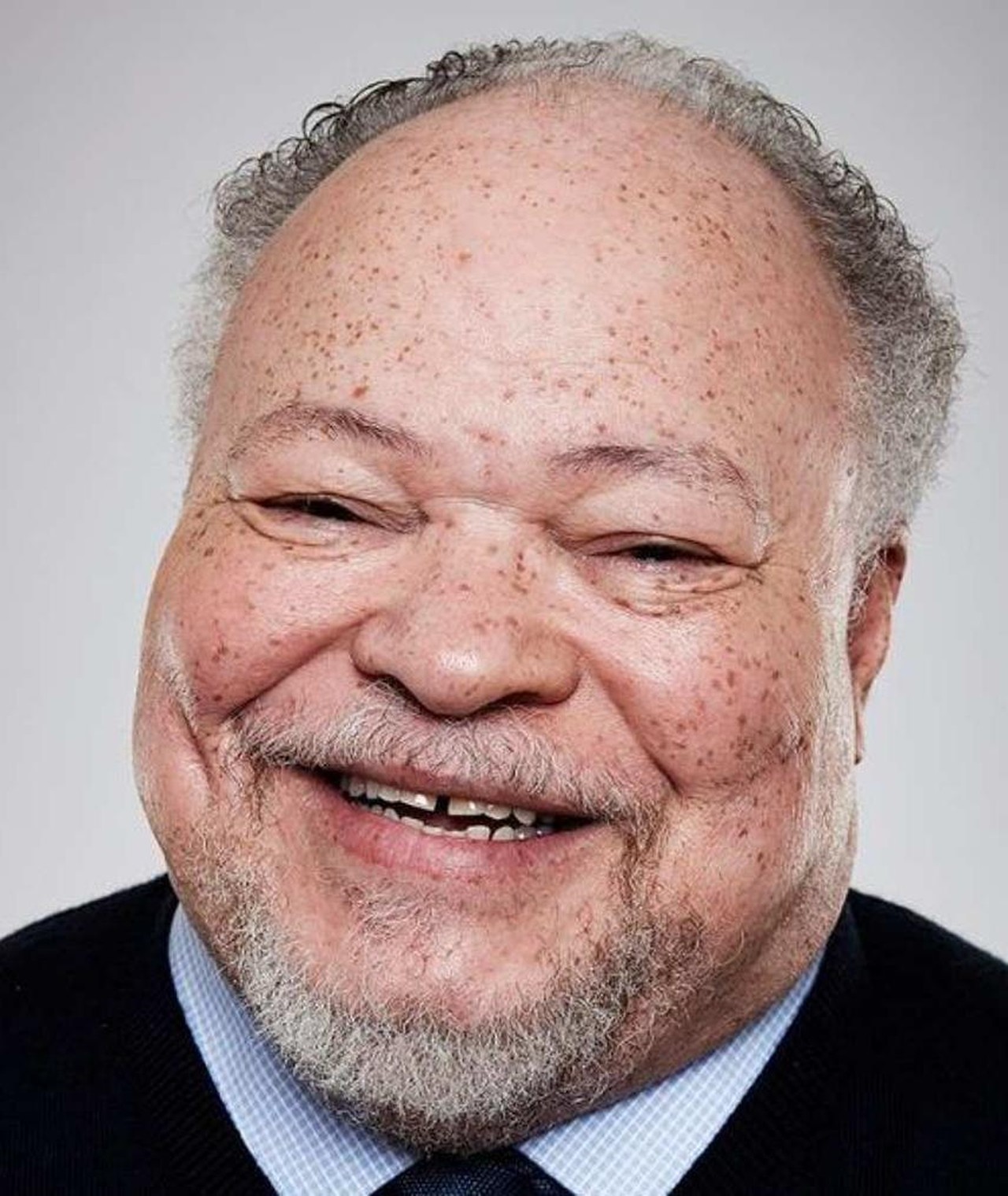
You probably recognize him as the guy who makes every movie feel a little more grounded. Whether he’s Thufir Hawat in Dune or Jim Bono in Fences, Stephen McKinley Henderson has this way of commanding the screen without ever needing to shout. But long before he was the "wise mentor" of Hollywood, he was just a kid from Kansas City trying to figure out if art could actually change the world.
Honestly, the story of Stephen McKinley Henderson young isn't your typical "struggling actor hits it big" narrative. It’s way more interesting than that. It’s a story about a math major who fell for poetry, a Juilliard student who walked away to join a revolution, and a man who spent thirty years teaching in Buffalo before the rest of the world finally caught on to what theater nerds had known for decades.
The Kansas City Roots and a Math Degree?
Stephen was born in 1949 in Kansas City, Missouri. Growing up, his house was the kind of place where the door was always open. His mother, Ruby Naomi, ran a home where "everybody was welcome," a vibe that clearly bled into Stephen’s later acting style. He’s got that "uncle you can trust" energy, right? That started in Missouri.
But here’s the kicker: he didn't start out wanting to be an actor.
He actually went to Lincoln University—a historically Black university in Jefferson City—as a math and political science major. He liked the precision of it. The logic. But then he got bit by the poetry bug. He started reading great writing and realized that words had a different kind of precision. He met Dr. Thomas D. Pauley at Lincoln, who directed him in his first plays. Suddenly, the math equations didn't seem as vital as the lines on a script.
The Juilliard Gamble
In 1968, something huge happened. Stephen auditioned for the brand-new Juilliard Drama Division. We're talking about Group 1. The very first class.
Think about the odds. There were nearly 5,000 people fighting for 35 spots. Stephen got one. He was standing there alongside people like Kevin Kline and Patti LuPone. It was the "it" place to be. But the world outside the classroom was literally on fire. The 1960s were peaking, the Civil Rights movement was at a fever pitch, and Stephen felt a massive pull to be part of the change.
He stayed for a couple of years, but then he did the unthinkable. He left.
Why He Walked Away From Juilliard
A lot of people think he failed or couldn't hack it. Not true. He was actually cited in the memoirs of John Houseman (the legendary founder of the Juilliard drama program) as a standout student. Stephen didn't leave because of the work; he left because of his conscience.
He became deeply politicized. He wanted to do more than just recite Shakespeare while the world was shifting. He moved on to the North Carolina School of the Arts (UNCSA), where he became the student government president. He wasn't just acting anymore; he was trying to raise money for the Black Panther Party’s free breakfast program. He was trying to figure out if a Black artist could be a "revolutionary optimist."
He eventually finished his BFA at UNCSA in 1972 and later got his Master’s at Purdue in 1977. But those "young" years were defined by that tension: do I act, or do I act out against injustice?
The "Paralysis" That Changed Everything
There's a story Stephen tells about his early twenties that sounds like something out of a movie. He went through a period of literal and metaphoric paralysis. It was a terrifying health scare where he couldn't move. When you're a young, ambitious guy, that kind of thing breaks you or makes you. For him, it solidified his "revolutionary optimism." He realized that if he got his movement back, he wasn't going to waste a second. He decided that the arts had to be the voice for the times.
The August Wilson Connection
If you look at the middle of his career, you see a lot of regional theater. He spent years at the Repertory Theatre of St. Louis (1976–1981). He was doing the work, day in and day out. But the real shift happened when he met August Wilson.
Wilson is arguably the greatest Black playwright in American history, and Stephen became his go-to guy. He didn't just play the roles; he inhabited the world of the "Pittsburgh Cycle."
- Turnbo in Jitney: This was his breakout. He played the gossipy, nosy station driver so well that he eventually took the role to London, winning an Olivier Award.
- Jim Bono in Fences: Most people know the 2016 movie with Denzel Washington. But Stephen had been playing that role on Broadway years before. Denzel respected him so much he insisted the Broadway cast reprise their roles for the film.
The Buffalo Professor Years
For nearly 30 years—from 1987 to 2016—Stephen wasn't just a "celebrity." He was Professor Henderson at the University at Buffalo.
He was the chair of the Department of Theatre and Dance. Think about that for a second. While he was appearing on Law & Order (he played Judge Marc Kramer in like seven different episodes) or filming Lincoln with Steven Spielberg, he was still grading papers and coaching kids in Western New York. He lived a double life as a master craftsman and a humble educator. He only retired from teaching in 2016, right around the time his film career went into overdrive.
The Late-Career Explosion
It’s kind of wild that a man in his 70s is suddenly one of the most sought-after actors in sci-fi and prestige drama. Since 2016, he’s been in:
- Manchester by the Sea
- Lady Bird (as the priest, Father Leviatch)
- Dune (as the Mentat Thufir Hawat)
- Beau Is Afraid
- Civil War
He’s the "best picture" charm. Between 2016 and 2017 alone, he was in three films nominated for the Best Picture Oscar. Not bad for a guy who once thought he might give up acting for political activism.
What We Can Learn From His Journey
Stephen McKinley Henderson’s life isn't just about fame; it’s about the "long game." He didn't chase the spotlight. He chased the craft. He famously said, "The career you seek may elude you, but your craft is in your hands."
Basically, he focused on being so good at what he did that the world eventually had to come to him. He didn't need to be the lead. He didn't need to be the "star." He just needed to be real.
Key Takeaways for Any Aspiring Artist:
- Education isn't a straight line. Dropping out of Juilliard didn't ruin him; it gave him the life experience he needed to actually have something to say on stage.
- Find your "August Wilson." Find the collaborators who speak your language. For Stephen, it was Wilson and later directors like Greta Gerwig and Alex Garland.
- Don't quit the day job too early. Teaching kept him grounded and kept his skills sharp. It allowed him to choose the roles he wanted rather than the ones he needed for a paycheck.
- Union pride matters. His father was a meatpacker and a die-hard union man. Stephen carries that same respect for the "work" into his acting. He treats it like a trade, not just "showbiz."
If you want to see the best of Stephen McKinley Henderson young-ish energy, go back and watch the 1989 PBS production of A Raisin in the Sun where he plays Bobo. You can see the seeds of the legend he would become—the quiet intensity, the perfect timing, and that unmistakable voice. He’s lived a thousand lives before he ever stepped onto the set of Arrakis, and honestly, that’s why we can't look away.
Next Steps for You:
- Watch Fences (2016): Pay attention to the chemistry between Henderson and Denzel Washington. That's 30 years of friendship on screen.
- Check out Jitney: If you can find a recording of the 2000 Off-Broadway run, do it. It’s a masterclass in ensemble acting.
- Research the "Pittsburgh Cycle": Understanding August Wilson’s ten plays is the best way to understand the foundation of Henderson’s career.