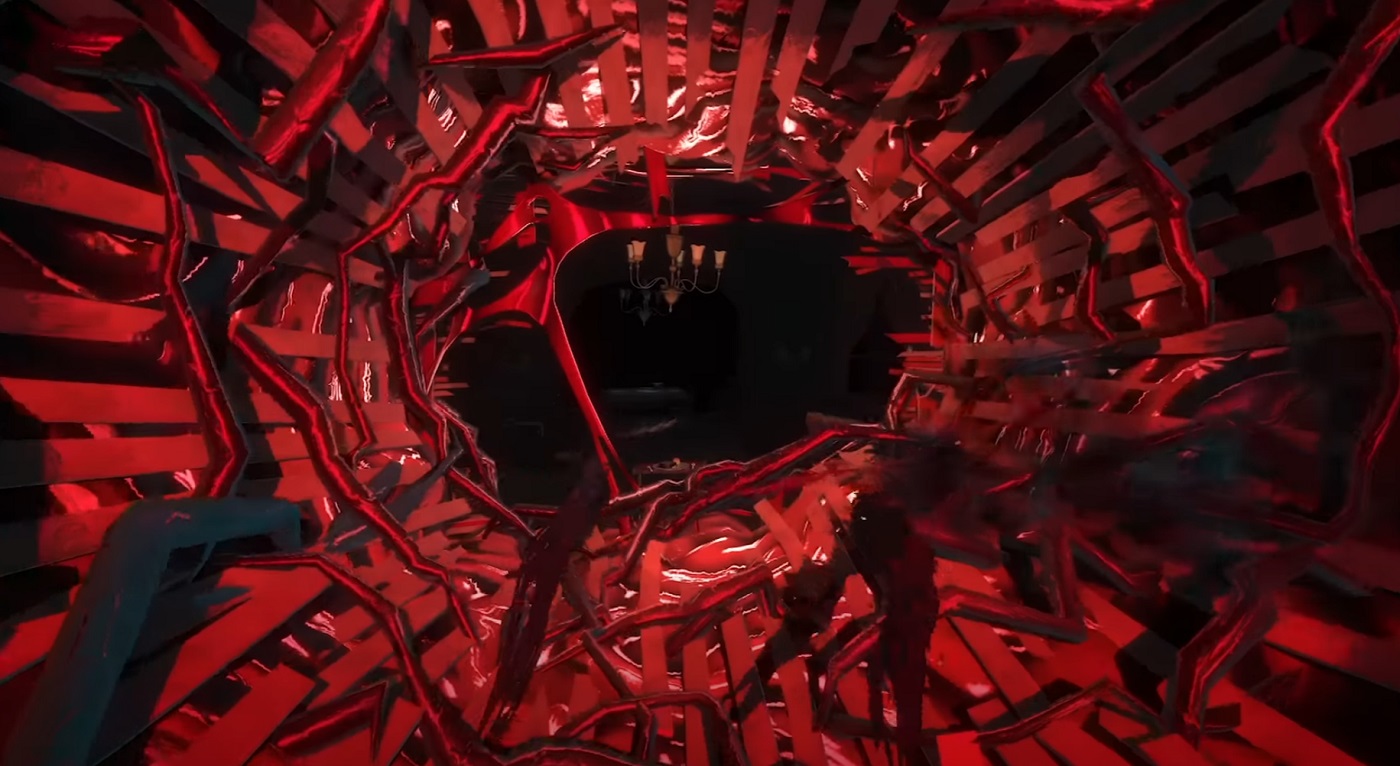
You've spent years watching Eleven bleed from her nose while trying to save Hawkins. You’ve watched the kids cycle through the woods and Hopper grumble his way through government conspiracies. But watching a screen is safe. Stranger Things VR isn't safe. It’s a psychological trip that flips the script by putting you behind the vine-covered, moist skin of the villain himself.
Most games based on massive Netflix IPs feel like cheap cash-ins. They’re often "experience" pieces that last twenty minutes and leave you feeling like you just paid for a glorified trailer. This is different. Developed by Tender Claws—the same studio that gave us the weird, wonderful Virtual Virtual Reality—this title actually tries to do something with the medium. It doesn't just let you play in the world; it lets you break it.
The Reality of Playing as Vecna
Honestly, the biggest shock is the perspective. You aren't playing a hero. In Stranger Things VR, you are Henry Creel. You are One. You are Vecna.
That shift matters because it changes how you interact with the environment. Instead of running away from the shadows, you are the shadow. You’re invading dreams. You’re telekinetically tossing people like ragdolls. It’s a power trip, sure, but it’s also incredibly unsettling because the game forces you to inhabit the mind of a monster.
The mechanics feel deliberate. You use your hands to grab onto memories and pull yourself through the Void. If you’ve used a Meta Quest 3 or a Quest Pro, the hand tracking adds a layer of "this is too real" that a standard controller just can’t replicate. You aren't pushing a button to crush a skull; you’re closing your fist.
Is It Actually Scary?
Fear is subjective, but VR scales it up by 100%. When a Demogorgon is in your face in a 2D TV show, it’s a cool special effect. When it’s standing "in the room" with you, and you can see the saliva dripping from its petal-like mouth, your lizard brain starts screaming.
Tender Claws didn't go for cheap jump scares. They went for atmosphere. The Upside Down in Stranger Things VR feels oppressive. It’s gray, it’s lonely, and it’s filled with this low-level hum that makes your skin crawl. You aren't just looking at a scary place; you are existing within a nightmare.
What Most People Get Wrong About the Lore
There’s a common misconception that this game is just a side story that doesn't matter to the main Netflix timeline. That’s wrong. The developers worked closely with the Duffer Brothers to ensure that the events in the game bridge gaps in Vecna’s history.
We get to see his transformation in a way the show couldn't quite fit into its runtime. We see how he formed the hive mind. We see his obsession with spiders evolve from a childhood fascination into a literal biological blueprint for the Upside Down.
If you’re a lore nerd, this is basically required reading—well, required playing. You see the Lab from a new angle. You see Eleven not as a protagonist, but as the person who "wronged" you. It’s a fascinating bit of perspective flipping that makes you re-evaluate scenes from Season 4.
The Technical Hurdles
It’s not all perfect. Let’s be real.
Virtual reality still has its "jank." Sometimes the tracking flickers. Sometimes you’ll try to grab a vine and your hand will pass right through it. While the art style is striking—leaning more into a stylized, almost painterly look rather than hyper-realism—it can occasionally feel a bit "thin" on older hardware like the Quest 2.
But does that break the immersion? Not really. The sound design carries the heavy lifting. The voice acting is top-tier, and the ambient noise of the Hive Mind is genuinely some of the best audio work in recent VR history.
Why This Isn't Your Typical Tie-In Game
Most licensed games fail because they try to recreate the movie exactly. If I wanted to watch the show, I’d open Netflix. Stranger Things VR understands that VR is about agency. It gives you abilities that feel heavy.
- You can manifest hallucinations to torture your victims.
- You can psychically link with the creatures of the Upside Down.
- You explore the "Void" as a navigation hub, which feels much more natural than a standard menu screen.
The game is structured as a series of memories. It’s fragmented. It’s chaotic. It feels like the mind of a person who has spent decades rotting in a hell dimension. That’s a bold choice for a major franchise.
The Evolution of the Genre
We’ve seen a lot of horror VR lately, from Resident Evil ports to The Walking Dead: Saints & Sinners. What sets this apart is the psychological element. It’s less about resource management (finding bullets and health kits) and more about the manifestation of will.
You aren't worried about running out of ammo. You’re worried about losing your grip on reality.
Tender Claws has a history of making games that meta-comment on the nature of VR itself. They’ve brought that DNA here. There are moments where the game breaks the fourth wall in a way that makes you wonder if you’re playing the game or if the game is playing you. It’s trippy. It’s weird. It’s very Stranger Things.
How to Get the Best Experience
If you're going to dive into the Upside Down, don't just put on the headset and sit on your couch. This is a game that demands presence.
First, use a good pair of over-ear headphones. The built-in speakers on most VR headsets are "fine," but they don't capture the low-end bass of Vecna’s voice or the skittering sounds behind your head.
Second, play in a dark room. Even though you have the headset on, light leakage from the nose gap can ruin the "total darkness" of the Void sections. You want to be completely isolated.
Finally, take your time. There are small details hidden in the environment—drawings by Henry, echoes of past victims—that flesh out the story. If you rush through the combat sections, you’ll miss the soul of the game.
What’s Next for Hawkins in VR?
The success of Stranger Things VR proves there is a hunger for high-quality, narrative-driven VR experiences that aren't just tech demos. It paves the way for potentially more "villain-POV" games. Imagine a Star Wars game where you truly inhabit Vader’s rage, not just swing a saber.
The industry is watching. Netflix has been aggressive about moving into gaming, and this is their strongest statement yet. They aren't just licensing characters; they are building out the universe.
As we wait for the final season of the show, this game acts as a bridge. It sets the stakes. It reminds us that Vecna isn't just a guy in a suit—he’s a cosmic force of nature with a very personal grudge.
Actionable Steps for New Players
- Check your hardware: Ensure your Meta Quest software is updated to the latest version to avoid crashes during the more intensive psychic battle sequences.
- Clear your space: You’ll be doing a lot of "reaching" and "crushing" motions. Make sure you have at least a 6x6 foot area to avoid punching a hole in your TV.
- Brace for intensity: If you’re prone to motion sickness, use the "teleport" movement settings. The "smooth locomotion" can be a bit much when you're flying through the air as a psychic entity.
- Listen to the dialogue: Don't skip the "Void" sequences. That’s where the best lore drops happen.
The Upside Down is waiting. Just remember: when you're in there, you aren't the one being hunted. You're the one doing the hunting.
Enjoy the power while it lasts.
Practical Insights:
To truly master the combat in Stranger Things VR, focus on "multi-tasking" your telekinesis. You can hold one enemy in the air while using your other hand to interact with the environment. This isn't just a combat tip—it's the only way to survive the later stages where the game throws waves of Hawkins Lab guards at you. Also, pay attention to the environmental cues; the "vines" often pulse in the direction of your next objective, acting as a diegetic compass.