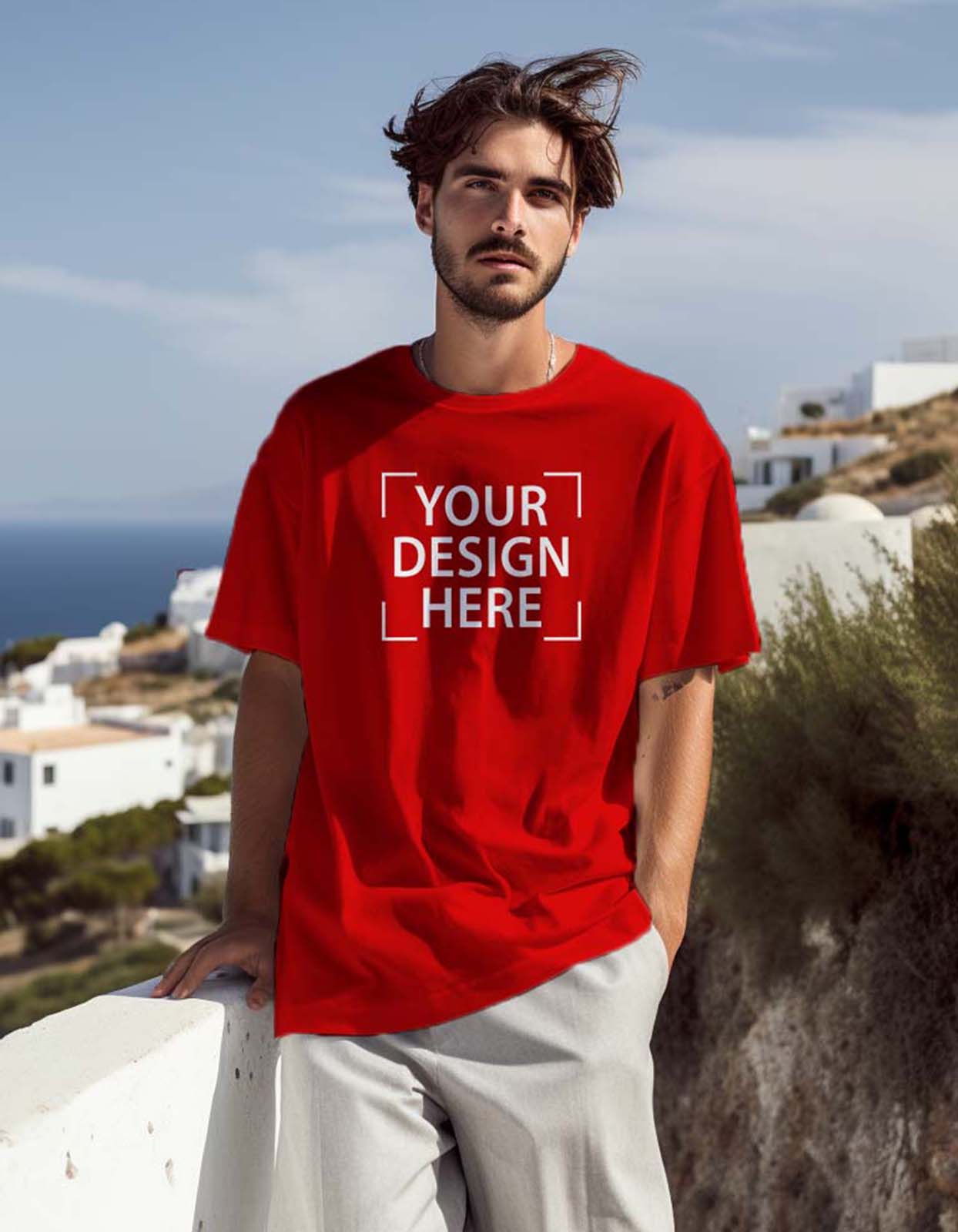
You probably have a graveyard of massive tees in your drawer. We all do. Maybe it’s a vintage find that’s three sizes too big or a "boyfriend" fit that actually looks like a literal tent. The problem is that styling oversized t shirt outfits usually goes one of two ways: you either look effortlessly cool like a street-style influencer in Copenhagen, or you look like you’ve completely given up on life before noon.
There is no middle ground.
Most people think "oversized" just means "big." That’s the first mistake. True oversized styling is about intentional volume, not just drowning in fabric. It's a game of architecture. If you don't understand the balance between your shoulder seam and your hemline, you're just wearing a nightgown. Honestly, it’s frustrating. You see Hailey Bieber rocking a giant tee with loafers and it looks like high fashion, but when you try it, you feel like you’re back in middle school gym class.
The Golden Rule of Proportions (And Why Your Mirror Lies)
Stop looking at the garment in isolation. Look at the silhouette.
When you’re styling oversized t shirt looks, the "Rule of Thirds" is your best friend. In design, things look better when they are divided into thirds rather than halves. If your shirt ends right at your mid-thigh and your legs take up the other half of your frame, you’ve cut yourself in two. It looks dumpy. You want a 1/3 to 2/3 ratio. This usually means tucking that shirt in or choosing a length that hits a very specific part of your hip.
Try the "French Tuck." Tan France made it a household name for a reason. By tucking just the front sliver of a massive shirt into your waistband, you reveal your waistline. This tells the world, "Hey, I have a body under here, I’m just choosing to be comfortable." It creates an upward diagonal line that elongates the legs. If you leave it untucked, you need to go the other way—extreme length. Wear it as a dress with bike shorts peeking out.
Contrast is the secret sauce. If the top is voluminous, the bottom needs to be sharp. Think leggings, skinny jeans (yes, they are coming back, whether we like it or not), or a fitted mini skirt. If you go baggy on top and baggy on bottom, you need to be very tall or very confident. Or both.
Fabric Weight Changes Everything
A thin, flimsy oversized shirt is a disaster. It clings to the wrong places. It looks cheap.
When styling oversized t shirt pieces, you need weight. Look for "heavyweight" cotton or "max weight" tees, usually around 6.5 oz to 7.5 oz. Brand experts like those at Los Angeles Apparel or Uniqlo (specifically their U Airism line) prioritize a structured drape. A thick fabric holds its own shape. It stands away from the body. This creates that crisp, boxy look that defines modern streetwear.
Cheaper, thinner shirts just sag. They show every lump and bump of the clothes underneath. If you’re going for that 90s skater vibe, the stiffness of the collar is the giveaway of quality. A sagging neckline on a big shirt makes the whole outfit look old. Keep the collar tight. It frames the face and makes the "extra" fabric look like a conscious choice rather than a hand-me-down.
The Sleeve Situation
The sleeves are usually where people get lost. On a standard shirt, the seam sits on your shoulder bone. On an oversized shirt, it should drop down toward your bicep. But if the sleeves are also wide and long, your arms disappear.
Roll them. Seriously.
Two neat rolls can transform a shirt. It exposes the thinnest part of your arm—the wrist and forearm—which prevents the "swimming in fabric" effect. It adds a bit of texture and "messy-on-purpose" energy. You’ve probably noticed that high-end brands like Fear of God often have sleeves that are intentionally long but narrow. That’s to maintain a sense of limb definition while keeping the torso massive.
Accessorizing the Void
A giant t-shirt is basically a blank canvas. It’s a lot of one color or one graphic. Without accessories, it’s just a pajama top.
Layering is how you elevate styling oversized t shirt combos. Throw a structured blazer over a giant graphic tee. The juxtaposition of the formal lapels against the casual cotton is a classic move. Or, go the other way: a turtleneck underneath. This was huge in the 90s and it’s back because it adds verticality.
- Footwear: Chunky sneakers (think New Balance 9060s or Balenciaga Triple S style) balance out the weight of a big top. If you wear tiny, slim shoes with a massive shirt, you look top-heavy.
- Bags: A crossbody bag worn high on the chest "breaks up" the vast expanse of fabric. It creates a focal point.
- Jewelry: Thick gold chains or layered necklaces. You need something heavy to compete with the scale of the shirt. Dainty jewelry gets lost.
Dealing With the "Too Tall" or "Too Short" Problem
If you are petite, a giant shirt can swallow you whole. The trick here is the "side knot" or using a clear hair elastic to create a gathered hem. This pulls the fabric closer to the body. You keep the slouchy sleeves but lose the "kid in dad's clothes" look.
For tall people, the struggle is usually the length. A shirt might be wide enough to be "oversized" but too short to look intentional. In this case, don't try to wear it as a dress. Lean into the boxy crop. Cut the bottom hem off. A raw, frayed edge on a wide-fitting shirt looks incredible with high-waisted trousers. It creates a "T" shape that emphasizes the shoulders and nips in the waist.
Real-World Inspiration and Mistakes
Look at how Billie Eilish or Justin Bieber handle volume. They don't just wear big clothes; they wear coordinated volume. They often match the color of the oversized tee to the pants (monochrome), which creates a single long line, making them look taller despite the width.
What most people get wrong is the "Graphic Trap."
A huge graphic on a huge shirt can be overwhelming. If the print is too low, it sits on your stomach and looks awkward when you sit down. Higher graphics—closer to the chest—draw the eye up. If you're wearing a band tee from a thrift store, check where the design hits. If it's a "belly print," it’s going to be much harder to style effectively without looking like a billboard.
How to Wash and Maintain the Shape
You found the perfect fit. Don't ruin it.
Heat is the enemy of the oversized fit. If you toss a 100% cotton heavyweight tee in a hot dryer, it’s going to shrink—but it won't shrink evenly. The length usually disappears faster than the width, leaving you with a shirt that is wide but "too short," which is the worst possible silhouette.
Always wash cold. Always hang dry or tumble dry on the lowest possible heat setting. If the collar starts to "bacon" (that wavy, stretched-out look), you can sometimes fix it by dipping the neckline in ice water and flat-drying it, but it's better to avoid the damage in the first place.
Actionable Steps for Your Next Outfit
- Check the Shoulder Seam: Ensure it drops at least two inches past your natural shoulder for that intentional "drop shoulder" look.
- Test the "Pants Check": Put on your baggiest jeans. Now put on your oversized tee. Do you look like a rectangle? If yes, swap for a slimmer bottom or do a front tuck.
- The Shoe Offset: If the shirt feels "too much," put on your bulkiest shoes. Watch how the outfit suddenly makes sense as the proportions at the bottom match the top.
- Edit the Sleeves: If you feel "lost," roll the sleeves twice.
- Add One "Hard" Element: A leather belt, a structured bag, or a stiff denim jacket. This offsets the "softness" of the t-shirt material.
Styling is really just a series of corrections. You put something on, realize it looks a bit "off," and then you adjust the proportions until the eye is happy. The oversized t-shirt isn't a lazy garment; it's actually one of the most technical pieces in a modern wardrobe because it relies entirely on your ability to manipulate space and shape.
Get the fabric right, watch your hemlines, and never fear the tuck.