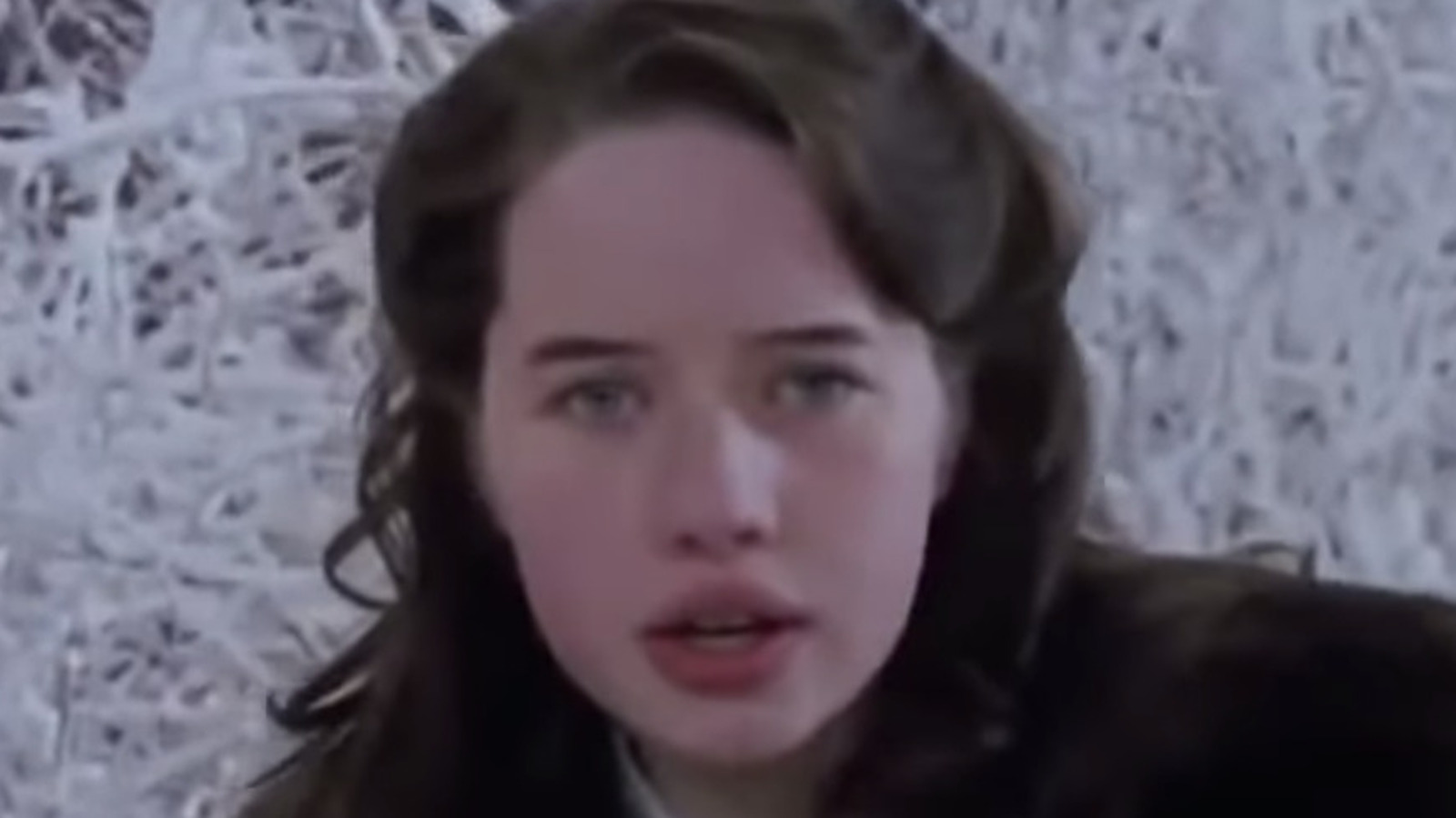
If you grew up reading C.S. Lewis, you probably remember the gut punch. One minute, the Pevensie siblings are kings and queens of a magical realm, and the next, Susan is just... gone. She's "no longer a friend of Narnia." It’s a line that has sparked more heated debates in literature circles and Reddit threads than almost any other character arc in 20th-century children's fiction. Honestly, it feels personal.
Most people remember Susan the Chronicles of Narnia star as the practical one. She was the Archer, the Queen Susan the Gentle, the one who looked at a magical wardrobe and thought about logic first. But her ultimate fate—being left behind while her family enters "Aslan’s Country" after a railway accident—remains one of the most controversial creative choices Lewis ever made. It’s not just a plot point. It’s a Rorschach test for how we view growing up, femininity, and faith.
The Problem of Susan: Lipsticks and Nylons
In the final book, The Last Battle, we find out that Susan Pevensie isn't with Peter, Edmund, and Lucy. When the characters ask why, Eustace Scrubb explains that Susan is "no longer a friend of Narnia" because she’s now interested in "nothing but nylons and lipstick and invitations."
Ouch.
That single sentence has launched a thousand academic papers. Critics like J.K. Rowling and Philip Pullman have famously slammed this ending. Rowling once remarked that Susan was basically cut out of salvation because she found out about sex, which is a pretty heavy reading for a series about talking lions. Pullman went further, calling the Narnia books "propaganda" and labeling Susan’s exclusion as "misogyny."
But is that actually what Lewis meant?
If you look at the letters C.S. Lewis wrote to fans (which are collected in The Collected Letters of C.S. Lewis), he offers a slightly different perspective. He didn't necessarily mean Susan was "damned" or gone forever. He suggested she was simply at an "uncomfortable stage" of life. She was trying to be a grown-up too fast, or perhaps she was trying to fit into a world that didn't have room for Narnian magic.
Basically, she chose to forget.
Was Susan Actually the Smartest Pevensie?
Think about Susan's role in The Lion, the Witch and the Wardrobe and Prince Caspian. She’s the voice of reason. While Lucy is the dreamer and Edmund is the one making mistakes, Susan is the one worrying about whether they have enough coats. She’s the pragmatist.
In Prince Caspian, she's the last one to see Aslan. It isn't because she's "bad." It's because she’s terrified of being disappointed. There is something deeply human about that. If you’ve ever outgrown a hobby or felt like you had to "put away childish things" to survive in the real world, you can relate to Susan. She didn't just wake up one day and decide to be mean; she leaned into the armor of adulthood.
It’s worth noting that Susan’s journey in Susan the Chronicles of Narnia lore is often viewed through the lens of 1950s British culture. Back then, "lipstick and nylons" weren't just makeup; they were the markers of a woman who had transitioned from the nursery to the ballroom. Lewis, a bachelor for much of his life and a deeply religious academic, might have seen this as a distraction from spiritual truth. But for a modern reader, it feels like Susan is being punished for simply growing up.
The Trauma Nobody Talks About
Let’s look at the facts of the ending that people usually gloss over.
- A train crash occurs.
- Peter, Edmund, Lucy, their parents, and their friends all die.
- Susan is the only one left alive.
Let that sink in for a second.
Susan Pevensie is left in the "real world" as an orphan who has lost her entire family in a single afternoon. She is the survivor. While her siblings are frolicking in a perfected version of Narnia, Susan has to identify the bodies. She has to sign the death certificates. She has to figure out how to live a life in London without anyone who remembers the Great River or the White Witch.
Some fans argue this is actually the ultimate "mercy." In a letter to a child named Martin in 1957, Lewis wrote that the books don't tell us what happens to Susan after the crash. He hinted that she might eventually get to Aslan’s country in her own way, perhaps even being changed by the tragedy of losing her family. She’s essentially left with a "long and perhaps difficult" life ahead of her.
Reclaiming the Gentle Queen
Modern reinterpretations of Susan the Chronicles of Narnia have tried to give her more agency. Neil Gaiman wrote a famous short story called "The Problem of Susan," which explores the trauma of the surviving sister. It’s dark. It’s gritty. It forces the reader to confront the reality of Lewis’s theology from the perspective of the one left behind.
Even in the Walden Media films from the 2000s, played by Anna Popplewell, Susan is given a more "warrior-queen" vibe. She’s proficient with her bow. She leads armies. This makes her eventual "falling away" feel even more jarring to audiences who saw her as a hero, not just a girl who liked makeup.
The tension in Susan's character comes from the conflict between Logic and Belief.
- Susan uses logic to navigate the world.
- Narnia requires belief that defies logic.
- When the two collided, Susan chose the world she could touch and see.
Is that a sin? Or is it just a survival mechanism?
Why We Can't Let It Go
We talk about Susan because she’s the most "real" person in the books. Most of us aren't like Lucy, who has unwavering faith even when things look bleak. Most of us aren't like Peter, born to lead. We are like Susan—doubting, trying to fit in, and sometimes pretending things didn't happen because it's easier than dealing with the implications of the supernatural.
The "lipstick and nylons" comment feels dated because it targets feminine markers, but the core idea is about vanity—not just physical vanity, but the vanity of thinking we are too sophisticated for wonder.
Actionable Insights for Narnia Fans
If you're revisiting the series or introducing it to a new generation, Susan’s arc offers some of the best discussion points in all of children's literature. Don't just skip The Last Battle because it's "the sad one."
- Read the Letters: To truly understand the author’s intent, look up The Collected Letters of C.S. Lewis, Volume 3. He explicitly addresses Susan's fate and confirms she isn't "gone" forever, just on a different path.
- Compare the Versions: Watch the 2005 film The Lion, the Witch and the Wardrobe and then read the 1950 book. Notice how the movie pumps up Susan’s "action" scenes to make her more palatable to modern audiences, while the book focuses on her internal hesitation.
- Explore the "Survival" Theory: Consider the narrative from the perspective of a post-WWII Brit. Lewis lived through two world wars. The idea of a "survivor" had a very specific, heavy meaning for him that we sometimes miss in the 21st century.
- Check Out "The Problem of Susan": If you want a deconstruction, read Neil Gaiman’s take. It’s not for kids, but it provides a necessary counter-weight to the "happily ever after" of the other siblings.
Susan Pevensie remains a Queen of Narnia, even if she forgot it for a while. The tragedy isn't that she liked lipstick; the tragedy is that she felt she had to trade her memories for it. Whether you see her as a victim of a narrow-minded author or a complex woman dealing with the pressures of reality, she is undeniably the most interesting Pevensie to analyze.
Next time you see a copy of The Last Battle, don't just feel sorry for her. Think about the life she lived after the train stopped. That’s where the real story begins.