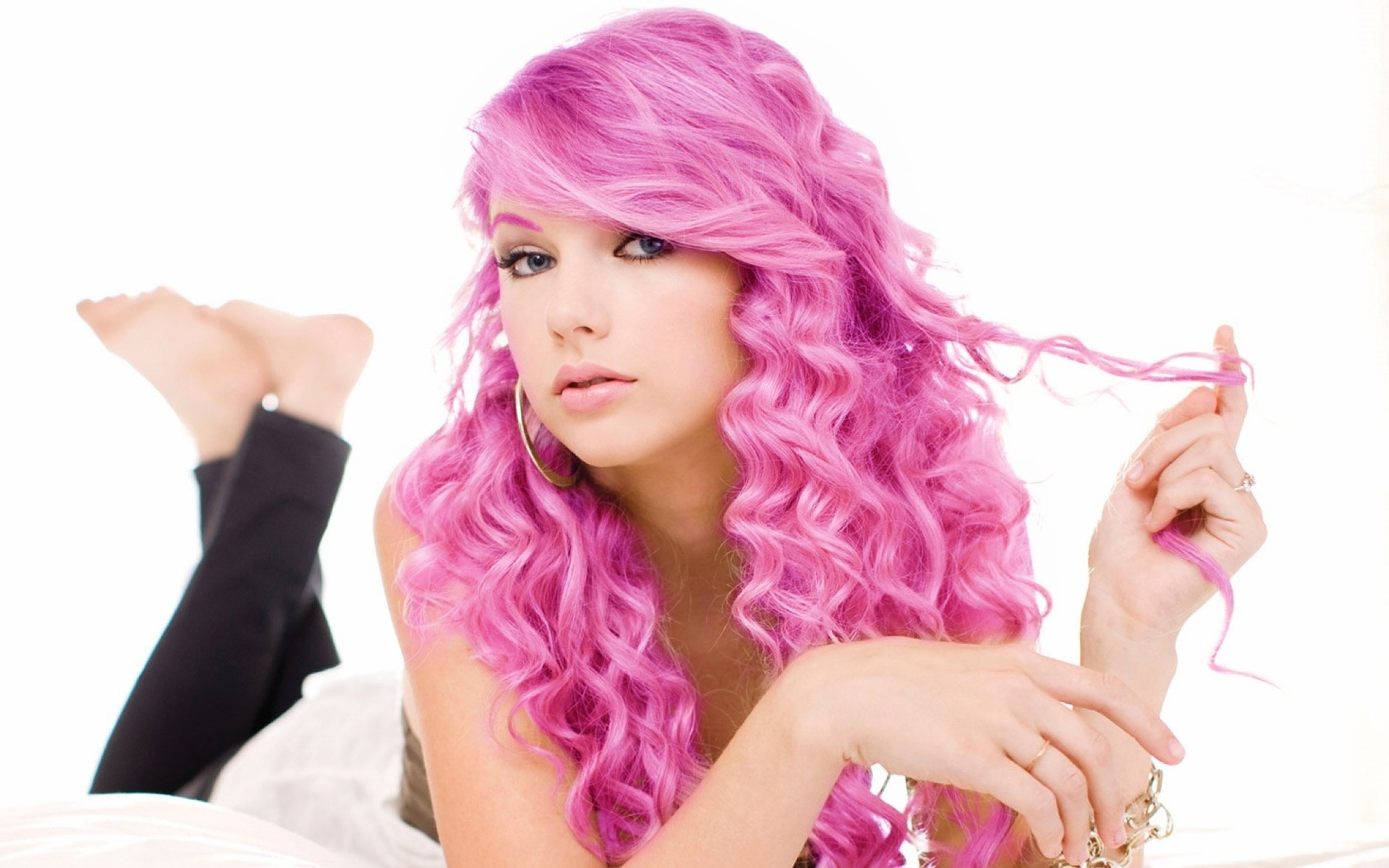
It was the hair flip heard ‘round the world—or at least across every corner of the internet where Swifties reside. When Taylor Swift stepped onto the red carpet at the 2019 iHeartRadio Music Awards, the air shifted. Gone was the moody, dark, "snake-skin green" aesthetic of the reputation era. In its place? A shimmering, holographic romper and a ponytail dipped in a shade of fuchsia so vibrant it practically glowed.
Honestly, seeing Taylor Swift with pink hair for the first time felt like a massive exhale. It was the visual confirmation that the "Old Taylor" wasn't dead; she’d just been waiting for the right moment to come back to life in technicolor.
But here is the thing about Taylor: she never does anything just because it looks "kinda cute." Everything is a riddle. Everything is a piece of a larger puzzle. That pink hair wasn't just a style choice—it was the opening act for the Lover era.
The iHeartRadio Debut: Not Just a Ponytail
On March 14, 2019, Taylor didn't just walk a red carpet. She signaled a regime change. She wore a sequined Rosa Bloom romper and those iconic Sophia Webster butterfly heels, but everyone was staring at her head.
The look featured her classic blonde base, but the ends of her messy ponytail were saturated with a hot pink hue. People lost their minds. Was it a wig? Was it semi-permanent dye? Was she trying to tell us that the new album was going to be bubblegum pop?
- The Look: Messy, high ponytail with dip-dyed fuchsia ends.
- The Vibe: Whimsical, lighthearted, and decidedly "not-Reputation."
- The Result: A frenzy of "Easter egg" hunting that lasted for months.
The beauty of this specific moment was the subtlety. From the front, she looked like the Taylor we’d known for years—fringe bangs, bright smile. But when she turned around, it was a "hot-pink party in the back," as some critics called it. It was the perfect bridge between the dark curls of her previous tour and the pastel dreamscape she was about to inhabit.
Why the Pink Hair Mattered for the Lover Era
You've gotta understand the context here. For nearly two years, Taylor had been leaning into a darker, more guarded persona. The reputation era was about reclaiming her narrative after a very public "cancellation." It was heavy. It was black hoodies and thigh-high boots.
When she transitioned to the Lover era, the pink hair acted as a palette cleanser. It was the "butterfly emerging from the snake" metaphor, but in literal hair-color form.
In the "You Need To Calm Down" music video, she took it a step further. We saw her lounging in a pool with a full-blown pink-and-blue hair moment—often interpreted by fans as a nod to the bisexual pride flag. It wasn't just about being "pretty" in pink; it was about inclusivity, loud self-expression, and a refusal to stay hidden in the shadows of the reputation dungeon.
A History of Dip-Dye Experiments
Interestingly, 2019 wasn't the first time Taylor played with this. Way back in 2012, while filming the "I Knew You Were Trouble" music video, she rocked a shoulder-length cut with pink tips. That was her "rebel" look—a visual representation of the "trouble" the song warns about.
Comparing the 2012 pink to the 2019 pink is like looking at two different people. In 2012, it was angsty and punk-lite. In 2019, it was sophisticated, joyful, and purposeful. It shows how she uses her physical appearance to signal which "character" she’s playing for that specific album cycle.
Is It Real or a Wig? The Great Debate
Fans are still debating whether she actually dyed her hair or if it was just a high-quality hairpiece. Honestly, it was likely a mix of both throughout the era. For the iHeartRadio awards, hair experts suggested it was likely a clip-on extension or a very well-blended temporary tint.
Why? Because Taylor is notoriously protective of her hair’s health. If you look at her during the folklore and evermore eras, her hair returned to its natural, "dirty blonde" state very quickly. Constant bleaching to achieve those neon pinks would have fried her natural curls, something she’s talked about wanting to preserve.
Whatever the method, it worked. It created a signature look that defined an entire year of her career.
How to Get the Taylor Swift Pink Hair Look (Safely)
If you're looking to channel your inner Lover era self, don't just dump a bottle of permanent dye on your head. Taylor’s looks are usually achieved with professional precision.
Basically, you have three options if you want to recreate this:
- Hair Chalk or Temporary Spray: This is the "iHeartRadio" method. It stays for a night and washes out in the shower. Perfect for a concert or a themed party.
- Semi-Permanent Tints: If you have light blonde hair, brands like Arctic Fox or Manic Panic can give you that fuchsia pop without the commitment of permanent chemicals.
- Clip-in Extensions: This is the most "Taylor-coded" way to do it. Buy high-quality blonde extensions, dye the tips pink, and clip them into your ponytail. No damage, all the drama.
The Actionable Takeaway
The "Taylor Swift with pink hair" moment wasn't just a trend; it was a lesson in brand reinvention. If you’re feeling stuck in your own "era," sometimes a small, vibrant change is enough to signal a fresh start.
Next Steps for Your Hair Journey:
If you're planning on trying a bold color like fuchsia, start with a "test strand" on the underside of your hair. This lets you see how the pigment reacts with your natural blonde (or brunette) tones before you go full "You Need To Calm Down" in the middle of your bathroom. Also, always use a color-protecting shampoo—pink is notorious for fading faster than a summer fling.
By understanding the history and the "why" behind Taylor's most colorful era, you can appreciate the craftsmanship that goes into her public image. She’s a mastermind, after all.
Practical insights for fans:
- Check out the "You Need To Calm Down" video to see the most saturated version of the look.
- Look for "Lover Era" tutorials on TikTok for specific extension-blending techniques.
- Remember that her hair in 2026 is much closer to her natural "old money blonde," proving that even the brightest pink eras eventually fade into something more grounded.