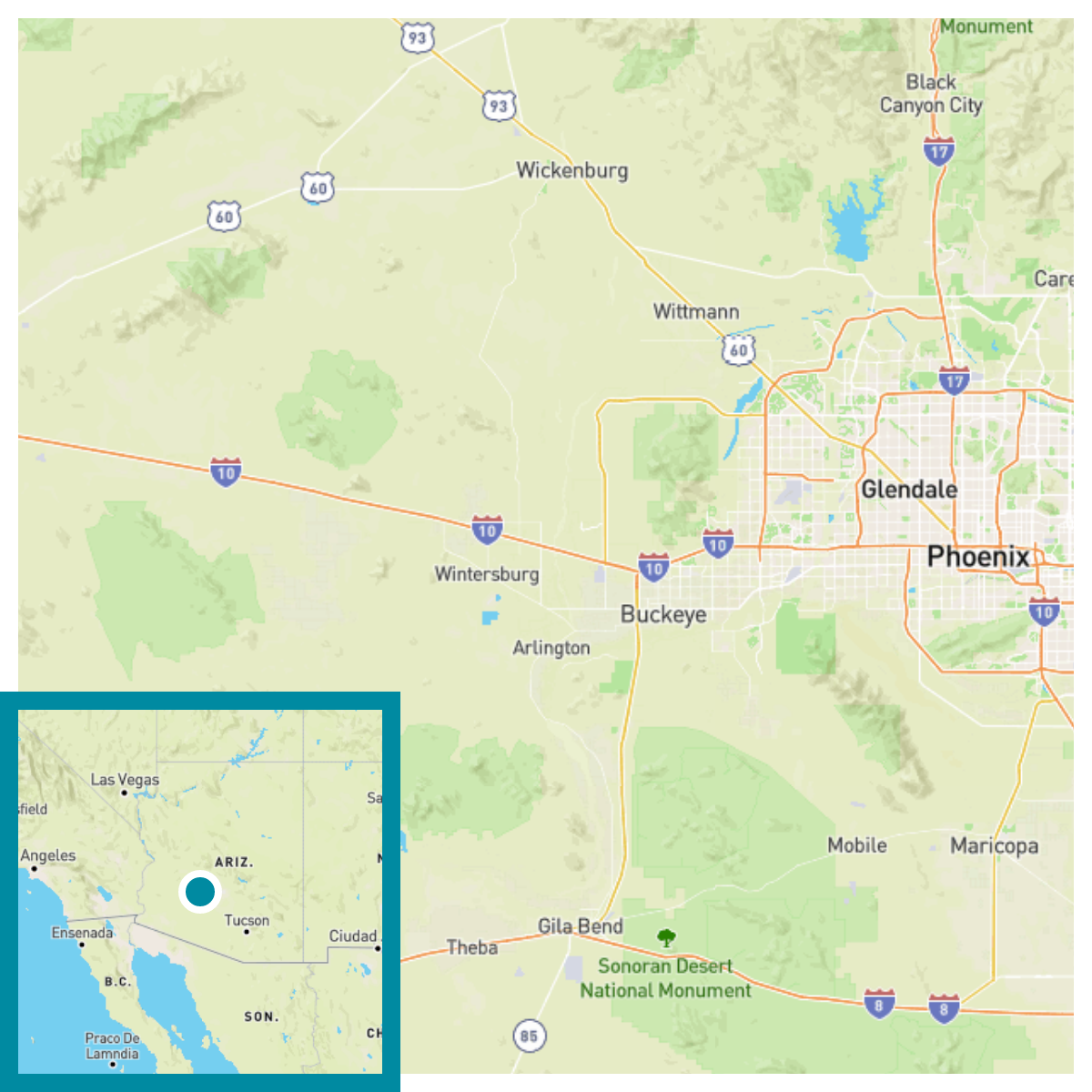
If you’ve ever stepped out of a car in Buckeye during July, you know that "dry heat" feels a lot like standing inside a giant hair dryer. People talk about the desert like it’s one big monolith of sun, but the temperature in Buckeye Arizona actually has a personality. It’s a mix of brutal summer afternoons, shockingly chilly winter nights, and those weird "shoulder" weeks where you’re wearing a hoodie at 6:00 AM and a tank top by noon.
Honestly, living here or visiting requires a bit of strategy. You aren't just checking a weather app; you're playing a game of chicken with the sun.
The Reality of Buckeye Summer Heat
Buckeye isn't just "hot." It’s "top-five-hottest-cities-in-the-country" hot. During the peak of summer, which basically stretches from late May through September, the daily highs routinely cross the 100°F mark. In fact, July is usually the heaviest hitter. Average highs sit around 108°F, but that’s just the average. It’s very common to see the mercury climb to 115°F or even 118°F.
The record high for Buckeye is a blistering 125°F, set back in July 1995. Think about that for a second. At that temperature, the air feels heavy. Metal surfaces will give you a second-degree burn in seconds.
One thing people get wrong is the "dry heat" myth. While it’s true that 110°F in Arizona feels better than 95°F with 90% humidity in Florida, it’s still dangerous. Your sweat evaporates so fast you don't even realize you’re dehydrating. You’ll be bone-dry and suddenly feel dizzy. That’s the desert’s way of telling you you’re in trouble.
Why Buckeye is Often Hotter Than Phoenix
It’s weird, but Buckeye often records temperatures a few degrees higher than the official Phoenix reading at Sky Harbor Airport. Why? It comes down to geography and the way the city is growing.
Buckeye has a lot of open desert and agricultural land. This sounds like it should be cooler, but the low-lying valley position can trap heat. However, as the city grows, it’s starting to deal with the Urban Heat Island effect. All that new asphalt and concrete in the master-planned communities like Verrado or Tartesso absorbs heat all day and bleeds it back out at night.
In the old days, the desert would cool off significantly once the sun went down. Now, during a heatwave, the "low" might only be 90°F. You never get a break.
When the Monsoon Changes the Game
Around mid-June, everything shifts. This is the start of the Arizona monsoon. While the temperature in Buckeye Arizona might technically "drop" a few degrees when a storm rolls in, the humidity spikes.
Suddenly, that dry heat becomes "muggy."
It’s a trade-off. You get these massive, dramatic thunderstorms that dump rain and drop the temperature to a beautiful 80°F for an hour, but you also get the humidity that makes the next day feel like a sauna. Plus, there are the haboobs—those giant walls of dust that can drop visibility to zero and precede the rain. If you see a wall of brown on the horizon, the temperature is about to plummet, but you definitely want to be indoors.
Winter in Buckeye: The Best Kept Secret
If you can survive the summer, you get the reward. Winter in Buckeye is basically perfect. From November to March, the daytime temperatures are usually in the 65°F to 75°F range. It’s paradise.
But here’s the kicker: it gets cold at night.
Because the desert air is so thin and dry, it doesn't hold heat. As soon as the sun goes behind the White Tank Mountains, the temperature can drop 30 degrees in a couple of hours. It’s not rare to see frost on the windshields in January. The record low in Buckeye is a bone-chilling 11°F, though most winter nights stay in the high 30s or low 40s.
If you're visiting in the winter, bring layers. You’ll want a coat for breakfast and a t-shirt for lunch.
Survival Tips for the Buckeye Climate
Whether you're moving here or just passing through, you have to respect the climate. It’s a beautiful place, but the sun is the boss.
- The 10:00 AM Rule: In the summer, if you haven't finished your outdoor chores, hiking, or dog walking by 10:00 AM, just wait until tomorrow. The window between 2:00 PM and 5:00 PM is the danger zone.
- Hydrate Yesterday: If you start drinking water when you feel thirsty, you're already behind. Locals carry a gallon jug or a massive insulated flask everywhere. It’s not a fashion statement; it’s a necessity.
- Sunscreen is a Year-Round Thing: Even when it’s 70°F in February, the Arizona sun is intense. The UV index here is consistently higher than in most of the country.
- Check Your Tires: The heat from the pavement (which can hit 160°F) will destroy old tires. Blowouts are incredibly common on I-10 during the summer months.
- AC Maintenance: In Buckeye, your AC isn't a luxury; it’s life support. Get it serviced in April before the first 100-degree day hits. If it dies in July, you might be waiting days for a technician because they’re all slammed.
Actionable Next Steps
If you are planning to be in the area, the best way to handle the temperature in Buckeye Arizona is to plan your life around the sun's schedule. Download a reliable weather app like the National Weather Service (NWS) Phoenix station for the most accurate local alerts.
Invest in high-quality window tints for your car and ceramic films for your home windows to cut down on solar heat gain. Finally, if you’re hiking the White Tanks, always tell someone your route and bring twice as much water as you think you need. The desert is unforgiving, but if you play by its rules, the views and the winter weather are more than worth it.