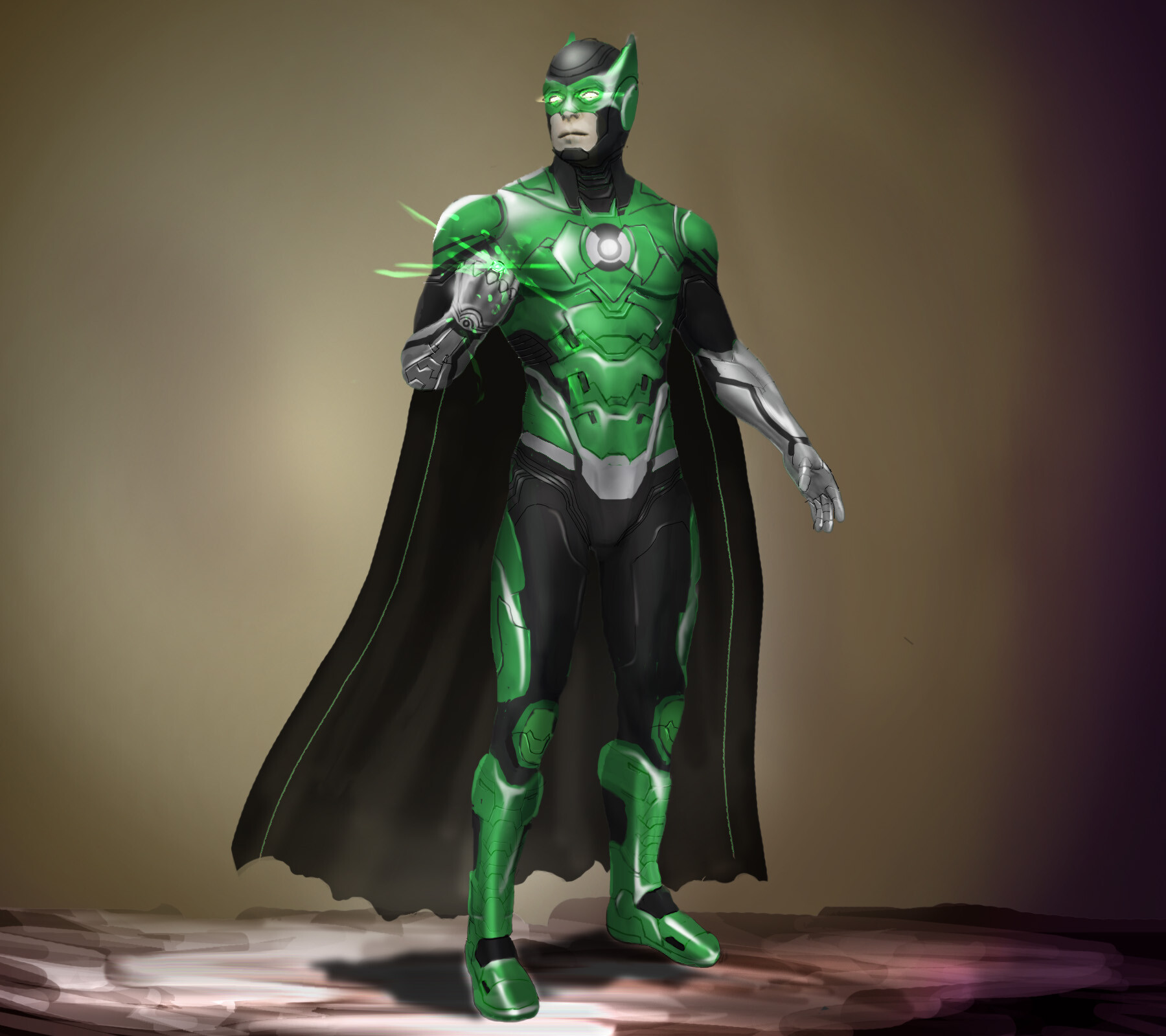
Batman with a power ring seems like a cheat code. Think about it. You take the most disciplined mind in the DC Universe, a guy who basically lives on sheer willpower, and you hand him a weapon fueled entirely by that specific trait. It should be a perfect match. On paper, Bruce Wayne is the ultimate candidate for the Green Lantern Corps.
But he isn’t.
If you've spent any time reading the comics—from the Elseworlds tales to the main continuity—you know that Batman as a Green Lantern is usually a disaster. It’s a fascinating, messy contradiction that tells us more about Bruce Wayne’s psyche than any therapy session ever could.
The ring requires the ability to overcome great fear. Bruce doesn't just overcome fear; he lives in it. He weaponizes it. That fundamental difference is why the ring often rejects him, or why he ultimately rejects the ring.
The Moment Hal Jordan Handed Over the Ring
There is a specific scene in Green Lantern vol. 4 #9 by Geoff Johns and Ethan Van Sciver that perfectly encapsulates this. Hal Jordan, trying to help Bruce move past the trauma of his parents' death, lets him try on the ring. It’s a quiet moment in the Batcave. No villains. No world-ending stakes. Just two teammates.
Bruce puts it on. He tries to conjure a construct of his parents. For a second, it almost works. But the light flickers. It’s weak.
The ring tells him that to truly use it, he has to let go of his past. He has to let go of the fear and the darkness that defines him. Batman’s response? He takes the ring off. He tells Hal he’s not ready to let go. Honestly, that’s the most "Batman" thing ever. He chooses his trauma because that trauma is what gives him his edge. Without the darkness, he isn’t the Batman.
Batman: In Darkest Knight and the Multiverse
Of course, DC couldn’t resist the "What If" factor. In 1994, we got the Elseworlds story Batman: In Darkest Knight. In this reality, Abin Sur crashes near Wayne Manor instead of outside Coast City. Bruce Wayne becomes the Green Lantern instead of Hal Jordan.
It goes about as well as you’d expect.
Bruce uses the ring to hunt down the Joe Chill of that universe, but his methods are terrifying. He doesn't join the Corps immediately; he stays in Gotham and uses the green light to enhance his brand of vigilante justice. He ends up clashing with the Guardians of the Universe because he refuses to follow their rules.
Then there’s the darker side.
The most famous—or infamous—version of Batman as a Green Lantern is The Dawnbreaker. This isn't a hero. This is a nightmare from the Dark Multiverse (Dark Nights: Metal). In this version, a young Bruce Wayne receives the ring moments after his parents are killed. His willpower is so corrupted by grief and rage that he literally breaks the ring. He forces it to kill Joe Chill, something the ring’s internal safeguards are supposed to prevent.
He "blacks out" the green light with his own darkness. It’s a chilling reminder that the only thing scarier than Batman is a Batman with the power to manifest his deepest, darkest thoughts into physical reality.
Why the Ring and the Cowl Usually Clash
Let's get into the mechanics of why this pairing is so weird.
The Source of Power: Green Lanterns use willpower to suppress fear. Batman uses fear as his primary tool. You can’t exactly be the "Creature of the Night" while glowing like a giant neon sign. Stealth is his whole thing. A Green Lantern is basically a human flashlight.
Authority Issues: Batman doesn't play well with others. The Green Lantern Corps is a paramilitary organization with a strict hierarchy. Can you imagine Bruce Wayne taking orders from a blue immortal named Ganthet? Absolutely not. He’d be trying to hack the Central Power Battery within twenty minutes of arriving on Oa.
Psychological Trauma: As we saw in the Geoff Johns run, the ring requires a level of inner peace or at least a "moving forward" mentality. Bruce Wayne is defined by a refusal to move forward. He is eternally eight years old in Crime Alley. The ring wants him to heal; Bruce wants to punish.
That One Time He Actually Was a Lantern (Briefly)
During the Blackest Night event, things got even weirder. For a very brief window, Batman (well, a version of him) was chosen by a White Lantern ring. Even more briefly, in the Justice League comics, he’s donned a Yellow Ring of Sinestro.
Wait. The Yellow Ring?
Actually, the Yellow Ring suits him way better than the Green one ever did. In Green Lantern vol. 4 #17, a Qwardian power ring tries to recruit Bruce because he has the "ability to instill great fear." It fits him like a glove. He eventually rejects it because, again, Bruce has a thing about someone else controlling his destiny, but the potential was there. It’s a terrifying thought: a Batman fueled by the fear he creates in others.
The Takeaway for Fans and Writers
What do we learn from all these different iterations of Batman as a Green Lantern?
Basically, Bruce Wayne is too big for a single power set. The Green Lantern ring simplifies things. It turns internal struggles into external constructs. But Batman is all about the internal struggle. If he can just "will" his problems away with a magic ring, the tragedy of the character evaporates.
The best writers understand that the ring is a temptation for Bruce, not an upgrade. It represents the easy way out—a way to stop being the man in the suit and start being a god. And Bruce Wayne, for all his flaws, always chooses to be the man.
If you want to explore this dynamic further, there are a few key runs and issues you should prioritize. These aren't just "fun" stories; they are essential reading for understanding the intersection of the Bat-mythos and the cosmic side of DC.
Recommended Reading Path
- Green Lantern (Vol. 4) #9: This is the essential "Hal and Bruce" heart-to-heart. It’s only a few pages, but it defines their entire relationship.
- Batman: In Darkest Knight (Elseworlds): For the best "What If" scenario that stays true to the 90s era of comics.
- Dark Nights: Metal - Batman: The Dawnbreaker: If you want to see the absolute worst-case scenario. It’s cosmic horror blended with superhero tragedy.
- Green Lantern (Vol. 4) #17: This covers the Yellow Ring encounter. It’s a great look at how the universe views Batman’s "scary" reputation.
Actionable Insights for Collectors and Enthusiasts
If you are looking to dive into this niche of DC lore, don't just look for "Green Lantern" titles. The most interesting Batman/Lantern crossovers happen in team-up books or major events.
Keep an eye out for the Dawnbreaker tie-in issues if you're a collector; they’ve held their value surprisingly well because of the striking character design. Also, look into the Justice League: The Darkseid War arc, where Batman becomes the God of Knowledge (sitting on the Mobius Chair). While not a Green Lantern story specifically, it explores the same theme: what happens when Batman gets "ultimate power" and why it always ends poorly for his humanity.
Batman works best in the shadows. The emerald light of Oa is just a bit too bright for the streets of Gotham. It’s a fun "what if," but at the end of the day, Bruce Wayne doesn't need a ring to be the most dangerous man in the room. He just needs a plan.