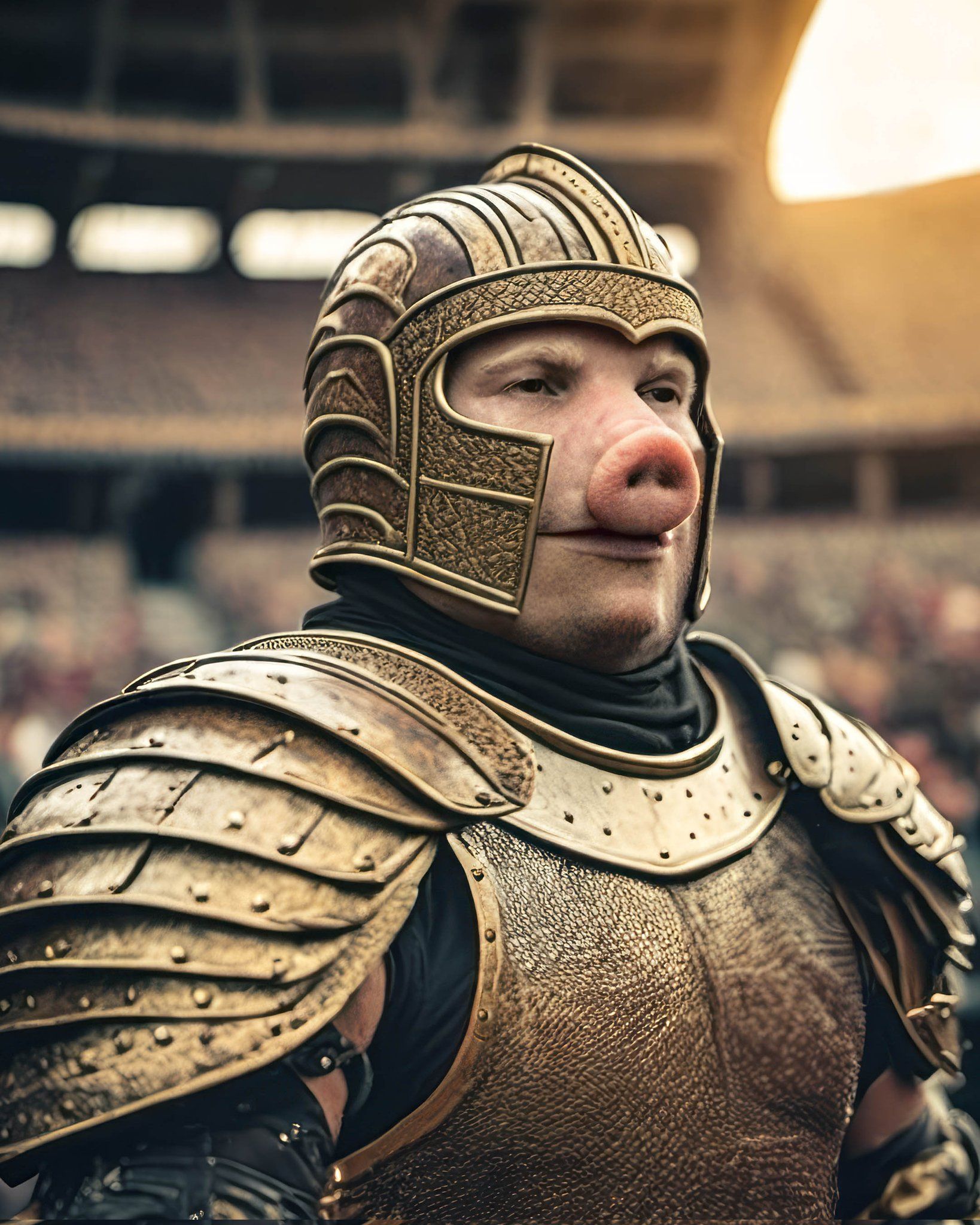
You've seen him. Maybe it was a late-night scroll on TikTok or a random Discord ping from a friend who thinks they’re hilarious. A bipedal, suit-wearing man with the head of a realistic pig holding a smartphone to his ear. It’s unsettling. It’s goofy. Honestly, a picture of John Pork is one of those things that feels like a fever dream until you realize millions of other people are looking at the exact same thing.
He isn't real, obviously. But the way he took over the internet makes you wonder if the line between "creepy" and "iconic" has just completely vanished.
Where did John Pork actually come from?
Most people assume John Pork was some AI-generated nightmare that popped up last week. Wrong. He’s actually been around since at least 2018. The character was created by a digital artist—or rather, a collective of creators—under the Instagram handle @john_pork. This wasn't a corporate marketing campaign. It was just... art. Or a meme waiting to happen.
The original picture of John Pork is a masterpiece of the "uncanny valley." That’s that weird psychological space where something looks almost human, but just "off" enough to make your skin crawl. He has human skin textures on a porcine snout. He wears trendy clothes. He’s often seen "traveling" to places like London or New York. For years, he lived in a quiet corner of the internet, a niche curiosity for people who liked weird digital art.
Then came 2023.
The internet has a way of breathing life into dead memes. Suddenly, John Pork wasn't just a weird digital avatar; he was a protagonist in a massive, sprawling creepypasta. People started making "John Pork is Calling" videos. You know the ones. A low-quality ringtone plays, a distorted picture of John Pork flashes on the screen, and the caption tells you that if you don't answer, something terrible will happen. Or, even weirder, the meme evolved into a "RIP John Pork" trend where people acted like a digital pig-man had actually passed away.
The psychology of the "calling" meme
Why did this specific image blow up? It’s basic human psychology mixed with Gen Z humor. The image is inherently funny because it’s absurd, but it’s also inherently creepy because of the realistic textures.
When you see a picture of John Pork calling your phone, your brain registers two conflicting emotions. You want to laugh because it’s a pig in a vest. You want to look away because those eyes look a little too human. That tension is the perfect recipe for a viral hit. It’s why "Slender Man" worked a decade ago, and it’s why John Pork works now. He’s the mascot of the weird-web.
The technical side of the John Pork image
If you look closely at a high-resolution picture of John Pork, you’ll notice he isn't a 2D drawing. He’s a 3D model.
Back in 2018, creating something this detailed required actual skill in software like ZBrush or Blender. Today, people use AI to generate "new" versions of him, but the original assets have a specific look that AI struggles to replicate perfectly. The original creator used high-quality textures to make the pig skin look porous and aged. It’s high-effort weirdness.
A lot of the newer images you see floating around are edits. Fans take the base picture of John Pork and put him in different scenarios. He’s in the gym. He’s eating ramen. He’s at the club. This user-generated content is what keeps the meme alive. It’s a collaborative storytelling effort where nobody knows the plot, but everyone knows the main character.
Is John Pork "dead"?
In the world of memes, "death" is a literal plot point.
Around mid-2023, the "John Pork is dead" hoax took over. People were posting fake news reports and "tribute" videos with sad music. It was a fascinating look at how digital communities personify abstract concepts. Of course, you can't kill a JPEG. But the relevance of the picture of John Pork shifted from a "jump scare" meme to a nostalgic icon.
He’s now a part of the permanent internet archives. Like Big Chungus or Sanic, John Pork has moved past his expiration date into the realm of "ironic appreciation."
Why we can't stop looking
We live in an era of "brain rot" content. It’s fast, it’s nonsensical, and it requires zero context. The picture of John Pork fits this perfectly. You don’t need to know his backstory to find the image striking. In fact, knowing less makes it better.
Some people find it genuinely distressing. There are threads on Reddit where parents ask why their kids are obsessed with a "scary pig man." It’s a generational gap thing. For older users, it looks like a horror movie prop. For younger users, it’s just John. He’s just a guy. Who happens to be a pig.
Digital footprints and copyright
Interestingly, the actual ownership of the John Pork character is a bit of a grey area. While the Instagram account @john_pork is the "official" home, the image has been screenshotted, remixed, and filtered so many times that it basically belongs to the public domain of the internet now.
This is the fate of any truly great meme.
The original high-quality picture of John Pork is actually quite crisp. If you find the original posts from 2018, the lighting and shadows are impressively handled. It shows that whoever made him actually gave a damn about the aesthetics. They weren't just trying to be "random." They were building a character.
Actionable ways to use or find John Pork media
If you’re looking to dive deeper into this rabbit hole, or maybe you just want to prank a friend with the "John Pork is calling" screen, here is how you handle the digital pig-man responsibly.
- Check the Source: Go to the original Instagram account. Seeing the evolution of the character from 2018 to now is actually pretty interesting from a digital art perspective.
- Use High-Res Assets: If you’re making content, don’t settle for a blurry screenshot. The "uncanny" effect works best when you can see the weirdly realistic skin textures.
- Understand the Meta: Before you post, realize that John Pork has gone through several "lore" phases. Is he a jump scare? Is he a tragic figure who died? Is he a lifestyle influencer? Your audience will know the difference.
- Verify the "Hoaxes": Don't get caught up in the "John Pork spotted in real life" videos. They are all (obviously) CGI or masks. Don't be that person who thinks a digital render is a cryptid.
The picture of John Pork remains a pillar of 2020s internet culture. He represents the shift from "relatable" memes to "surrealist" memes. We aren't laughing at things we recognize anymore; we’re laughing at things that make us feel slightly uncomfortable. He’s the digital equivalent of an urban legend, born in a 3D rendering suite and raised by the chaos of the TikTok algorithm.
Whether he’s calling you or just staring at you from a static image, John Pork isn't going anywhere. He’s the pig-man of our dreams—or nightmares—and honestly, the internet would be a much more boring place without him.