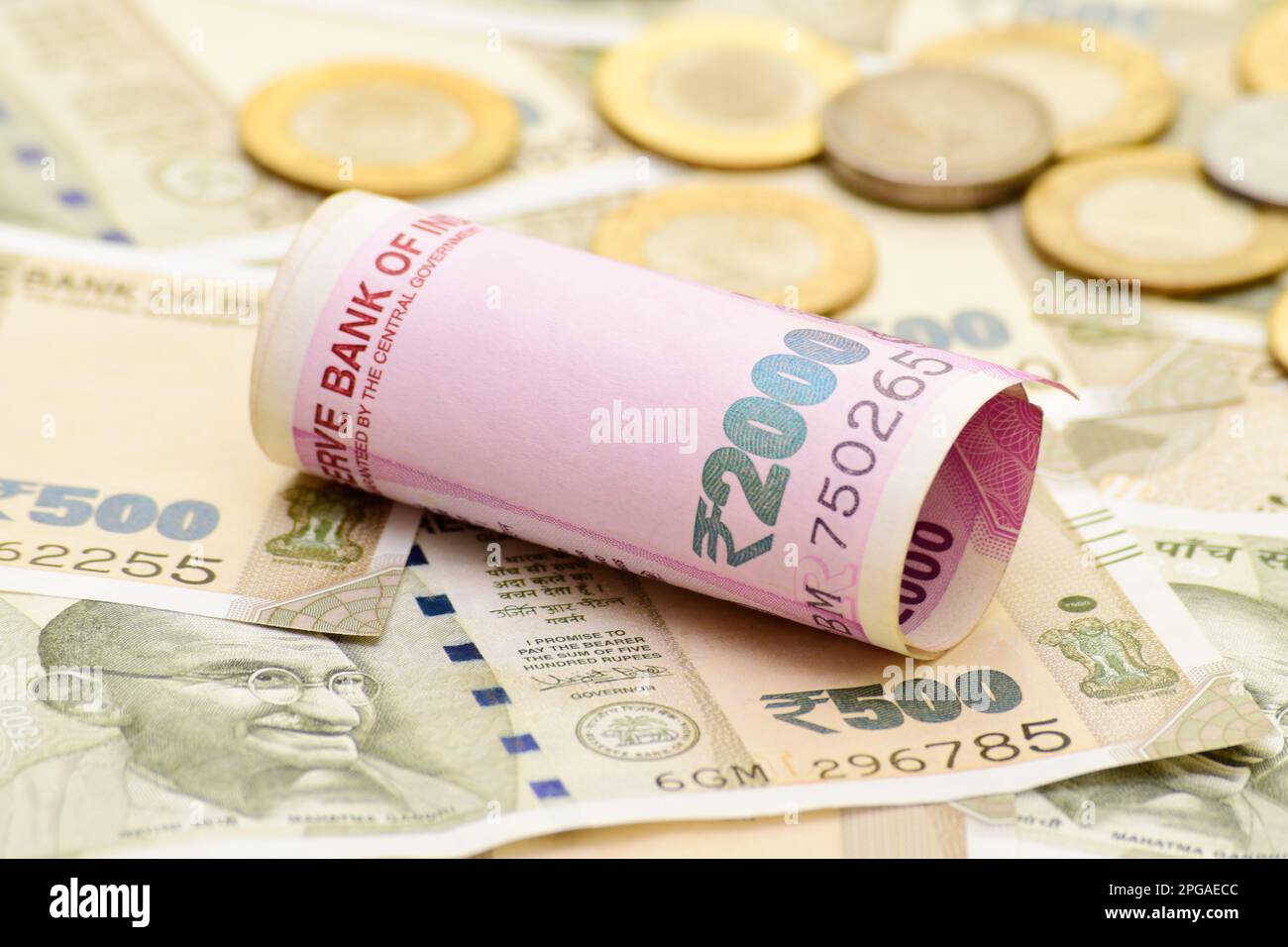
The magenta note. It was bold, it was bright, and frankly, it was a bit of a shock when it first landed in our wallets back in late 2016. Most of us remember exactly where we were when the announcement dropped. One minute we’re worrying about everyday chores, the next, the 500 and 1000 rupee notes are gone, and this brand-new indian currency 2000 rupees note is the new king of the hill. It felt like holding a piece of history, albeit a slightly oversized and very pink one.
But here’s the thing. That king didn’t sit on the throne for very long.
By May 2023, the Reserve Bank of India (RBI) decided it was time for the 2000 rupee note to head into retirement. It wasn't a "ban" like the 2016 demonetization—that’s a huge distinction people often miss. It was a withdrawal from circulation. You could still use it for a while, but the banks wanted them back. Why? Because the "Clean Note Policy" isn't just a corporate slogan; it’s how the RBI manages the physical health of the money moving through your hands.
Why the Indian Currency 2000 Rupees Note Was Born (And Why It Had to Go)
Context matters. Back in November 2016, the government pulled 86% of the country's cash out of the system overnight. It was chaos. People were queuing for hours. The economy needed a massive injection of value, and it needed it fast. Printing billions of smaller notes takes time—time the country didn't have.
So, the 2000 rupee note was the emergency bandage. It allowed the RBI to remonetize the economy quickly. One note did the work of four 500s. It was efficient. It was necessary. But it was never really meant to be a permanent fixture of your daily chai-stall transaction. Honestly, have you ever tried getting change for a 2000 rupee note from a small vendor? It was a nightmare. "Change nahi hai" (I don't have change) became the unofficial anthem of the Indian marketplace.
The RBI eventually stopped printing these high-value notes in the 2018-19 financial year. They’d served their purpose. Most of these notes had reached the end of their estimated lifespan of 4-5 years anyway. Plus, let's be real: high-value notes are the preferred playground for "black money" hoarding. If you want to hide a crore of rupees, you'd much rather have a stack of 2000s than a mountain of 100s.
The Numbers Behind the Withdrawal
When the RBI announced the withdrawal on May 19, 2023, there were about ₹3.56 lakh crore worth of 2000 rupee notes in circulation. By the end of September that year, over 93% of them had come back home to the banks. It was a massive logistical feat. People weren't panicking this time around because the notes remained legal tender; you just couldn't get new ones from the ATM.
By 2024 and 2025, the remaining trickle of notes started drying up. The RBI reported that nearly 98% of the notes had been returned. The few that remain? Probably tucked away in old diaries, forgotten in "emergency" spice jars, or held by collectors who think they’ll be worth a fortune one day. (Spoiler: They probably won't be, given how many were printed).
The Security Features You Probably Ignored
We all looked for the "chip" that rumors said was inside. Remember that? The WhatsApp forwards claiming there was a GPS tracker in the note so the government could find your stash from space? Total nonsense. Pure fiction. There was no chip.
What there was, however, was some pretty sophisticated printing tech.
The indian currency 2000 rupees note featured several security marks that were actually quite impressive if you took the time to look. The see-through register where the number '2000' would reveal itself when held against the light was a neat trick. Then you had the latent image, the micro-lettering, and the color-shifting windowed security thread. If you tilted the note, the thread changed from green to blue. It’s the kind of stuff that makes life very difficult for counterfeiters.
For the visually impaired, there was a raised print (intaglio) of the Mahatma Gandhi portrait and a horizontal rectangle with ₹2000 in raised print on the right. These tactile markers are crucial for financial inclusivity, something we often take for granted.
The Shift to Digital: The 2000 Note's Real Legacy
You can't talk about the 2000 rupee note without talking about UPI. While the note was intended to bridge the cash gap, it actually pushed a lot of people toward digital payments. When you can't get change for a high-value note, you start looking for alternatives. Suddenly, scanning a QR code at the kirana store became the path of least resistance.
India's digital payment revolution didn't happen because of one note, but the friction caused by high-denomination cash certainly greased the wheels. We've moved from a "cash is king" mindset to "UPI is convenient." In 2024 alone, transaction volumes hit records that would have been unthinkable when the 2000 rupee note was first minted.
What if You Still Have One?
If you’re reading this and realize you have a stray magenta note sitting in a coat pocket, don't panic. But don't wait either. You can't just walk into your local grocery store and spend it anymore. Most banks have finished their primary exchange windows.
Currently, you have to go to one of the 19 Regional Offices of the RBI. You can either go in person or send the notes through India Post (Registered Post) to an RBI office. You'll need to provide your bank account details and some ID. It’s a bit of a bureaucratic hurdle, but the money isn't "gone"—it’s just in a state of administrative limbo.
The Economic Ripple Effect
When the RBI pulls a massive amount of currency out of circulation, it affects bank liquidity. In mid-2023, banks saw a temporary surge in deposits as people turned in their 2000 rupee notes. This actually helped banks manage their credit-to-deposit ratios for a while. It wasn't a massive shock to the system like 2016, mainly because the 2000 rupee note accounted for only about 10.8% of the total notes in circulation at the time of the withdrawal announcement.
Economists like Ashima Goyal have noted that the withdrawal was handled smoothly, with minimal disruption to the daily lives of citizens. It was a surgical strike on high-value hoarding rather than a carpet-bombing of the economy.
Common Misconceptions That Refuse to Die
- "It's illegal to own one." Wrong. It’s not illegal to possess them, but their utility as a medium of exchange is basically zero in the regular market.
- "The color leaks, so it's fake." Actually, the 2000 rupee note (and other high-value notes) used a specific type of ink that could rub off slightly if the note was new or wet. This was actually a sign of genuineness, not a flaw.
- "They’re bringing back the 1000 rupee note." People have been saying this for years. As of early 2026, there is no official word or plan from the RBI to reintroduce the 1000 rupee denomination. The focus is firmly on the 500 rupee note as the primary high-value workhorse and the expansion of the e-Rupee (Central Bank Digital Currency).
The life of the 2000 rupee note was short, vibrant, and controversial. It served as a bridge during India's most turbulent financial transition and then quietly exited the stage when it was no longer needed. It represents a specific era of Indian fiscal policy—one of rapid change and digital transition.
Actionable Steps for Holders and Collectors
If you're holding onto these notes, here is exactly what you should do:
- Check the RBI Website: Look for the latest notification on "Withdrawal of ₹2000 Denomination Banknotes." Rules for exchange at regional offices can change, and you don't want to travel to an RBI office only to find you're missing a specific document.
- Use the Post Office: If you aren't near a major city like Mumbai, Delhi, or Bengaluru, the India Post option is your best bet. Use insured, registered post to send the notes to the nearest RBI issue office.
- Documentation is Key: Have your PAN card and Aadhaar ready. If you're depositing a large amount (though most people by now only have a few notes), you'll need to explain the source of funds.
- Don't Buy "Rare" Notes: Unless a note has a legitimate printing error (which are extremely rare), a standard 2000 rupee note is not a high-value collector's item yet. Don't fall for scams on auction sites claiming a single note is worth lakhs of rupees just because it has a "lucky" serial number like 786.
- Transition to Digital: If you haven't already, set up a digital payment backup. The withdrawal of the 2000 rupee note is a clear signal that the government prefers smaller denominations and digital tracks for high-value transactions.
The era of the magenta note is effectively over. It’s a souvenir now, a reminder of a time when the Indian economy had to pivot on a dime—or rather, on a very large, very pink piece of paper.