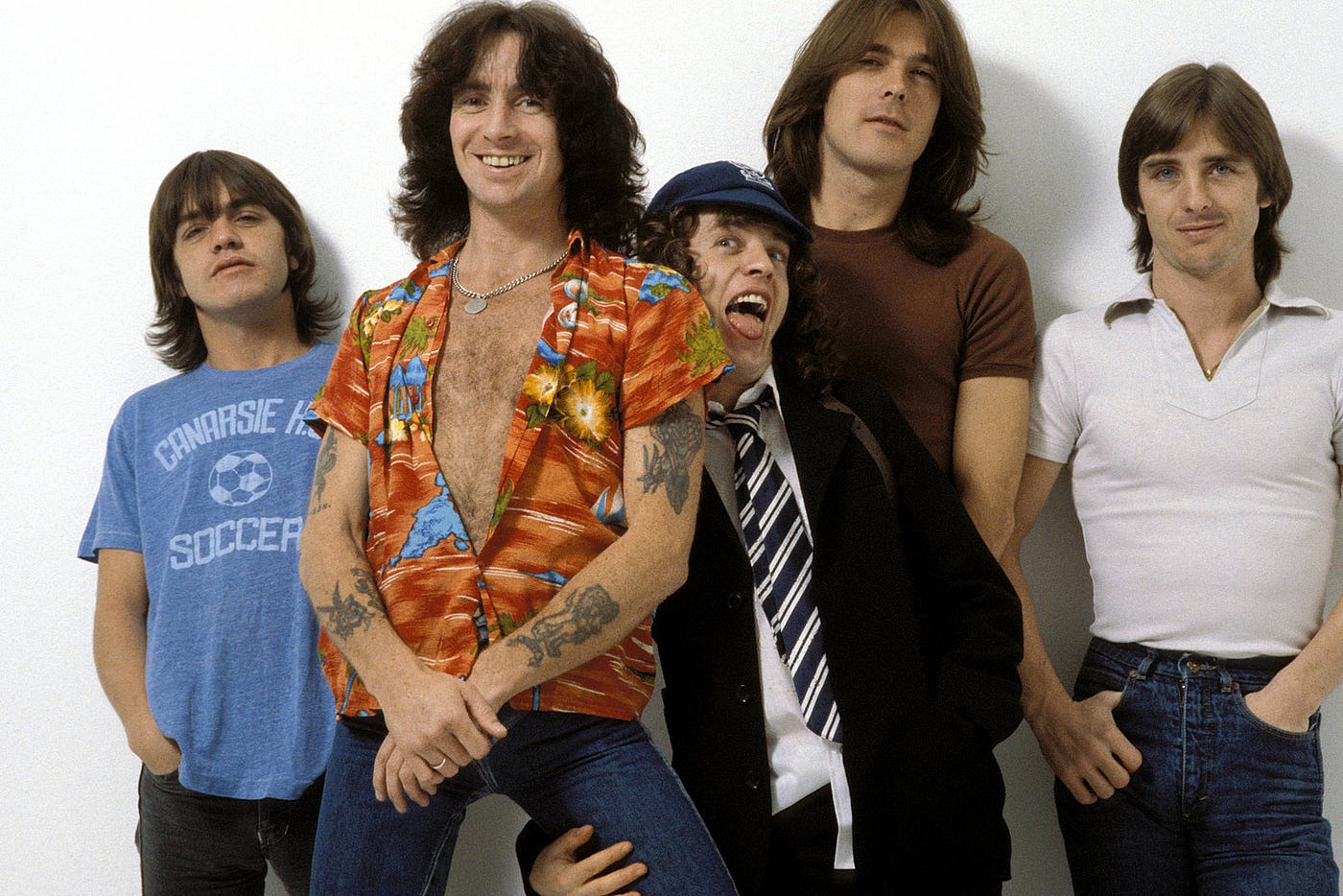
Before the schoolboy suit became a global corporate logo and before "Back in Black" turned into the second-best-selling album of all time, AC/DC was a different beast entirely. It was grittier. Dirtier. Honestly, it was a bit more dangerous. That’s mostly thanks to Ronald Belford "Bon" Scott. He wasn't just a singer; he was a street poet with a raspy leer and a wink that suggested he’d already stolen your wallet and was about to buy you a drink with your own money.
The AC DC albums with Bon Scott represent a lightning-in-a-bottle moment in music history. Between 1975 and 1979, the band released a string of records that stripped rock and roll down to its barest essentials: three chords, a steady beat, and stories about mischief. It wasn't about the flashy virtuosity of the 70s prog-rock era. It was about the power of the riff.
Most people today know the hits, but if you really want to understand why this band matters, you have to look at the grime under the fingernails of these early recordings.
The Raw Early Years: High Voltage and TNT
In Australia, the debut was High Voltage (1975), followed quickly by T.N.T.. Internationally, these were chopped up and frankensteined together into a single 1976 release also called High Voltage. It’s a bit confusing for collectors, but the vibe remains the same across both versions. This was the sound of a band figuring out how to be a wrecking ball.
Listen to "It's a Long Way to the Top (If You Wanna Rock 'n' Roll)." It’s got bagpipes. Who puts bagpipes in a hard rock song? Bon did. He played them himself, despite supposedly having never played them before joining the band—though some accounts suggest he was in a pipe band as a kid. That track is the ultimate anthem for the working-class musician. It acknowledges the "getting robbed," the "getting stoned," and the "getting beat up" that comes with the territory.
Bon’s lyrics were always grounded in a very specific reality. He wasn't writing about wizards or spaceships. He wrote about women like "The Jack" and "Whole Lotta Rosie." He wrote about the law. He wrote about the road. The interplay between Angus Young’s frantic, blues-drenched lead guitar and Malcolm Young’s metronomic rhythm guitar created a floor for Bon to dance on.
Dirty Deeds and the Cult of Personality
- Dirty Deeds Done Dirt Cheap (1976)
- Let There Be Rock (1977)
- Powerage (1978)
Dirty Deeds Done Dirt Cheap is arguably the weirdest record in the catalog. It's got "Big Balls," which is basically a parlor room joke set to a heavy beat, but it also has the title track—a blueprint for every "tough guy" rock song that followed. Interestingly, Atlantic Records in the US initially hated it. They thought the production was too thin and Bon’s voice was "not melodic enough." They actually refused to release it in America for years. It didn't officially drop in the States until 1981, after Back in Black had already made them superstars.
Talk about a massive oversight.
Then came Let There Be Rock. If the previous albums were "rock and roll," this was "heavy metal" before the term got sanitized. The title track is a biblical retelling of the history of music. "Hell Ain't a Bad Place to Be" is a masterclass in tension. It's loud. It's sweaty. During the recording of the song "Let There Be Rock," Angus Young’s amp reportedly caught fire. They kept recording. That tells you everything you need to know about the energy in the studio.
Why Powerage is the True Fan Favorite
Ask a casual fan their favorite Bon Scott album, and they’ll say Highway to Hell. Ask a die-hard, and they’ll say Powerage.
Released in 1978, Powerage is where the songwriting reached a level of sophistication that most hard rock bands never touch. Take "Down Payment Blues." It's a song about being broke, but it's not a pity party. It's observant. It’s "doing nothing for my self-respect." It’s "looking at the cards, and I’m playing a hand."
Keith Richards of the Rolling Stones famously cited this as one of his favorite albums. It’s easy to see why. The groove is deeper here. Songs like "Sin City" and "Gone Shootin'" have a swing to them that AC/DC eventually traded for a more straight-ahead, thumping stadium sound. On Powerage, they were still a club band at heart, even if they were playing theaters.
There’s a certain vulnerability in Bon’s performance on this record that is often overlooked. Amidst the bravado, there’s a guy who knows the world is tough, and he’s just trying to find a way through it. This is also the first album to feature Cliff Williams on bass, solidifying the classic rhythm section that would define their sound for decades.
Highway to Hell: The Breakthrough
By 1979, the band brought in producer Robert John "Mutt" Lange. This was a turning point. Lange was a perfectionist. He made them tune their guitars between every take. He pushed Bon to find melodies he hadn't used before.
The result was Highway to Hell.
It’s a perfect album. There isn't a single second of filler on it. The title track is perhaps the most recognizable riff in history, but the deeper cuts like "Shot Down in Flames" and "If You Want Blood (You've Got It)" are just as potent. Bon sounds like he’s having the time of his life.
"I'm on the highway to hell / No stop signs, speed limit / Nobody's gonna slow me down"
Looking back, those lyrics are haunting. Bon Scott died in London on February 19, 1980, just months after the album's release. He was 33. The official cause was acute alcohol poisoning, classified as "death by misadventure." He never got to see the band become the biggest act in the world.
The Legacy of the Bon Scott Era
What makes the AC DC albums with Bon Scott so enduring is their lack of pretension. They weren't trying to change the world; they were trying to soundtrack a Saturday night.
A lot of people think AC/DC is "simple." That’s a mistake. It is incredibly difficult to play that simply and make it move people. It requires a specific kind of discipline. Malcolm Young once said that if a riff didn't make you want to move your feet, it wasn't a riff.
When Brian Johnson took over for Back in Black, he did a Herculean job of honoring the past while moving forward. But the Bon era remains the "sacred" era for many. It was the time of the underdog.
How to Listen Like a Pro
If you're just diving into this era, don't just stick to the Greatest Hits. Go for the live album If You Want Blood You've Got It (1978). It captures the band at their absolute peak of aggression. You can hear the crowd, the feedback, and Bon’s banter. It’s the closest thing to a time machine we have.
Also, pay attention to the lyrics on "Riff Raff" or "Kicked in the Teeth." Bon was a master of the double entendre, but he was also a master of the "single" entendre. He said exactly what he meant. There’s a refreshing honesty in that.
Practical Next Steps for Collectors
- Identify the Pressings: If you are buying vinyl, be aware of the differences between the Australian and International versions. The Australian versions often have different tracklists and superior cover art (like the original High Voltage or Dirty Deeds).
- Listen to the Lyrics: Treat Bon like a storyteller. He was heavily influenced by 1950s rock and roll and early blues. If you listen closely, you’ll hear the influence of Chuck Berry and Little Richard in his phrasing.
- Watch the Footage: Search for the "Let There Be Rock" concert film (1980). It’s the definitive visual document of this lineup. Watching Angus and Bon interact on stage is a lesson in rock chemistry.
- Explore the Influences: Check out Bon’s pre-AC/DC bands like The Valentines or Fraternity. It’s wild to hear him singing bubblegum pop or prog-rock before he found his true voice in AC/DC.
The Bon Scott era wasn't just a phase for AC/DC; it was the foundation. Everything that came after—the stadium tours, the cannons, the millions of records sold—was built on the back of five years of hard touring and five classic studio albums. It was a brief, loud, and brilliant moment that changed music. If you haven't spun Powerage lately, go fix that right now.
---