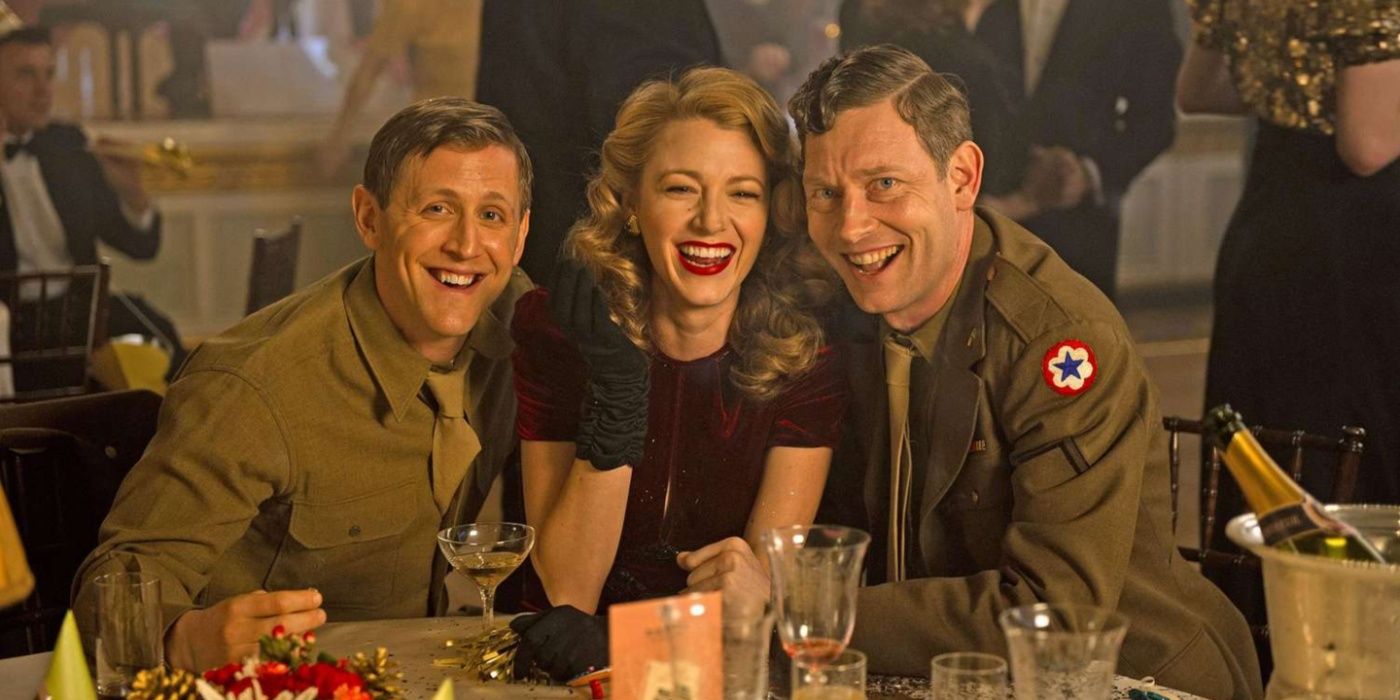
Cinema has a weird obsession with immortality, but usually, it's about vampires or gods. The Age of Adaline took a different route, giving us a story that felt more like a scientific fluke mixed with a fairy tale. When you finally get to the The Age of Adaline ending, it hits you with a mix of relief and genuine surprise because, honestly, the movie spent nearly two hours convincing us that things would probably end in tragedy.
Adaline Bowman, played by Blake Lively, spent eight decades running. She changed her name every ten years. She lived in the shadows. She watched her daughter grow old while she stayed stuck at 29. It’s a lonely premise. But that final sequence—the car crash, the bridge, the white hair—changes everything. It’s not just a "happily ever after" moment; it’s a biological "reset" that people still argue about today.
Let's break down what actually went down in those final frames.
The Science (and Pseudo-Science) of the Crash
To understand why Adaline starts aging again, you have to look back at the beginning of the film. Remember that weirdly specific narrator? He explains that in 1937, Adaline’s car went into a lake, she died of hypothermia, and then a bolt of lightning struck the car. The narrator calls it "electron-compression," a fake scientific concept that supposedly halted her aging process.
Fast forward to the climax. Adaline is fleeing again—this time from Ellis Jones and the complicated reality of his father, William (Harrison Ford), who was her former lover. She crashes. Again.
This second accident is a mirror image of the first. It’s freezing. She’s dying. But this time, the paramedics use an automated external defibrillator (AED) to jump-start her heart. The movie suggests that this specific jolt of electricity, delivered under identical conditions of hypothermia, "unlocked" her cells.
Basically, the same force that froze her in time was the one that restarted the clock. It’s a bit of a cinematic "two negatives make a positive" situation. Some viewers find it a bit too convenient, but within the logic of the movie, it’s remarkably consistent. It wasn't love that cured her; it was 750 volts of electricity.
That One Gray Hair
The most iconic shot in the The Age of Adaline ending happens a year after the crash. Adaline is getting ready for a New Year’s Eve gala with Ellis. She looks in the mirror and spots something. She pulls it out—a single, silver hair.
She smiles.
It’s such a small detail, but it’s the most important moment in the film. For Adaline, a wrinkle or a gray hair isn't a sign of decay; it's a sign of life. For eighty years, she was a statue. She was a biological anomaly that couldn't change, couldn't grow, and couldn't truly exist in time with everyone else. That gray hair is her ticket back to humanity. It means she can finally grow old with her daughter, Flemming (Ellen Burstyn), and eventually die.
It sounds morbid, but in the context of the story, mortality is the ultimate gift.
The Harrison Ford Factor
We can't talk about the ending without talking about William Jones. Harrison Ford’s performance in this movie is arguably one of his best in the last twenty years. The moment he recognizes the scar on Adaline’s hand—a scar he stitched up decades ago—is heartbreaking.
The ending works because William gets closure. He spent his whole life wondering why the love of his life disappeared. When he realizes she hasn't aged a day, he doesn't treat her like a monster. He treats her like the woman he loved. His reaction is what finally gives Adaline the courage to stop running. Without William’s discovery, she probably would have vanished again, and the "cure" at the end would have happened to a woman who was still hiding.
Common Misconceptions About the Final Scene
People often get confused about whether Ellis knows the truth. By the time we see them headed to the party a year later, it's heavily implied that Adaline has told him everything. She promised her daughter she would stop running. You can't really have a relationship with someone if you’re hiding the fact that you’re 107 years old and immortal.
Also, some fans wonder if the aging process happens all at once. Does she turn into an 80-year-old overnight?
No. The movie makes it clear she is aging normally from that point forward. She didn't "catch up" to her chronological age; she just resumed aging at the rate of a normal human being. She’s 29 (physically) and 108 (chronologically) at the end, but next year, she’ll be 30.
Why the Movie Still Resonates
The Age of Adaline isn't a blockbuster, but it has a massive following on streaming platforms like Netflix and Max. Why? Because the ending addresses a universal fear: being left behind.
Most romance movies are about finding "the one." This movie is about the exhaustion of living. Adaline is tired. She has seen friends die, she has watched her dog die over and over, and she has had to distance herself from her own child to keep them both safe.
The ending provides a release from that exhaustion. It’s a subversion of the typical "fountain of youth" trope. Usually, characters are searching for a way to stay young forever. Adaline is the only one begging for a crow's foot.
A Few Fun Facts About the Production:
- Blake Lively did many of her own stunts, including some of the water sequences.
- The costume design was intentional; Adaline wears clothes that are timeless because she has pieces from every decade she lived through.
- The narrator was meant to give the film a "National Geographic" feel to ground the magic in a bit of reality.
Final Takeaways on Adaline's Journey
If you’ve just finished the movie and you're processing that final scene, remember that the film is fundamentally about the courage to be vulnerable. Adaline’s "condition" was a metaphor for emotional walls. She didn't age because she wouldn't let anyone in.
The crash happened because she finally let her guard down. She chose to love Ellis, which led to the pursuit, which led to the accident, which led to her "cure."
Actionable Insights for Movie Lovers:
- Re-watch the 1937 Intro: Notice the specific terminology the narrator uses; it perfectly matches the medical jargon used by the paramedics at the end.
- Check out the Wardrobe: Look at Adaline’s final dress in the mirror scene. It’s gold—symbolizing a new dawn or a "golden age" that she is finally allowed to enter.
- Watch for the Dog: Throughout the film, Adaline’s dogs are a recurring motif of her stagnant life. In the final scene, notice the shift in energy in her home; it feels permanent for the first time.
Adaline Bowman’s story concludes by proving that time isn't a thief—it's what gives life its flavor. Without an end, the middle doesn't mean much.
What to Watch Next
If the themes of time and love in The Age of Adaline stuck with you, there are a few other films that handle these concepts with a similar touch. About Time (2013) offers a more grounded, humorous look at time travel and family. If you want something more somber, The Curious Case of Benjamin Button is the obvious companion piece, though it’s much more sprawling and tragic. For a hidden gem, look for The Man from Earth (2007), which is almost entirely dialogue-based but explores the psychological toll of immortality in a way that feels very "Adaline."