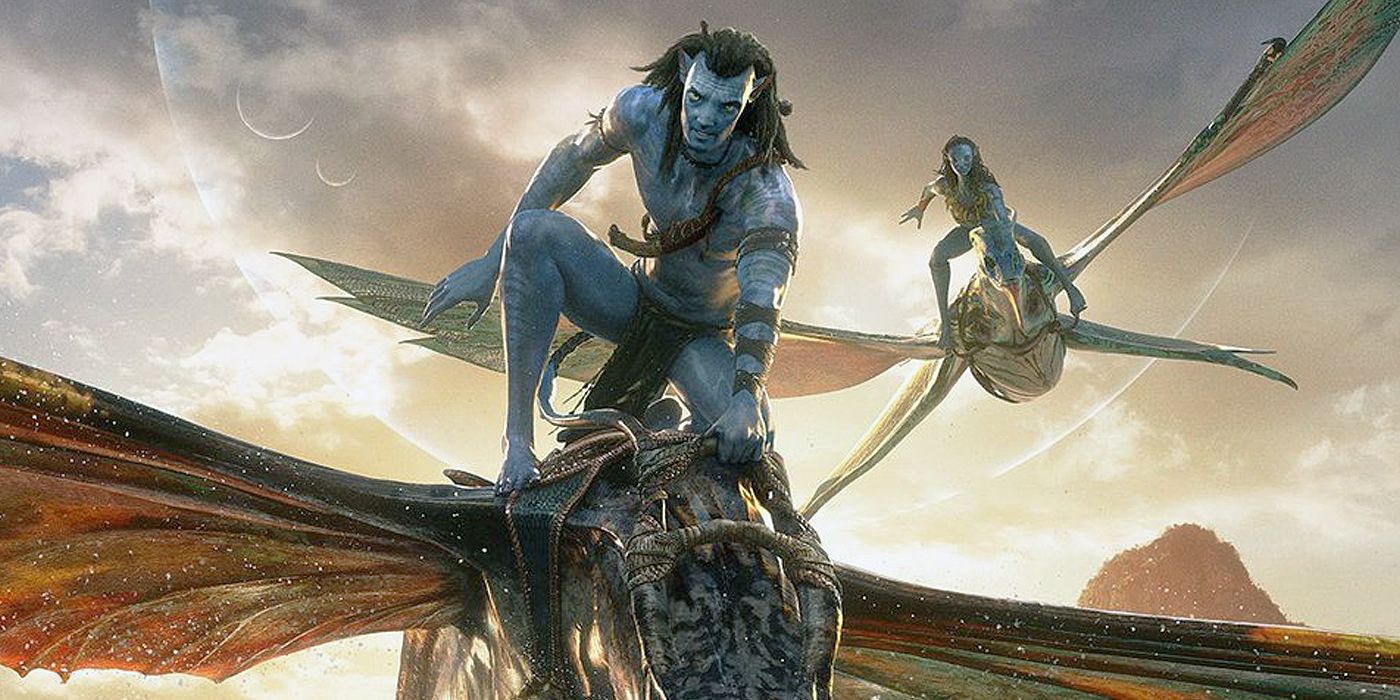
Honestly, when people talk about the avatar movie budget, they usually sound like they’re discussing the national debt. It’s a lot. Like, "should we buy a small country or make a movie about blue aliens" kind of money.
James Cameron doesn't just make movies; he builds entire technological ecosystems. That costs money. A lot of it. The original 2009 Avatar was a massive gamble that redefined what "expensive" meant in Hollywood, and yet, compared to its sequels, it almost looks like an indie budget. Almost.
What Most People Get Wrong About the Numbers
There’s this weird myth that Avatar: The Way of Water needed $2 billion just to break even. Cameron himself sort of fueled this when he told GQ it was the "worst business case in movie history" and needed to be the third or fourth highest-grossing film of all time just to survive.
People did the math. They saw that Star Wars: The Force Awakens was the number four spot at the time with roughly $2 billion.
But here’s the reality. Break-even points aren't just "production cost x 2." It’s a messy soup of marketing spend, theater splits, and tax rebates.
Breaking Down the Original Avatar (2009)
The first film had an official production budget of $237 million. That was the "clean" number given to the trades. However, many insiders at the time, including some involved in the physical production, suggested the real cost including marketing and R&D was closer to $350 million.
Fox was terrified. You’ve probably heard the stories. They thought they had a massive flop on their hands because 3D was still unproven on that scale.
Then it made $2.9 billion.
The Staggering Cost of The Way of Water
Fast forward to 2022. The budget for the sequel didn't just grow; it mutated. The official production budget is generally cited between $350 million and $460 million.
Wait. Why such a big range?
It's because Cameron shot Avatar 2 and Avatar 3 (now titled Fire and Ash) largely at the same time. He also shot parts of Avatar 4. When you’re paying for a crew in New Zealand for years, the lines between where one movie ends and the next begins get blurry for the accountants.
The Real Breakdown of Where the Money Goes
If you look at a $400 million production budget, you might wonder why it doesn't just cost $100 million. We aren't just talking about actor salaries.
- Underwater Performance Capture: Cameron basically had to invent a way to track actors' movements while they were submerged in a 900,000-gallon tank. Traditional Mo-Cap doesn't work underwater because the surface of the water acts like a mirror, creating fake "markers" that confuse the cameras.
- The Weta Factor: Thousands of visual effects artists spent years on these frames. In The Way of Water, the resolution jumped to 4K, meaning Weta had to render roughly four times as many pixels per frame compared to the first film. That requires massive server farms and astronomical electricity bills.
- New Zealand Infrastructure: A huge chunk of the avatar movie budget actually stays in New Zealand. Because the production is so big, they get significant tax rebates—sometimes up to 25%—which helps offset the eye-watering gross costs.
Marketing: The Invisible Billion
You can't spend $400 million on a movie and then spend $5 on a Facebook ad. Disney reportedly spent at least $150 million to $200 million just on the global marketing push for the sequels. When you add that to the production cost, the total investment for a single Avatar sequel easily clears **$600 million** before a single ticket is sold.
Why Avatar: Fire and Ash (2025) Might Be "Cheaper"
There is a silver lining for Disney. Because Fire and Ash was filmed alongside The Way of Water, a lot of the heavy lifting is already done. The digital assets are built. The software is written. The actors were already on set.
Industry reports from late 2025 suggest the production budget for Fire and Ash sits around $400 million, but its path to profitability is actually much shorter. Why? Because the "R&D tax" was paid by the previous film.
Fire and Ash opened in December 2025 with a massive $347 million global weekend. By the time the dust settles, it’s looking to be just as profitable, if not more so, than its predecessor because the studio didn't have to reinvent the wheel—or the ocean—this time.
Business Strategy: The "Block" Filming Gamble
Most studios are too scared to greenlight three sequels at once. Cameron demanded it. He argued that if they didn't shoot them together, the kids (like Jack Champion, who plays Spider) would grow up too fast and the continuity would be ruined.
It was a billion-dollar bet on "aging."
And it worked. By front-loading the costs, Cameron created a factory line. Avatar 4 and 5 are already well into development, and while their budgets will likely hover in the $300 million to $400 million range, the risk decreases every time a previous installment crosses the $2 billion mark.
Key Financial Realities
- The 50/50 Split: Remember, Disney doesn't keep all the box office money. Theaters take about half. So a $1 billion gross only puts about $500 million back in the studio's pocket.
- Ancillary Revenue: Merchandise, the "World of Pandora" at Disney World, and Blu-ray/Digital sales (which still pull in tens of millions) are the quiet heroes of the avatar movie budget equation.
If you’re tracking the health of the franchise, don't just look at the production cost. Look at the "multiplier." The first Avatar had a multiplier of over 10x its budget. Even with a $460 million cost, The Way of Water achieved a 5x multiplier. In modern Hollywood, anything over 3x is usually a home run.
To truly understand the financial scale here, you have to stop thinking of these as movies and start thinking of them as tech startups that happens to produce a film every few years. The investment is in the platform—the world of Pandora itself.
If you want to track how these numbers actually impact the future of the series, keep a close eye on the international box office splits, particularly in China and South Korea, where the "premium format" (IMAX and 3D) surcharges significantly inflate the returns on Cameron's expensive visuals. Check the weekly trades like Deadline or Variety for the "net profit" breakdowns that usually drop a few months after a film's theatrical run ends.