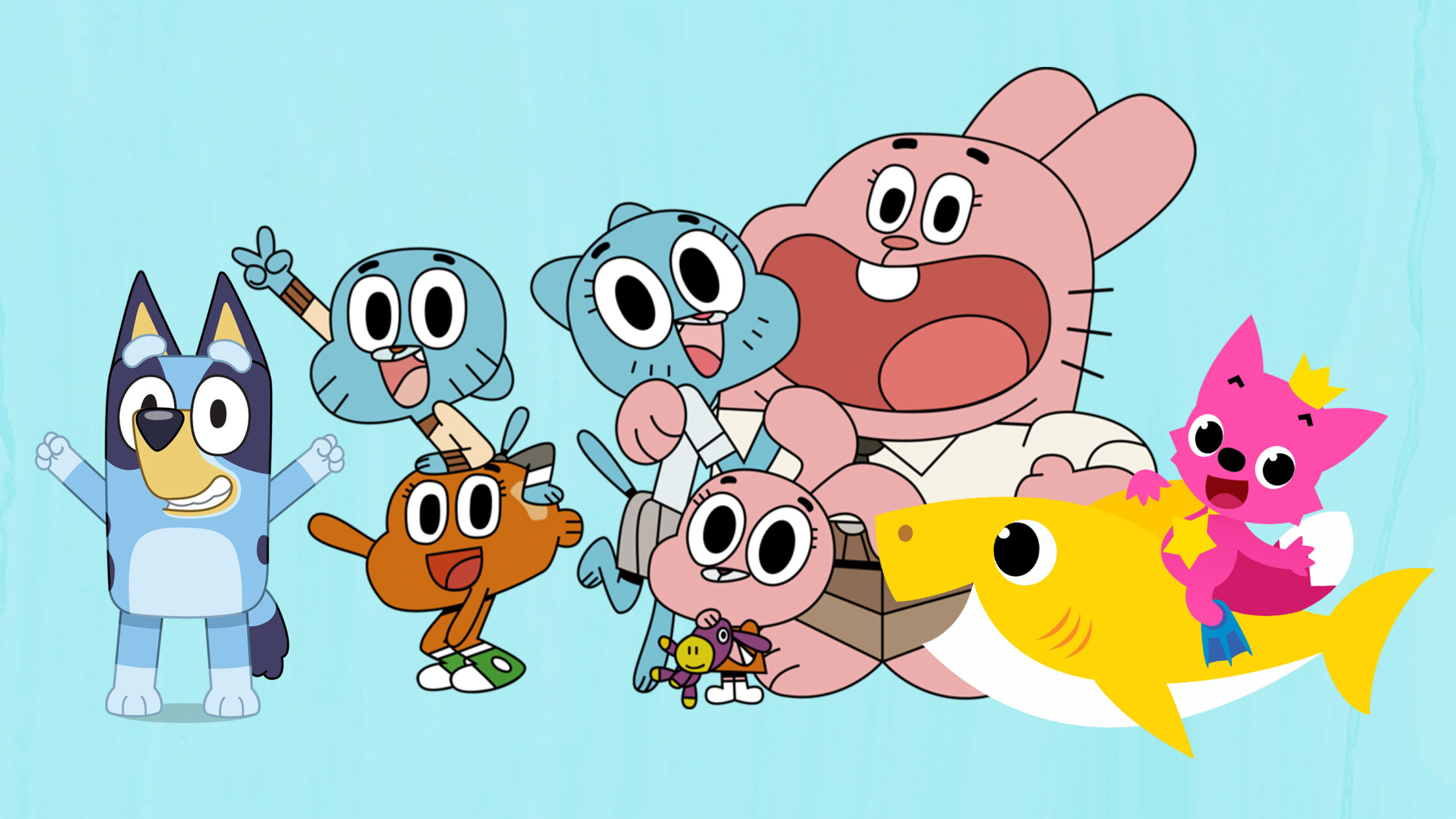
Honestly, picking a list of tv cartoons is a recipe for an argument. You’ve got people who swear the 90s were the peak of human civilization and others who think anything made before Adventure Time is just prehistoric noise. It’s a mess. But if we’re being real, the stuff we watched as kids—or the stuff we’re bingeing now on Max or Disney+—is often better written than half the live-action dramas on Netflix.
Animation isn't just for kids. It never really was, though try telling that to a TV executive in 1985.
The medium has shifted. We went from thirty-minute toy commercials to serialized epics that tackle grief, fascism, and the heat death of the universe. It’s wild. If you're looking for a definitive list of tv cartoons that actually matter, you have to look at the ones that broke the mold.
The Classics That Actually Hold Up
Let’s start with the heavy hitters. You can't talk about a list of tv cartoons without mentioning Batman: The Animated Series. It shouldn't have worked. It was dark. It was moody. It used "Dark Deco" on black paper to give it that gritty, noir feel that hadn't really been seen in afternoon programming. Bruce Timm and Eric Radomski basically redefined what a superhero could be on screen. They took a joke character like Mr. Freeze and turned "Heart of Ice" into a tragedy that won an Emmy. That’s insane for a "kid's show."
Then you have The Simpsons. Well, the first ten seasons, anyway.
It’s easy to dunk on it now because it’s been running for roughly a billion years, but those early years were lightning in a bottle. The writing staff was a literal Harvard Lampoon dream team. They weren't just making jokes; they were dissecting the American family. When Homer loses his job or Lisa feels lonely, it feels real. Most modern sitcoms still can't touch the comedic timing of "Marge vs. the Monorail."
And we have to talk about Avatar: The Last Airbender.
If you haven't seen it, you probably think it's just another "chosen one" story. You're wrong. It’s a masterclass in world-building. Michael Dante DiMartino and Bryan Konietzko created a magic system based on actual martial arts—Bagua, Tai Chi, Hung Gar. It deals with genocide, systemic corruption, and redemption arcs that actually feel earned. Zuko’s journey from a scarred, angry prince to a hero is widely considered one of the best character developments in television history. Period.
The Weird Era of the 2010s
Something shifted around 2010. Adventure Time happened.
At first, it looked like a candy-colored fever dream. Finn and Jake going on random quests in the Land of Ooo. But then, slowly, the show started dropping hints. A stray nuclear missile in the background. A backstory about a "Mushroom War." Suddenly, it wasn't just a gag show; it was a post-apocalyptic meditation on growing up. It paved the way for Steven Universe, which tackled identity and trauma with a level of nuance that made some parents' groups very uncomfortable. Good.
Adult Animation: Beyond the "Family Guy" Clone
For a long time, "adult animation" just meant swearing and fart jokes. Thank Bojack Horseman for killing that trend.
Bojack is a show about a talking horse who was a 90s sitcom star, but it’s actually the most accurate portrayal of clinical depression ever put to film. It’s brutal. You’ll laugh at a pun about a whale news anchor and then, five minutes later, you’re staring at the wall questioning your life choices.
Then there’s Primal by Genndy Tartakovsky. No dialogue. Just a caveman and a dinosaur trying to survive a nightmare world. It’s pure visual storytelling. It proves you don't need a massive script to make an audience weep over a prehistoric creature.
- King of the Hill: Still the most grounded "adult" show. It’s a love letter to the mundane.
- Rick and Morty: High-concept sci-fi that occasionally gets lost in its own nihilism but remains brilliantly inventive.
- Bob’s Burgers: The rare show that actually likes its characters. It’s wholesome without being annoying.
- Arcane: If we’re talking about the future of the medium, this is it. The animation by Fortiche Production is a literal painting in motion. Even if you hate League of Legends, you cannot deny the craft here.
Why Some Cartoons Fail the Test of Time
Not everything on a list of tv cartoons stays fresh.
Go back and watch some 80s stuff like He-Man or Transformers. It’s rough. The animation is recycled, the plots are repetitive, and the moral lessons at the end are tacked on to appease regulators. They were products. That’s okay, but they don't have the soul of something like Gargoyles or X-Men: The Animated Series. Those shows respected the audience’s intelligence. They had multi-episode arcs before that was standard.
We’re in a weird spot now where streaming services keep cancelling great shows after one season. Pantheon was incredible—a hard sci-fi look at uploaded consciousness—and it almost vanished because of tax write-offs. It’s a reminder that the industry is still volatile.
The Technical Artistry Behind the Scenes
Most people don't realize how much work goes into a single frame.
Traditionally, you’re looking at 24 frames per second. Even with modern "tweening" software, the character design and storyboarding take months. Shows like Spider-Man: Across the Spider-Verse (I know, it's a movie, but the influence on TV is massive) have pushed studios to stop using the "CalArts" style—that rounded, soft look you see in everything—and experiment with textures.
Look at The Legend of Vox Machina. It’s funded by fans and looks better than half the stuff on network TV. It’s an R-rated fantasy that actually feels like a Dungeons & Dragons campaign. That kind of creative freedom only happens when the artists are in charge.
The Best TV Cartoons for Different Moods
Sometimes you don't want a deep existential crisis. Sometimes you just want to see a cat and a mouse hit each other with hammers.
If you need a "brain off" show, Looney Tunes is still the king. The physics-defying slapstick of Wile E. Coyote is timeless. If you want something cozy, Over the Garden Wall is a mandatory autumn watch. It’s ten episodes of pure atmospheric perfection. It feels like an old folk tale found in a dusty attic.
If you're into something more experimental, Midnight Gospel is basically a podcast set to a psychedelic apocalypse. It's not for everyone. It’s weird. But it’s a perfect example of what animation can do that live-action simply can't. It breaks the rules of space and time.
How to Curate Your Own Watchlist
Don't just stick to the stuff you liked when you were ten. The world of animation is huge.
- Check out the international scene. Anime is the obvious choice, but French animation (like Wakfu or Lastman) is doing incredible things with action choreography.
- Follow the creators. If you liked Gravity Falls, you’ll probably like The Owl House or Amphibia. There’s a direct lineage of creators who worked under Alex Hirsch and went on to make their own masterpieces.
- Pay attention to the music. Shows like Steven Universe and Adventure Time use music as a narrative tool, not just background noise. The songs actually move the plot forward.
- Don't ignore the shorts. Love, Death & Robots on Netflix is a mixed bag, but the good episodes are some of the most stunning pieces of animation ever produced.
The landscape of TV is changing, but cartoons aren't going anywhere. They’re just getting more ambitious. We’re seeing a blurring of lines between "kid" and "adult" content, where the best shows are just... good stories.
Putting Your Knowledge to Use
If you’re ready to dive back in, start by revisiting a classic and then jumping into something modern. Watch an episode of Batman: TAS and then follow it up with Blue Eye Samurai. You’ll see the DNA of the former in the latter—the same focus on lighting, the same cinematic framing, the same refusal to talk down to the viewer.
The next step is to explore niche genres. Stop looking for "cartoons" as a monolith and start looking for "animated horror," "animated noir," or "animated documentary." You’ll find that the medium is capable of telling any story imaginable. Go support the independent creators on platforms like YouTube too; creators like Vivienne Medrano (Hazbin Hotel) proved that you can build a massive franchise outside the traditional studio system. Start your new watchlist by picking one show from each decade—70s, 80s, 90s, 00s, and 10s—to see exactly how the technology and storytelling evolved into the powerhouses we have today.