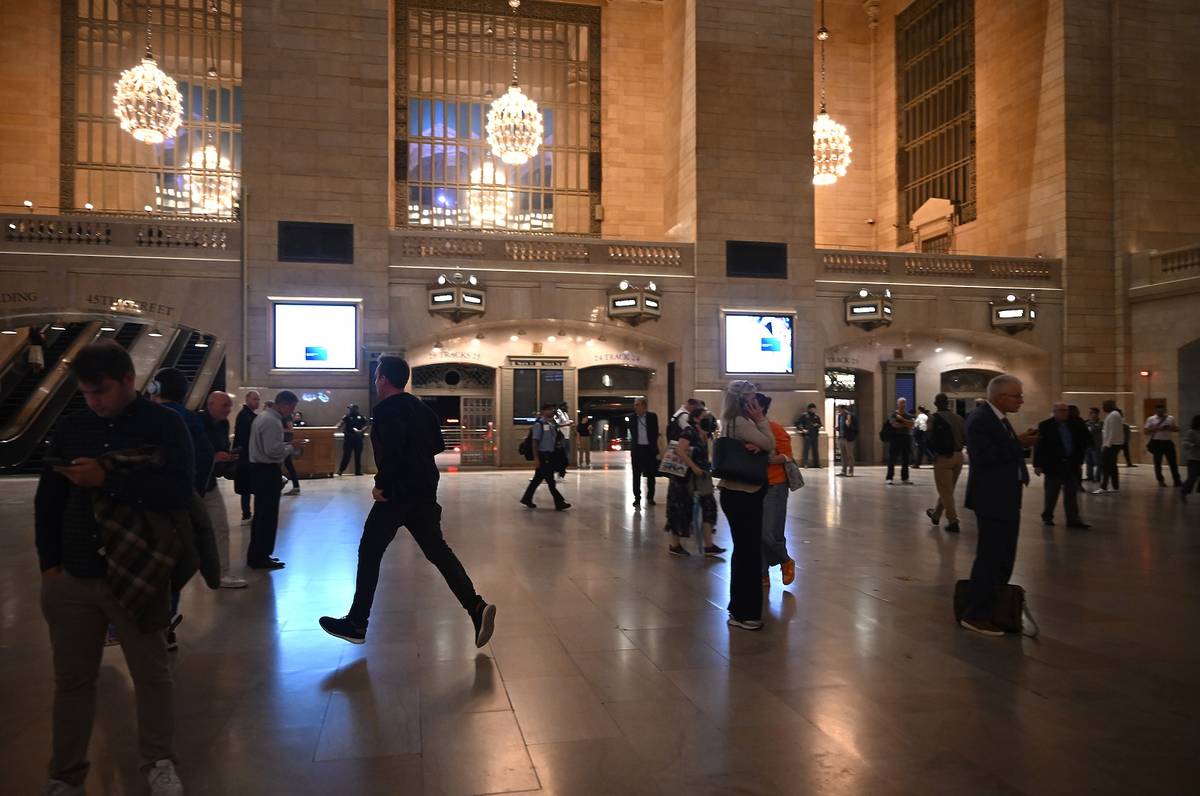
It happened in an instant. One second, the sprawling Beaux-Arts concourse of Grand Central Terminal was a glowing hive of commuters and tourists; the next, a suffocating, eerie dimness swallowed the world’s most famous train station. People stopped. They looked up at the ceiling, waiting for the constellation of the zodiac to flicker back to life. It didn't.
A Grand Central Station power outage isn't just a minor technical glitch; it's a massive mechanical heart attack for New York City. When the lights go out here, the ripple effect hits the Metro-North Railroad, the MTA subways, and the thousands of people who rely on the terminal for more than just a ride. Honestly, if you've ever been trapped in the lower concourse when the fans stop spinning and the emergency lights kick in, you know it feels more like a scene from a post-apocalyptic movie than a Tuesday afternoon commute.
The most recent major disruptions have taught us that our infrastructure is basically a giant, aging puzzle held together by decades-old wiring and high-tech patches.
What Really Happens During a Grand Central Station Power Outage
When the power fails, the first thing you notice isn't the darkness. It’s the silence. The constant hum of the HVAC systems—those massive lungs that keep the underground air moving—just dies. Then comes the confusion.
Security protocols at Grand Central are intense. During a significant outage, like the one sparked by a Con Edison feeder cable failure or a localized transformer blow-out, the NYPD and MTA police have to move fast. They aren't just worried about people tripping in the dark. They're worried about crowd control. Imagine 750,000 people—the average daily foot traffic—trying to navigate staircases when the escalators have frozen into literal "stairs." It’s a mess.
Technically speaking, the terminal has redundant systems. But "redundant" is a tricky word in engineering. It doesn't mean "invincible." Usually, a Grand Central Station power outage is caused by external grid issues or internal substation failures. In 2024 and 2025, we saw instances where high-voltage equipment simply reached its thermal limit.
The Infrastructure Headache
The "Graybar" substation and the various feeder lines coming in from the Manhattan grid are under constant stress. New York’s electrical demand is skyrocketing because of new skyscrapers and the push for electrification.
The terminal itself is a weird hybrid of 1913 architecture and 2026 technology. You have the "M42" basement—a deep, formerly secret substation that was actually a target during World War II—working alongside modern fiber optics. When a cable fries, finding the specific point of failure in that subterranean labyrinth is a nightmare for Con Ed crews.
Sometimes the outage is "brown-out" style. The lights dim, the monitors flicker, and the departure boards go blank. This is arguably worse than a total blackout. Why? Because the signaling systems for the trains are sensitive. If the voltage drops too low, the computerized interlocking systems "fail-safe."
"Fail-safe" sounds good, right? It means the trains stop. Every single one of them.
If a train is in the Park Avenue Tunnel when the power cuts, it stays there. Passengers end up sitting in a dark tube, smelling the ozone and damp concrete, waiting for a rescue engine or a slow crawl to the platform.
The Economic Ripple of a Dark Station
Think about the businesses. Grand Central isn't just a transit hub; it’s a shopping mall and a dining destination. The Oyster Bar, the Apple Store, the various kiosks—they all lose thousands of dollars every hour the lights are out.
- Perishable Goods: Restaurants lose inventory if the walk-ins stay off too long.
- Retail Security: Shoplifting risks skyrocket when the cameras go dark, forcing stores to shutter immediately.
- Labor Costs: Thousands of employees are left standing around, unable to work but still on the clock.
Most people don't realize that the Grand Central Station power outage costs the city millions in lost productivity. If a hedge fund manager in Greenwich can't get to their office on Park Avenue because the Metro-North is stalled, that's a problem. If a surgeon is stuck on a train while a patient is prepped in the Bronx, that's a crisis.
Why the Grid Struggles to Keep Up
It's not just old wires. It’s the sheer complexity of the modern load. We are asking an old building to do things it was never meant to do.
We’ve added thousands of digital screens. We’ve added high-speed Wi-Fi. We’ve added charging stations for every tourist with a dead iPhone. All of that draws juice. When you combine that with a summer heatwave—where every air conditioner in Midtown is screaming—the local grid starts to sag.
The MTA has been working on the "Grand Central Madison" project, which brought Long Island Rail Road (LIRR) trains into the terminal. This was a massive win for commuters, but it also added an entirely new layer of electrical demand. The deep-level tunnels for the LIRR have their own massive ventilation and lighting needs.
Surviving the Next Big Outage: Practical Realities
If you find yourself in the middle of a Grand Central Station power outage, forget the "helpful" announcements. Usually, the PA system is the first thing to get garbled or die.
You need to look for the "glow-in-the-dark" strips on the floor. These were installed as part of post-9/11 safety upgrades. They lead to the emergency exits. Also, keep a small flashlight or a fully charged phone with you. Relying on the terminal's emergency lighting is a gamble; those battery backups only last so long before they start to dim.
Don't crowd the information booths. The staff there knows as much as you do in the first fifteen minutes. They're waiting for a radio call from the control center. Your best bet is to check the MTA’s official social media feeds or apps using your cellular data—if the cell towers in the area aren't overwhelmed by everyone else doing the same thing.
What to Do Immediately
- Move toward the edges: The center of the Main Concourse becomes a mosh pit of confused people. Get to the walls.
- Avoid the elevators: This seems obvious, but people forget. You do NOT want to be the person stuck in a lift when the backup generator fails.
- Head for the street: If the outage looks like it's going to last, get out to Vanderbilt Avenue or Lexington immediately. Once the crowds realize the trains aren't moving, Uber prices will hit 5x surge pricing and the buses will be packed.
The Engineering Fixes on the Horizon
Is there a solution? Sort of. Con Edison is currently investing billions into "smart grid" technology. These are sensors that can detect a fault and reroute power automatically before the whole station goes dark.
There's also talk of installing larger-scale battery storage units within the terminal's sub-levels. These wouldn't just be for emergency lights; they would be "peak shavers" that provide extra power during high-demand periods to prevent the system from blowing a fuse in the first place.
But let's be real. Grand Central is a living museum. Upgrading it is like trying to perform heart surgery on a patient who is currently running a marathon. You can't just shut it down for a month to rewiring everything. The work happens in the middle of the night, in two-hour windows, by crews working in cramped, dusty crawlspaces.
Moving Forward After the Lights Come Back
A Grand Central Station power outage is a reminder of how fragile our daily "normal" actually is. We take the 5:15 to Stamford for granted until the departure board turns into a black void.
The next time you're walking through that iconic space, take a look at the brass chandeliers. They were designed to be dual-fuel—both gas and electric—because back in 1913, they didn't quite trust the power grid either. Maybe they were on to something.
Actionable Steps for Commuters:
- Download the TrainTime App: It’s surprisingly resilient and often updates via cellular data even when the station’s internal monitors are dead.
- Identify Two Alternate Routes: Know which bus lines or subway transfers (like the 4, 5, 6 or the S Shuttle) can get you to a different hub like Penn Station or Port Authority.
- Keep a Physical Map: It sounds "old school," but when your phone dies and the digital kiosks are out, knowing which way is North on Lexington Avenue is a lifesaver.
- Carry a Portable Power Bank: In a prolonged outage, your phone is your only link to the outside world. Don't let it hit 0%.
The grid will fail again. It’s a statistical certainty. Being the person who knows where the side exits are—and which bar nearby has its own generator—is the only way to handle the chaos.