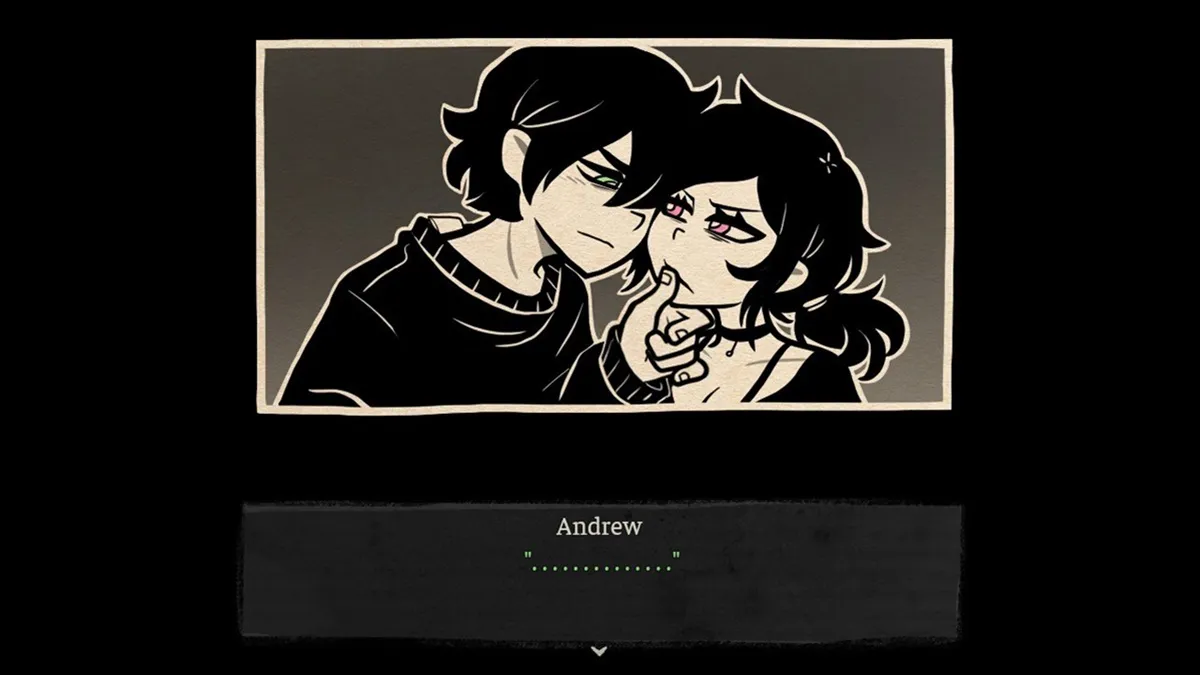
It’s dark. It’s messy. Honestly, it’s probably one of the most polarizing things to happen to indie gaming in recent memory. If you’ve spent any time on Steam or Twitter lately, you’ve seen the fan art, the heated debates, and the massive influx of "mixed" reviews. We’re talking about The Coffin of Andy and Leyley, a psychological horror game developed by Nemlei that manages to be both deeply unsettling and weirdly addictive. It isn't just another RPG Maker project; it’s a lightning rod for controversy that forces players to look at things most media won't even touch.
The game follows Andrew and Ashley, two siblings who are basically the definition of "codependent." They’re trapped in their apartment, they’re starving, and things go south incredibly fast. We aren't just talking about a little sibling rivalry here. We are talking about cannibalism, occult rituals, and some of the most uncomfortable psychological dynamics ever put into a pixelated format.
What’s the Big Deal with Andrew and Ashley?
The heart of The Coffin of Andy and Leyley isn’t just the shock value. It’s the writing. People often dismiss it as "edge-lord" bait, but that’s a bit of a lazy take. The game explores a toxic, cyclical relationship where both characters are equally victims and victimizers. Andrew (Andy) is the more passive, seemingly "normal" one, while Ashley (Leyley) is the manipulative, aggressive force. But as you play through the episodes, those lines blur.
You see, the game uses a specific kind of dark humor to mask some really heavy themes. It’s uncomfortable. It’s supposed to be. When you’re forced to help these two survive by doing objectively horrific things, the game is testing your empathy—or lack thereof. Most horror games give you a clear "bad guy" to run from. Here? You are the bad guy. Or at least, you’re the one making the bad guys happen.
The Art Style vs. The Subject Matter
One reason this game blew up on social media is the aesthetic. Nemlei has a very distinct, sharp art style that looks almost like a high-end webcomic. The characters are expressive, the color palette is muted but effective, and the character designs are instantly recognizable. This creates a weird cognitive dissonance. You’re looking at these stylized, almost "cute" characters while they discuss how to dispose of a body or engage in some seriously questionable behavior.
It’s a classic bait-and-switch.
A lot of players went in expecting a quirky indie RPG and came out needing a long walk outside. That contrast is exactly why it stays in your head. It’s the "cute but psycho" trope turned up to eleven and then stripped of any romanticism. Well, mostly. The "romance" aspect is actually where the biggest controversy lies.
Dealing with the "Incest" Elephant in the Room
Let’s be real. We can’t talk about The Coffin of Andy and Leyley without talking about the "incest" tags. It’s the reason the game gets banned from certain forums and why the developer faced a massive amount of harassment.
In the game’s second episode, there are paths—specifically a dream sequence/vision—that imply or outright depict incestuous themes between the siblings. For some, this was a hard line. For others, it was viewed as a narrative tool to show just how far gone and isolated these two characters have become from society.
The internet, being the internet, reacted with total nuance. Just kidding.
It was a firestorm.
The developer eventually stepped back from social media due to the intensity of the backlash. It brings up a massive question in the gaming community: where is the line for fictional depravity? If we're okay with playing games where we gun down thousands of people (looking at you, GTA), why does this specific taboo trigger such a visceral "delete this" response? It’s because it feels personal. It feels "gross" in a way that cartoonish violence doesn't.
Does the Game Endorse It?
That’s the million-dollar question. Most critics who have actually played through the available episodes argue that the game doesn't "endorse" the behavior so much as it documents a total moral collapse. The characters aren't heroes. They aren't role models. They are deeply broken people in a supernatural pressure cooker.
If you view The Coffin of Andy and Leyley as a tragedy or a horror story, the "problematic" elements fit the tone. If you view it as a self-insert fantasy, well, that’s where things get murky for a lot of people. The game doesn't give you a moral out. It doesn't have a "good" ending where they go to therapy and become productive members of society. It’s a downward spiral.
The Gameplay Loop: It’s More Than Just Dialogue
Despite the heavy focus on the story, there is actual gameplay here. It’s an adventure game at heart. You solve puzzles, manage a very limited inventory, and make choices that branch the narrative. The puzzles aren't exactly Portal-level difficulty, but they serve to pace the story.
The real "game" is the decision-making.
Small choices early on ripple into massive changes later. This is what gives the game its replay value. You want to see how much worse it can get. It’s a morbid curiosity. You find yourself thinking, "Okay, if I choose this option, does Ashley finally snap, or does Andrew finally stand up for himself?" Usually, the answer is "everyone loses," which is oddly refreshing in a world of games that want to make the player feel like a god.
Why Indie Horror is Moving in This Direction
We’ve seen a shift lately. Indie horror is moving away from jump-scares and toward "vibes" and psychological discomfort. Games like Fear & Hunger or Milk inside a bag of milk inside a bag of milk have paved the way for The Coffin of Andy and Leyley. These games don't care about being "likable." They care about being impactful.
There is a massive audience for this.
People are tired of sanitized stories. They want something that feels raw, even if it's offensive or "wrong." The success of this game proves that there is a market for extreme narratives in the indie space, specifically ones that focus on character dynamics rather than just running away from a monster in a dark hallway.
Navigating the Community and the Drama
If you decide to dive into the world of The Coffin of Andy and Leyley, be prepared. The community is... intense. On one side, you have the "anti" crowd who thinks the game should be scrubbed from the earth. On the other, you have a very dedicated fanbase that produces a staggering amount of fan content.
The developer, Nemlei, has had a rough go of it. After the harassment reached a fever pitch, they effectively vanished, leaving the future of the game in a bit of a limbo for a while. It’s a textbook case of how "cancel culture" (a term I hate using, but here it fits) can collide with the niche indie dev scene.
- The Pro-Dev Argument: It's fiction. Let creators explore dark themes without being labeled as criminals in real life.
- The Anti-Dev Argument: Certain themes are inherently harmful and shouldn't be "gamified" or used for entertainment, regardless of intent.
Both sides have dug in their heels. But regardless of where you stand, the game remains one of the highest-rated titles in its genre on Steam. That tells you something. The "silent majority" of players seem to value the experience for what it is: a grim, well-written horror story.
How to Approach the Game Today
If you’re going to play it, go in with your eyes open. It is not for the faint of heart. It is not for people who need their protagonists to be "good people."
- Check the Content Warnings: Seriously. This isn't a joke. If you have triggers related to family trauma, starvation, or the aforementioned taboos, stay away.
- Play Both Episodes: Don't judge the game based on the first 20 minutes. The depth of the toxicity between the siblings takes time to breathe.
- Separate Art from Artist: It’s helpful to look at the game as a standalone piece of media. The drama surrounding the developer is a separate rabbit hole that can color your experience if you let it.
- Look for the Subtext: Pay attention to the background details in the apartment and the way the characters' designs change slightly based on their mental state. There is a lot of environmental storytelling happening.
What's Next for the Series?
The "Episode 3" wait has been a saga in itself. Because of the developer's hiatus, the roadmap became a bit blurry. However, the demand hasn't slowed down. The game has been translated into multiple languages by fans and official teams alike, expanding its reach far beyond the initial English-speaking audience.
There’s a lesson here for other indie devs. Controversy creates conversation, and conversation creates sales. But it also creates a massive amount of personal pressure. The Coffin of Andy and Leyley is a masterpiece of psychological tension, but it’s also a cautionary tale about the costs of "going there" in the modern internet era.
Ultimately, the game asks a very simple, terrifying question: What would you do for the only person who understands you, even if that person is destroying you?
If you want to understand the modern indie horror landscape, you have to look at this game. You don't have to like it. You don't even have to play it. But you can't ignore the impact it's had. It has shifted the goalposts for what is "acceptable" in narrative-driven horror, and we’re likely going to see the ripples of this for years to reach.
If you're looking for your next "feel-good" game, this isn't it. But if you want a story that will make you feel something—even if that something is profound unease—then you know where to go. Just don't say you weren't warned.
Practical Next Steps:
- If you're a developer, study the pacing of Episode 1's "locked room" mechanic to see how to build tension with minimal assets.
- For players, if the themes of this game were too much, check out Milk inside a bag of milk for a similarly "unhinged" art style with a much narrower focus on mental health rather than taboo relationships.
- Always back up your save files before Episode 2's major choice branch; the game doesn't make it easy to see all the content in one go without some planning.