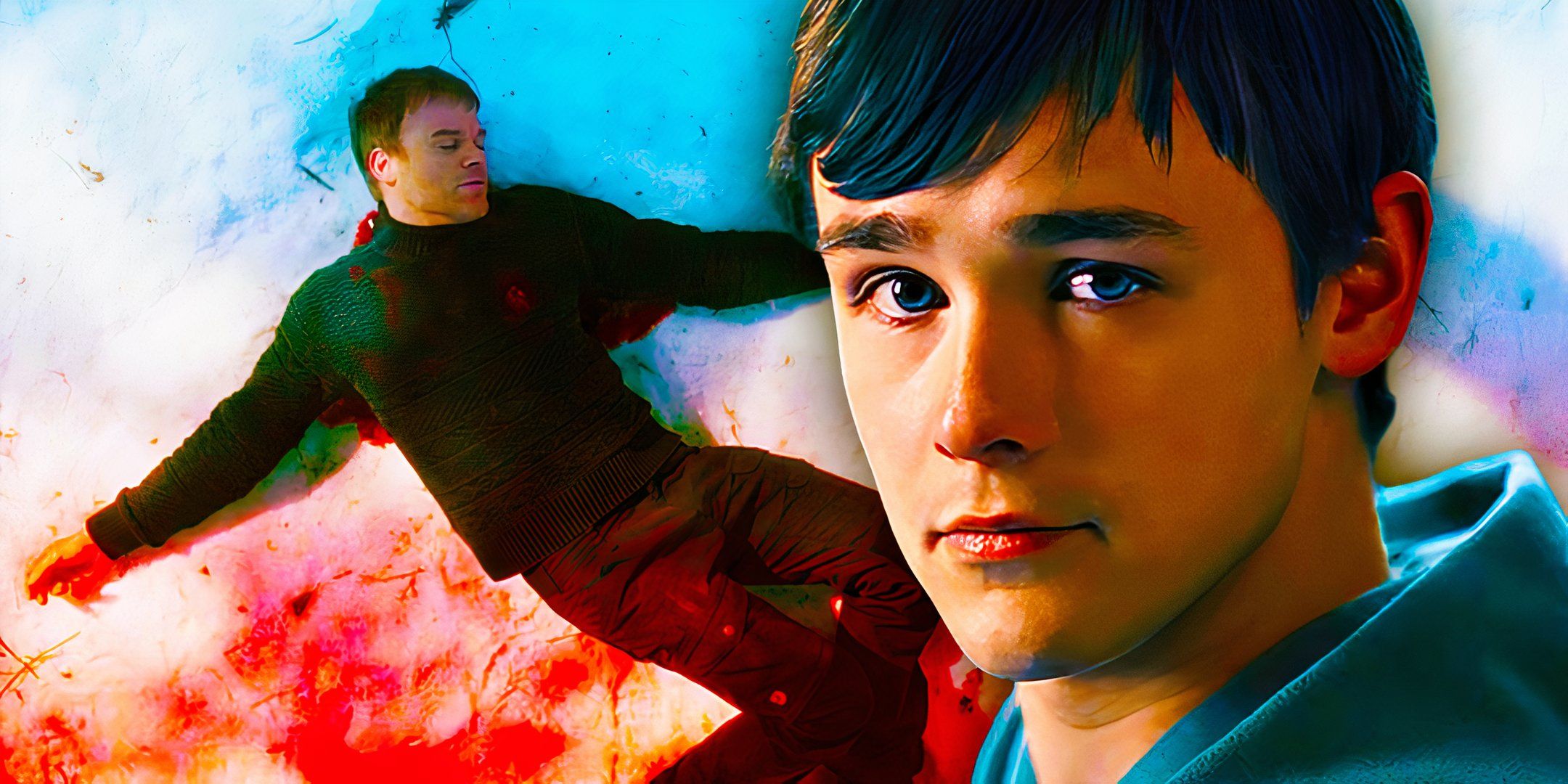
Dexter Morgan has seen some weird stuff. He's dealt with the Ice Truck Killer, the Trinity Killer, and even his own sister finding out his dark secret. But honestly, nothing quite matches the sheer biblical insanity of the killer in Dexter Season 6. Known to the public—and the terrified citizens of Miami—as the Doomsday Killer (or DDK), this antagonist pushed the show into a realm of religious fanaticism and psychological fragmentation that changed the series forever.
It was 2011. The show was at a crossroads. We just came off the high-intensity fifth season with Lumen Pierce, and the writers decided to go big. Like, "Seven Trumpets of the Apocalypse" big.
The season introduces us to Travis Marshall and Professor James Gellar. They aren't just killing people for the thrill of it; they’re trying to bring about the end of the world. It sounds like something out of a medieval fever dream. Their "Tableaux" were gruesome works of art, ranging from a woman suspended by hooks to look like an angel to four horses riding through downtown Miami carrying severed body parts. It was morbid. It was ambitious. And for many fans, it was the moment Dexter started to feel a little bit different.
Who Was the Doomsday Killer?
At first, we’re led to believe the killer in Dexter Season 6 is a duo. Professor Gellar, played with a chilling, stern intensity by Edward James Olmos, is the mastermind. He’s the teacher. Travis Marshall, played by Colin Hanks, is the reluctant student. Travis seems like a guy who just wants a normal life, maybe a girlfriend, but he’s trapped under the thumb of this domineering religious zealot.
Except he wasn't.
Halfway through the season, the show drops the hammer. Professor Gellar has been dead the entire time. Travis has been keeping Gellar’s frozen corpse in a basement, hallucinating his mentor's presence to justify his own horrific actions. Travis is the Doomsday Killer. All of it. The planning, the stitching, the theological justification—it was all inside the fractured mind of a man who couldn't bear the weight of his own darkness.
This twist was a massive gamble. Some viewers saw it coming from a mile away (the "Fight Club" trope was already well-worn by then), while others were genuinely rocked. Whether you liked it or not, it shifted the stakes. Dexter wasn't just hunting a predator; he was hunting a man who was arguably more mentally broken than he was.
The Biblical Tableaux and the Horror of DDK
The killer in Dexter Season 6 didn't just dump bodies in the Gulf Stream. He staged them. Each kill was a "Tableau" based on the Book of Revelation. Let’s look at some of the most disturbing ones because, frankly, they're hard to forget.
First, there was the "Fruit of the Serpent." A victim found with his chest cavity filled with snakes. Then came the "Four Horsemen." This was probably the peak of the season's production value. Four different victims, pieces of them sewn together, riding through the streets on actual horses. It was theatrical. It was loud. It was exactly what Miami Metro Homicide wasn't prepared for.
But why the theatrics? Travis believed he was a "Witness." He thought he was doing God's work. This creates an interesting parallel with Dexter. Dexter kills because of his "Dark Passenger"—a psychological compulsion he personifies to distance himself from his actions. Travis does the same thing, but he uses a religious icon instead of a shadowy passenger. Both men are killers who refuse to take full ownership of their identity until they are forced to.
Why Season 6 Felt So Different
Honestly, the killer in Dexter Season 6 represents the show’s shift toward a more stylized, almost comic-book version of reality. In the early seasons, the kills felt grounded in a gritty Miami underworld. By Season 6, we have Dexter creating a "Ring of Fire" on the ocean to trap Travis. It’s high drama.
The season also explores Dexter's own search for faith. He starts wondering if there’s something more to life than just the Code of Harry. He talks to Brother Sam, a reformed murderer played brilliantly by Mos Def. This relationship is actually one of the highlights of the season. It provides a foil to the toxic religious obsession of Travis Marshall. While Travis uses faith to destroy, Brother Sam uses it to heal. When Travis kills Brother Sam, it isn't just another murder; it's the destruction of the one thing that might have actually "saved" Dexter’s soul.
Critics have pointed out that the pacing in Season 6 can be a bit wonky. Sometimes the hunt for the Doomsday Killer feels like it's dragging its feet just to get to the finale. But the finale? That’s where everything changes.
The Moment Everything Broke
You can't talk about the killer in Dexter Season 6 without talking about the ending. Dexter finally catches Travis. He has him on the table in an abandoned church. He does his usual ritual. He plunges the knife in.
"Hello, Dexter."
Debra walks in. She sees her brother, the "hero" cop, the person she loves most in the world, committing a cold-blooded murder. The hunt for Travis Marshall was the catalyst for the ultimate reveal. Without the specific, grandiose nature of the Doomsday Killer's crimes, Dexter might not have been pushed into such a vulnerable, exposed position.
Travis Marshall wasn't the most dangerous killer Dexter ever faced—that title probably still goes to Trinity—but he was the most consequential. His death ended the era of Dexter being able to hide in plain sight.
Key Facts About the Season 6 Antagonist
If you're revisiting the show or just trying to win a trivia night, here’s the breakdown of what made the killer in Dexter Season 6 tick:
- Real Name: Travis Marshall.
- Alias: The Doomsday Killer (DDK).
- The "Partner": Professor James Gellar (revealed to be a corpse/hallucination).
- Signature: Staging elaborate, multi-person murders based on the Book of Revelation.
- Weapon of Choice: Often used a theatrical sword or ancient-style blades.
- Ultimate Goal: To trigger the end of the world through a series of "sacrifices."
Actionable Insights for Fans and Writers
Looking back at the killer in Dexter Season 6 provides some pretty interesting lessons on storytelling and character development. If you're a fan of the genre or a writer yourself, keep these nuances in mind.
First, the "unreliable narrator" or "hallucinated mentor" trope is a double-edged sword. It worked for Dexter with Harry because we always knew Harry was a projection. With Travis and Gellar, the show tried to trick the audience. If you use this, you have to be careful not to make the audience feel cheated. Many fans felt the Gellar reveal was too predictable because of how the camera never showed Gellar interacting with anyone but Travis.
Second, thematic contrast is your best friend. Season 6 succeeds most when it pits Brother Sam's version of faith against Travis's version. It makes the world feel bigger. It moves the story beyond a simple "cat and mouse" game and into a philosophical debate.
Finally, understand the power of the "Point of No Return." The Doomsday Killer was a tool to get the story to the Debra-Dexter confrontation. Sometimes, the villain exists not just to be a threat, but to force the protagonist into a corner they can't escape from.
If you’re planning a rewatch, pay close attention to the background details in Travis’s scenes before the big reveal. You'll notice the subtle ways the directors hinted that Gellar wasn't really there—like the way objects don't move when Gellar "touches" them or how Travis is always the one doing the heavy lifting. It's a masterclass in visual foreshadowing, even if the twist itself remains one of the most debated moments in the franchise's history.
To fully appreciate the impact of the killer in Dexter Season 6, one should compare Travis Marshall's motivations to the later antagonists in New Blood. The evolution from religious zealotry to the more personal, grounded evil of someone like Kurt Caldwell shows how the series constantly reinvented what it meant to be a "monster."
Start by re-watching the episode "Getaway" (Season 6, Episode 12) to see how the tension peaks. Then, immediately jump into the first episode of Season 7. Seeing the immediate fallout of Travis Marshall's death is essential to understanding why this specific killer was the turning point for the entire series. Pay attention to the lighting and color palettes; Season 6 is notably brighter and more saturated, reflecting the "divine light" Travis thought he was following, which contrasts sharply with the murky, dark aftermath.