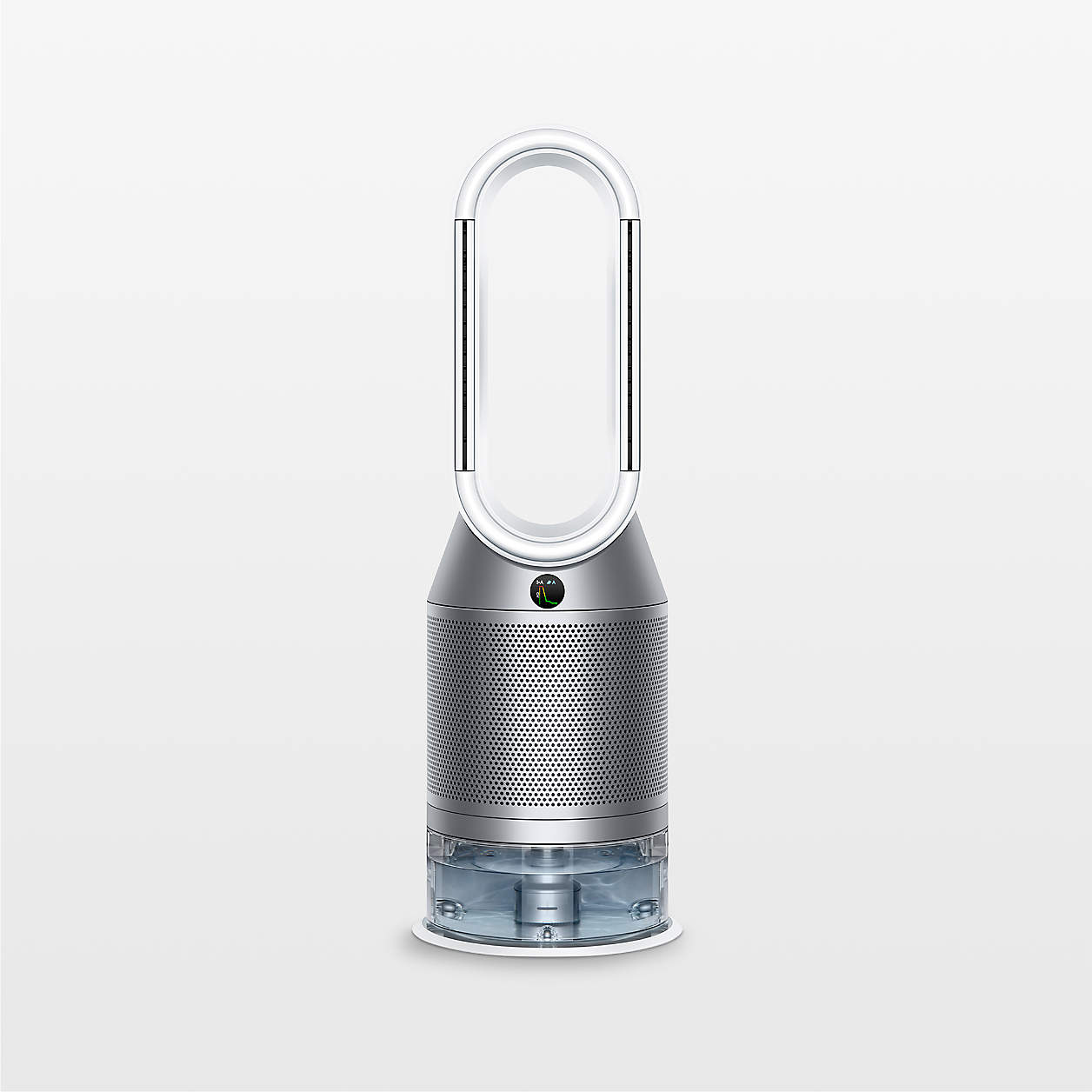
Let's be real. Buying a Dyson air purifier and humidifier isn't just a purchase; for many, it’s a commitment to a specific kind of living room aesthetic. It’s that tall, bladeless loop that screams "I care about my lungs." But honestly, after testing these machines in actual homes—not just clinical labs—there’s a lot more to the story than what the sleek marketing tells you. Most people unbox it, plug it in, and assume their air is now mountain-fresh. It's more complicated than that.
I’ve seen people place these units in corners where the airflow is basically non-existent. Or they use tap water in the humidifier and wonder why there's a fine white dust on their TV.
Dyson's approach to the "2-in-1" or "3-in-1" (if you get the heater version) is about solving two of the biggest indoor climate issues simultaneously. Dry air makes you itchy and prone to nosebleeds. Dirty air makes you sneeze. Combining them seems like a no-brainer, right? Well, the engineering inside the Dyson Purifier Humidify+Cool (PH03, PH04, and the newer Formaldehyde versions) is pretty wild, but it requires you to actually know how it functions to get your money's worth.
Why the Dyson Air Purifier and Humidifier Is Over-Engineered (In a Good Way)
Most humidifiers are gross. Let's start there. If you’ve ever owned a cheap $40 ultrasonic humidifier from a big-box store, you know the slimy orange or pink biofilm that grows in the tank after three days. It’s nasty. Dyson looked at that and decided to use a UV-C light system.
They call it "Ultraviolet Cleanse." Basically, every drop of water that enters the system is exposed to a specific wavelength of light meant to zap 99.9% of bacteria like E. coli. This isn't just a marketing gimmick. In 2026, we’re seeing more brands try to copy this, but Dyson’s integration of the silver-threaded evaporator—which has antimicrobial properties—actually helps prevent that "old gym sock" smell that plagues most humidifiers.
But then there's the air purification side.
The machine uses a sealed HEPA 13 filter. This is the gold standard. When we talk about a Dyson air purifier and humidifier, the "sealed" part is actually the most important bit of jargon you need to know. Many purifiers have a HEPA filter, but the air can leak around the edges of the filter. If it leaks, it isn't purified. Dyson’s newer models ensure that what goes in must pass through the glass media. It’s catching stuff as small as 0.1 microns. That's tiny. We're talking viruses, ultra-fine dust, and smoke.
The Formaldehyde Factor
If you’ve been looking at the "Formaldehyde" edition, you’re probably wondering if you actually need it. Formaldehyde is a colorless gas found in pressed wood furniture, carpets, and some cleaning products. It off-gasses for years. Dyson uses a solid-state sensor for this. Unlike older sensors that could dry out or misread other gases as formaldehyde, this one is specific. It uses a catalytic filter that breaks formaldehyde down into tiny amounts of water and CO2. It never needs replacing. It just sits there, destroying gas. Is it overkill for a bedroom? Maybe. But if you just renovated or bought a bunch of flat-pack furniture, it’s actually a lifesaver for people with chemical sensitivities.
The Reality of Maintenance: It’s Not "Set and Forget"
Here is where the honeymoon phase usually ends. You cannot just ignore this machine.
If you live in a place with hard water—think London, Los Angeles, or parts of the Midwest—the minerals in your water will eventually try to kill your Dyson. The machine has a "Deep Clean Cycle." When that light comes on, don't ignore it. It’s a literal chore. You have to fill the tank, add citric acid (Dyson usually provides a packet, but you can buy a big bag of food-grade citric acid for cheap), and let it circulate for an hour.
Why the Deep Clean Matters
- The Evaporator Mesh: If lime-scale builds up on the 3D mesh, the water can't evaporate efficiently. You'll notice your humidity levels won't rise above 35% no matter how high you set the target.
- Sensor Accuracy: Dust can settle on the laser sensors. If the sensors are dirty, the machine thinks your air is "Poor" even when it's clean, or vice versa.
- The Pump Column: This is the heart of the humidifier. If mineral deposits seize the pump, the machine becomes a very expensive, very pretty fan.
I once spoke with a technician who mentioned that 60% of the "broken" units sent back for repair just needed a thorough citric acid soak. Use distilled water if you can. I know, it's a pain to buy jugs of water, but it makes the machine run perfectly for years.
Performance in the Real World: What to Expect
Let’s talk about the "Cool" part of the name. A Dyson air purifier and humidifier is not an air conditioner. It does not have a compressor. It does not use refrigerant. It is a fan.
It cools you by moving air over your skin (evaporative cooling). In the humidifier mode, it can feel slightly cooler because it’s adding moisture to the air, but don't expect it to drop the room temperature from 80 degrees down to 72. It won’t happen. What it will do is circulate that air incredibly well. Dyson uses something called "Air Multiplier technology." It draws in surrounding air and projects it in a powerful stream.
In a medium-sized bedroom, it’s brilliant. In a massive, open-concept living room with 20-foot ceilings? It’ll struggle.
The Noise Factor
At level 1 to 4, you won't even know it's on. It’s a whisper. At level 10, it sounds like a small jet is taxiing in your hallway. If you’re a light sleeper, you’ll probably keep it on "Night Mode," which dims the display and keeps the fan speed low.
One thing people love is the "Breeze" mode. Instead of a steady stream of air, the machine uses an algorithm to vary the airflow, mimicking a natural outdoor breeze. It sounds hokey. It actually feels great. It breaks up that stagnant, artificial feeling of fan air.
Comparing the PH03 vs. PH04 (The Formaldehyde Version)
There’s a price jump here, and you need to decide if it's worth it.
| Feature | PH03 (Purify Humidify+Cool) | PH04 (Formaldehyde Version) |
|---|---|---|
| HEPA Filtration | Fully Sealed HEPA 13 | Fully Sealed HEPA 13 |
| Humidification | UV-C Sanitized | UV-C Sanitized |
| Formaldehyde Sensor | No | Yes (Solid-state) |
| Catalytic Filter | No | Yes (Destroys Formaldehyde) |
| Color Options | White/Silver | Nickel/Gold |
Honestly, if you don't have allergies to VOCs (Volatile Organic Compounds) or you aren't living in a brand-new construction home, the PH03 is the sweet spot for value. But if you have the budget, the PH04 is the "complete" package.
The App Experience: MyDyson
The app is actually one of the best in the smart home world. It gives you live graphs of your PM2.5, PM10, VOCs, and NO2 levels. If you fry bacon in the kitchen, you will see the PM2.5 spike on your phone within minutes, even if the purifier is in the bedroom. It’s sensitive.
It also tracks the filter life. Don't just replace the filter because the app says it’s at 10%. Check it. If you live in a clean environment, you can often stretch those filters a bit longer. But if you have three shedding huskies, you might find yourself buying filters every six months. They aren't cheap. Expect to pay around $75 to $100 for genuine Dyson replacements.
Pro tip: Don't buy the "knock-off" filters on Amazon. I’ve seen them trigger error codes because they don't have the same resistance as the OEM filters, which messes with the motor's calibration.
Addressing the Common Complaints
People love to complain about the price. Yes, it’s expensive. You are paying for the R&D, the sensors, and the brand.
But the most legitimate complaint is the weight. Once that 1-gallon water tank is full, the unit is heavy and awkward to move. It doesn't have wheels. If you plan on moving it between the bedroom and the office every day, you’re going to get a workout.
Another gripe is the "Auto" mode. Sometimes, the machine gets a bit aggressive. If it detects a tiny bit of hairspray or perfume, it might ramp up to max speed for twenty minutes. It can be startling if you're watching a quiet movie. You can manually cap the fan speed in the settings so "Auto" stays within a certain noise range.
Actionable Steps for New Owners
If you just bought a Dyson air purifier and humidifier, or you’re about to hit "buy," do these three things to make sure it actually works:
- Placement is Everything: Don't shove it against a wall. It needs about 12 to 18 inches of clearance on all sides to properly "inhale" the room's air. If it's tucked behind a couch, it’s just purifying the same three cubic feet of air over and over.
- The Citric Acid Rule: Buy a tub of citric acid immediately. Don't wait for the machine to scale up and give you an error message. Running a clean cycle every month—regardless of the light—will double the lifespan of the pump.
- Monitor the Humidity: If you’re using it in winter, set the target humidity to 40-50%. Anything higher and you might start getting condensation on your windows, which leads to mold. The Dyson is powerful enough to over-humidify a small room if you aren't careful.
- Firmware Updates: Connect it to Wi-Fi. Dyson frequently pushes firmware updates that improve sensor accuracy and fan motor efficiency.
The Dyson Purifier Humidify+Cool is a beast of a machine. It’s a complex piece of climate tech that happens to look like a sculpture. Treat it like a high-end appliance, keep it clean, and it’ll genuinely change the way your home feels, especially during those dry, pollen-heavy months. It isn't magic, it's just very good engineering that requires a little bit of human help to stay at peak performance.