Sometimes a movie just slides under the radar. It doesn't explode at the box office, it doesn't sweep the Oscars, and yet, years later, you find yourself thinking about a specific scene. Maybe it's the blue cigarette smoke. Maybe it's the sound of rain on a tin roof in Wales. For a lot of people, The Edge of Love is that movie.
Released in 2008, it brought together a powerhouse cast: Keira Knightley, Sienna Miller, Cillian Murphy, and Matthew Rhys. It was meant to be this sweeping, artsy biopic about the legendary Welsh poet Dylan Thomas. But if you actually sit down to watch it, you’ll realize it’s not really about him at all. Honestly? It’s a movie about a mess. A beautiful, tragic, wartime mess centered on a friendship that felt a little too real for the critics of the time.
The Real Story vs. The Movie Magic
Let’s get the facts straight first. The script was written by Sharman Macdonald, who happens to be Keira Knightley's mother. Talk about a family project. It follows the life of Vera Phillips (Knightley), a nightclub singer in London during the Blitz, who runs into her first love, Dylan Thomas (Rhys).
The twist? Dylan is married to Caitlin Macnamara (Miller).
Instead of a typical catfight, the two women form this intense, almost claustrophobic bond. They become a "trinity" with Dylan, eventually moving to the Welsh coast where the isolation and the local gossip start to tear things apart. Then you’ve got William Killick (Cillian Murphy), the soldier who marries Vera but comes back from the war with what we now call PTSD.
But here is where things get tricky. The movie takes huge liberties with the truth.
- The "Affair": The film suggests a sexual entanglement between Dylan and Vera. In reality, most biographers say there's zero evidence they were ever more than childhood friends.
- Vera's Career: In the movie, she’s a glamorous singer. In real life? She was an eccentric, bohemian sculptor who studied under Henry Moore.
- The Gunshot: The scene where William fires a gun into the house actually happened in 1945. But the movie frames it as a jealous rage over an affair, while the real-life trial was much more complicated and involved a pub brawl and lingering wartime trauma.
Why Keira Knightley in The Edge of Love Surprised Everyone
By 2008, we were used to seeing Keira in a corset. Pride & Prejudice and Atonement had cemented her as the queen of the period drama. But The Edge of Love asked her to do something different.
She had to sing.
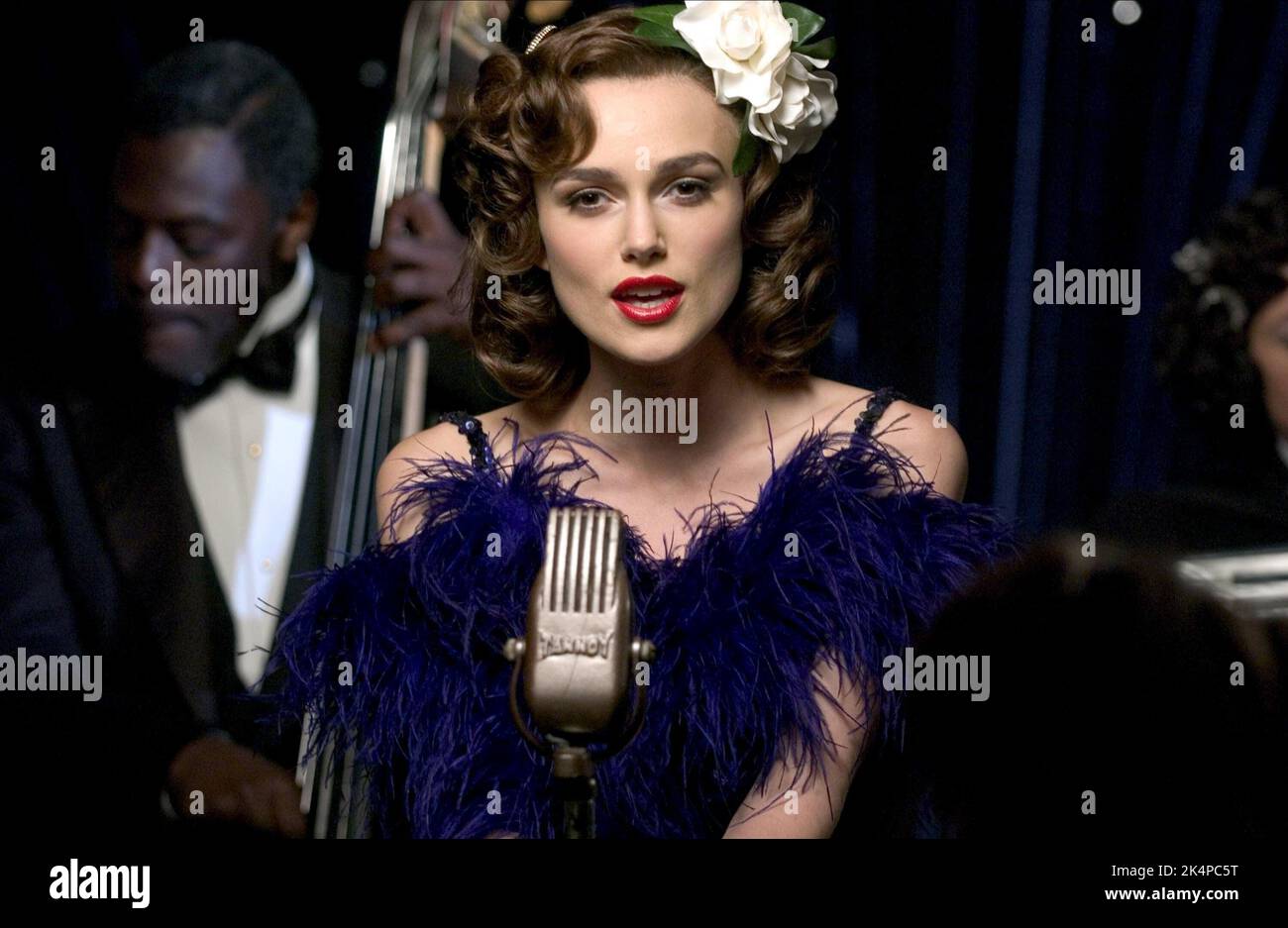
And she actually did it. No lip-synching. She took lessons to capture that breathy, 1940s "chanteuse" vibe. Her performances of songs like "Blue Tahitian Moon" and "Maybe It's Because" are haunting because they aren't perfect. They sound like a woman singing in an underground tube station while bombs are literally falling overhead.
Knightley plays Vera with a brittle kind of vivacity. She’s trying to hold onto her youth while the world is ending. There’s a scene where she’s filmed in these extreme, grainy close-ups—inspired by music videos like Sinéad O’Connor’s “Nothing Compares 2 U”—and you can see every flicker of regret.
The Miller-Knightley Chemistry
If the movie belongs to anyone, it’s Sienna Miller. At the time, she was mostly known as a tabloid "It Girl," but her performance as Caitlin Thomas is visceral. She’s loud, she’s messy, and she’s the only person who calls Dylan out on his nonsense.
The friendship between Vera and Caitlin is the real heart of the film. They share baths, they share secrets, and they share a man they both know is bad for them. Critics back then didn't quite know what to make of the "lesbian undertones," but today, it feels like a very modern depiction of a complicated female friendship. It’s about two women who find safety in each other because the men in their lives are either broken by war or consumed by their own genius.
A Visual Feast (Even If the Plot Is Thin)
Director John Maybury didn't want to make a boring BBC history lesson. He wanted it to feel like a fever dream. The first half is all neon lights, red lipstick, and dark Soho pubs. Then, the movie shifts.
When they move to Wales, the color palette changes to muddy greens and grey skies. You can almost feel the dampness of the cottages. It’s beautiful to look at, but some people find the pacing a bit "plodding." If you're looking for a fast-paced thriller, this isn't it. It's a mood piece.
One of the coolest details? The costumes. They didn't just use standard vintage rentals. The outfits for Vera and Caitlin were designed to reflect their personalities—Vera’s structured, glamorous London suits versus Caitlin’s wild, layered, and often practical Welsh knits.
What Most People Get Wrong About the Ending
People often walk away from The Edge of Love thinking William Killick was just a "villain" or a "maniac" for what he did at the bungalow. But Cillian Murphy plays him with such a haunted, hollow-eyed intensity that it’s hard not to feel for him.
He was a commando. He saw horrific things in Greece. He came back to find his money gone—spent by Dylan and Caitlin on booze and food—and his wife living in a weird, communal setup with a poet he didn't trust.
The real-life judge actually instructed the jury to acquit William because of the circumstances. The movie frames the acquittal as a moment of mercy, but it also shows the permanent scar left on the friendship group. It’s the moment they all realized their youth was over.
Actionable Takeaways for Your Next Rewatch
If you’re planning to revisit this film (or watch it for the first time), keep these things in mind to get the most out of it:
- Listen to the soundtrack: Angelo Badalamenti (the guy who did Twin Peaks) wrote the score. It’s incredible.
- Look for the poetry: Matthew Rhys reads Dylan Thomas's poetry throughout the film. Pay attention to how the poems chosen ("Death shall have no dominion") mirror the internal states of the characters.
- Watch the background: The "Blitz" scenes are highly stylized. They aren't meant to be realistic; they’re meant to show how people in London were living like there was no tomorrow.
- Contrast the "Mothers": Knowing Keira’s mother wrote the script adds a layer of depth to how the female characters are written. They have more agency than the men, even when they’re suffering.
The Edge of Love is a movie about people who are flawed and selfish, but deeply human. It reminds us that history isn't just dates and battles; it's also about a few friends in a cold cottage, trying to figure out who they are before the fire goes out.
If you're looking for a film that prioritizes atmosphere and emotion over a perfectly linear plot, this one is worth a spot on your watchlist. Check out the 2008 Edinburgh Film Festival archives if you want to see the original reception—it's a fascinating look at how much our perspective on "unlikable" characters has changed in twenty years.
To dive deeper into the real history, you can look for David N. Thomas’s book, Dylan Thomas: A Farm, Two Mansions and a Bungalow, which provided the original (though loosely followed) inspiration for the story.