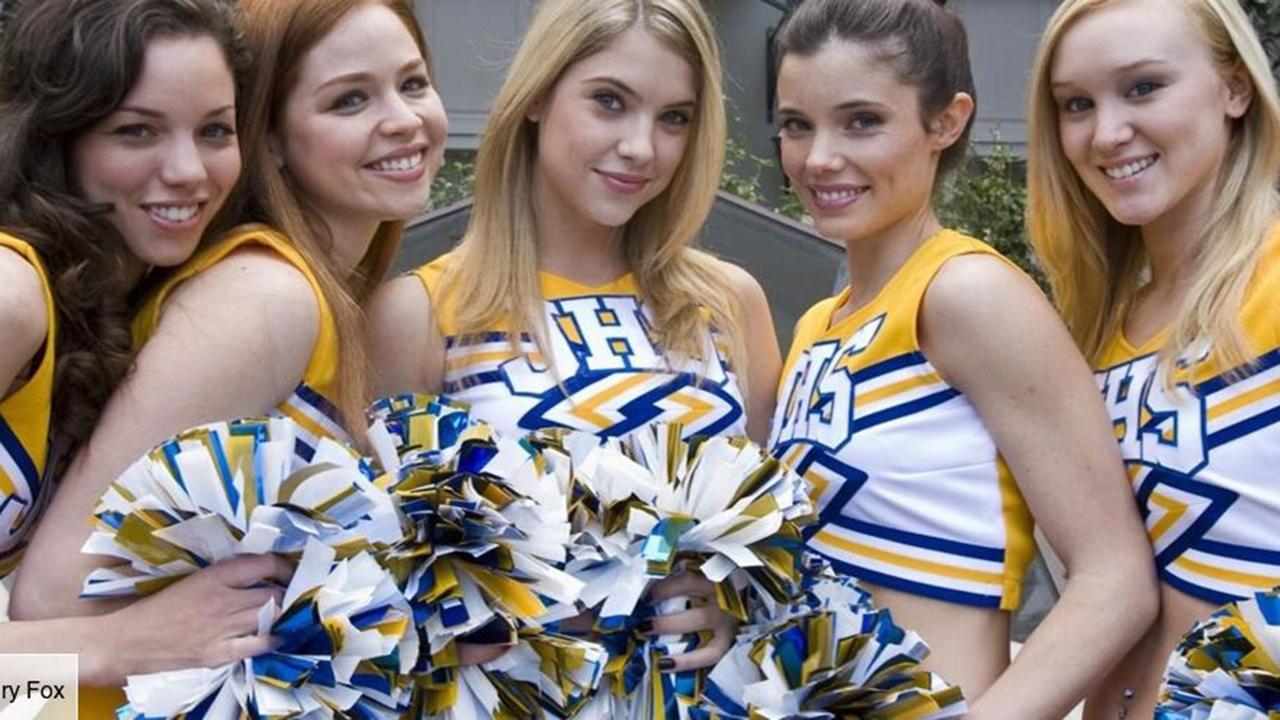
It started with a photo. Five teenage girls, all in their signature cheerleading uniforms, posing in a way that looked more like a wild party than a pep rally. At first glance, it was just another case of teens being teens in the mid-2000s, but this wasn't just any town. This was McKinney, Texas. This was North Central Texas—a place where high school football is essentially a religion and the cheerleaders are the high priestesses.
When the Fab 5 Texas cheerleader scandal broke wide open in 2006, it didn't just rattle the local school board. It became a national obsession. We’re talking Good Morning America, 20/20, and eventually a Lifetime movie. But if you dig past the sensationalist headlines and the glossy TV adaptations, the reality of what happened at McKinney North High School is a lot grittier, sadder, and more complicated than "mean girls" behaving badly.
The Myth of the Untouchable Five
To understand why this exploded, you have to understand the power dynamic. These five girls weren't just popular. People in McKinney genuinely described them as "untouchable." They were the daughters of influential families, and they knew it. The group, which included the principal’s own daughter, seemingly operated under a different set of rules than the other 2,000 students at the school.
They weren't just "sassy." We are talking about documented instances of bullying teachers, skipping classes without consequence, and creating a culture of fear. Imagine being a veteran educator and having a 17-year-old look you in the eye and tell you that her mom—the principal—would have your job by Monday if you gave her a detention. That wasn't a hypothetical threat; it was the vibe in the hallways every single day.
The scandal officially went nuclear when photos surfaced on MySpace. This was 2006, the era of digital cameras and early social media. The images showed the girls in a local lingerie shop, posing suggestively with adult items, and drinking. In a vacuum, maybe a slap on the wrist? But for the faces of a "Blue Ribbon" school district, it was the spark that lit the powder keg.
Why the Principal Was the Real Story
Honestly, the girls were just teenagers. Teenagers do dumb stuff. The reason the Fab 5 Texas cheerleader scandal became a case study in institutional failure was the response—or lack thereof—from the administration. Linda Theret, the principal at the time, was the mother of the "ringleader."
Conflict of interest doesn't even begin to describe it.
When teachers tried to report the girls for harassment or skipping, the reports would mysteriously vanish. Michaela Ward, the young cheer coach who eventually blew the whistle, became the hero of this story, but she paid a massive price for it. She realized that she couldn't actually discipline her own squad because the principal would override her every time.
Think about that. You’re hired to lead a team, but the boss’s kid is on the team and decides she doesn't want to follow the rules. Ward eventually resigned in a very public, very "I'm not taking this anymore" fashion. She didn't just quit; she went to the media. She brought the receipts. She showed that the "Fab 5" had been protected by a shield of nepotism that made the school's code of conduct look like a joke.
Beyond the MySpace Photos: The Bullying Culture
It’s easy to focus on the scandalous photos, but the real damage was done in the classrooms. Teachers testified about the "reign of terror." One teacher mentioned how the girls would use their cell phones in class—back when that was a massive "no-no"—and simply ignore any adult who told them to stop.
The entitlement was staggering.
- They reportedly harassed a teacher until she was driven to tears and eventually left the school.
- They skipped practices and still took the front-row spots in routines.
- They allegedly made fun of other girls' weights and social status with total impunity.
The school district eventually had to hire an independent investigator, a lawyer named Robert Waltz. His report was scathing. It didn't just blame the girls; it blamed the "culture of entitlement" that the adults had fostered. It turns out that when you tell a group of kids they are special and untouchable for long enough, they start to believe you.
The Fallout: Resignations and Reputation Damage
The fallout was swift once the national media descended on McKinney. Linda Theret eventually resigned, moving on to another district where the scandal followed her like a shadow. The girls graduated, but their names were forever linked to the term "Fab 5"—and not in the cool, Michigan basketball way.
The community was split. You had one side saying, "These are just kids, leave them alone," and the other side saying, "This is exactly what's wrong with suburban Texas culture." It became a mirror for the "Friday Night Lights" obsession where athletic or social status trumps character and discipline.
People often ask what happened to the girls. Most of them moved on to lead relatively private lives, but the internet is forever. You can't scrub a 20/20 special from the collective memory of the public. They became the poster children for "affluenza" before that word was even a common part of our vocabulary.
What Most People Get Wrong About the Scandal
There's a common misconception that this was just about "bad girls." That’s a lazy take. The Fab 5 Texas cheerleader scandal was actually a massive failure of adult leadership. If the principal had just done her job—if she had separated her role as a mother from her role as an administrator—this would have been a three-day story in the local paper.
Instead, it became a cautionary tale about what happens when boundaries disappear. It wasn't just a "cheerleader thing." It was a "power thing." The girls were just the ones holding the pom-poms when the music stopped.
Moving Forward: Lessons for Schools Today
What can we actually learn from this mess? It’s been years, but the same patterns repeat in high schools all over the country. The "Fab 5" might have different names now, and they’re probably on TikTok instead of MySpace, but the dynamics of favoritism haven't changed.
- Enforce the Code of Conduct Universally: The moment you make an exception for the "star" or the "principal’s kid," you’ve lost the locker room and the faculty.
- Protect Whistleblowers: Michaela Ward should have been supported by the district, not forced to quit to get someone to listen.
- Social Media is a Permanent Record: In 2006, this was a new lesson. In 2026, it should be common sense. Anything you post can and will be used in the court of public opinion.
The McKinney North incident serves as a reminder that institutional integrity is fragile. It only takes a few people in power looking the other way to turn a prestigious school into a circus. If you're a parent or an educator, the "Fab 5" story isn't just juicy gossip—it's a blueprint of what not to do when managing high-pressure, high-status student groups.
To truly understand the impact, you have to look at the teachers who stayed and tried to fix the culture after the cameras left. They had to rebuild trust with a student body that had seen firsthand that the rules didn't apply to everyone. That kind of damage takes a decade to repair, not just one school year.
Actionable Steps for Evaluating School Culture
If you're worried about these kinds of "untouchable" cliques forming in your own community, there are a few things to watch for.
First, look at the turnover rate of coaches and extracurricular sponsors. If a program has a new leader every year, there’s usually a reason—and it’s often "helicopter parents" or administrative interference. Second, check if the school's disciplinary actions are transparent and consistent. Are the "popular" kids getting the same "Saturday school" as everyone else for the same infractions? Finally, pay attention to the faculty's morale. Teachers are the first to see a "Fab 5" situation developing. If they feel unsupported, the culture is already in trouble.
The McKinney scandal wasn't an anomaly; it was just the one that got caught on camera. Keeping the "Fab 5" from happening again requires more than just rules—it requires adults who are willing to be the "bad guy" even when it's their own kid in the principal's office.