You're sitting in traffic. Someone cuts you off, and suddenly your heart is hammering against your ribs. Your palms are sweating. You want to scream, or maybe you want to ram their bumper, or maybe you just want to vanish. That isn't just "stress." It’s a deep, ancient part of your biology taking the wheel. We're talking about the four fs hypothalamus functions—a mnemonic that has been taught in medical schools for decades to explain how a tiny, almond-sized structure in your brain controls your entire survival strategy.
Most people think they are in control of their day-to-day decisions. They aren't. Not really.
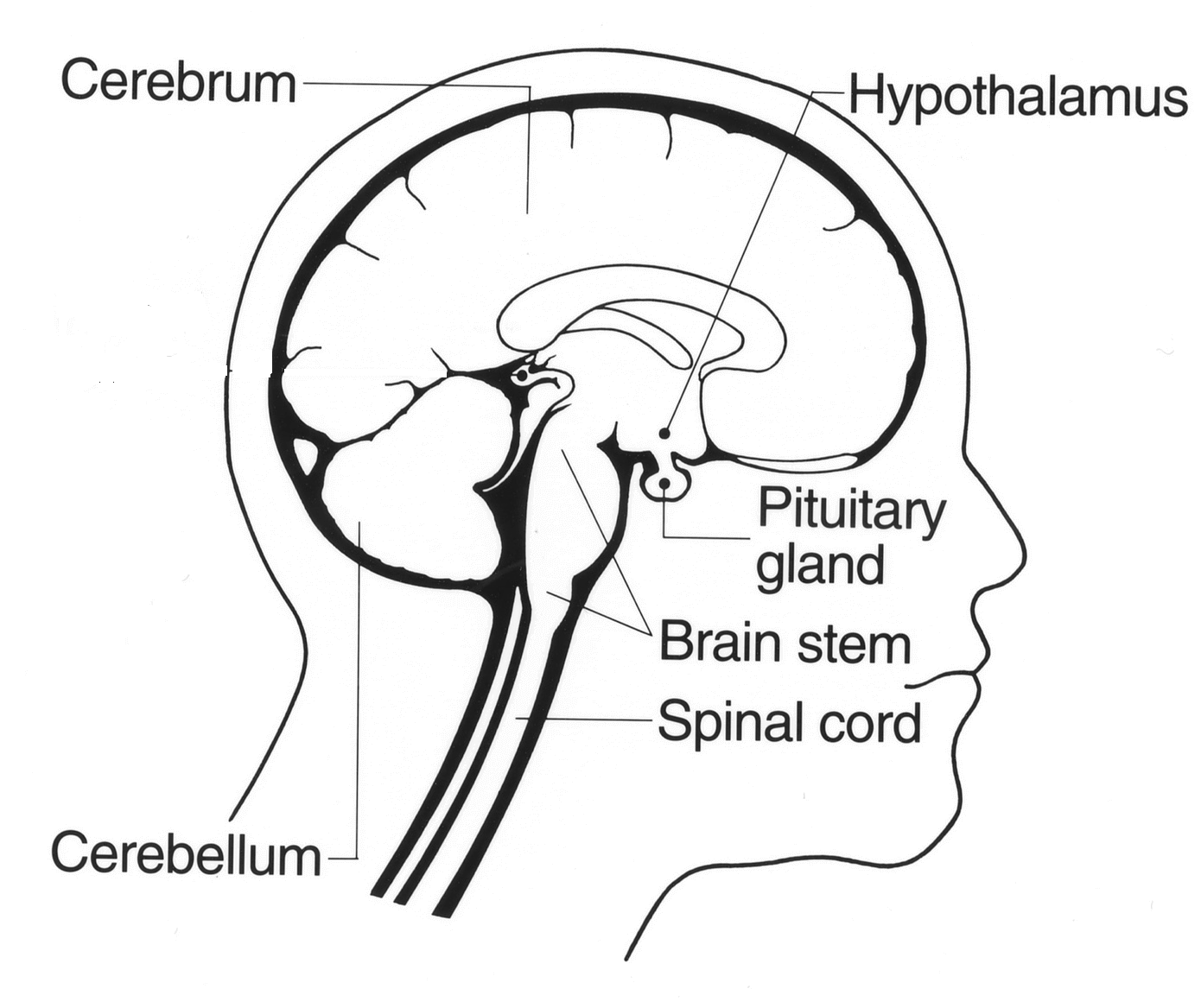
The hypothalamus is the middle manager of the brain, but it’s a middle manager with absolute veto power. It sits right above the brainstem and below the thalamus. If the cortex is the "thinking" part of you that writes poetry and does taxes, the hypothalamus is the "doing" part that keeps you alive. It regulates homeostasis. It manages your temperature. But its most famous role is coordinating the four behaviors essential for the survival of any species: fighting, fleeing, feeding, and... well, mating (often politely referred to as "mating" to keep the alliteration of "F" alive).
What the Four Fs Hypothalamus Actually Does to Your Body
It's easy to memorize a list, but understanding the visceral reality of these states is different. When the hypothalamus detects a threat or a biological need, it triggers the autonomic nervous system.
Take "Fighting" and "Fleeing." These are two sides of the same coin: the sympathetic nervous system response. When the paraventricular nucleus of the hypothalamus gets a signal from the amygdala that things are going south, it sends a message to the adrenal glands. Boom. Adrenaline hits the bloodstream. Your pupils dilate so you can see more light. Your digestion shuts down because, honestly, you don't need to digest that sandwich if you're about to be eaten by a bear.
The Nuance of Feeding and Mating
Feeding isn't just about being hungry. It’s a complex signaling web involving hormones like leptin and ghrelin. The lateral hypothalamus is often called the "hunger center." If you stimulate it in a lab setting, an animal will eat even if it’s full. Conversely, the ventromedial hypothalamus is the "satiety center." Damage that, and you might never feel full again.
Mating is equally complex. It involves the preoptic area. This isn't just about "desire"; it’s about the neurochemical drive to ensure the genetic line continues. It’s heavy stuff for a piece of tissue that weighs less than five grams.
Why Your Brain Gets Stuck in Survival Mode
We don't live in the Pleistocene anymore. We live in a world of Slack notifications, debt, and social media trolls. The problem? The four fs hypothalamus doesn't know the difference between a saber-toothed tiger and an angry email from your boss.
When you are chronically stressed, your hypothalamus is constantly "on." This leads to a flood of cortisol. Over time, this high-alert status wears out the body. It’s why people under high pressure often struggle with their weight (Feeding) or lose their libido (Mating). Your brain has prioritized "Fighting" or "Fleeing" for so long that it has de-prioritized the other two Fs. It’s a resource allocation problem.
The Role of the HPA Axis
To understand the four fs hypothalamus, you have to understand the HPA axis. That stands for Hypothalamic-Pituitary-Adrenal axis.
- The hypothalamus releases Corticotropin-Releasing Hormone (CRH).
- The pituitary gland gets that message and releases Adrenocorticotropic Hormone (ACTH).
- The adrenal glands receive that and pump out cortisol.
It’s a cascade. Once it starts, it's hard to stop. This is why you can't just "calm down" instantly after a fright. The chemicals are already in your blood. You have to wait for your liver to clear them out. You're basically a walking chemistry experiment.
Real-World Examples of Hypothalamic Hijacking
Think about "stress eating." That is the four fs hypothalamus in action. When the "Fleeing" response is triggered by a looming deadline, the body eventually demands a massive caloric intake to replenish the energy it thought it was going to spend running away. You didn't actually run five miles; you just sat at a desk. But your hypothalamus thinks you've been in a marathon. So, you eat the bag of chips.
Or consider "The Yips" in sports. A professional golfer or baseball player suddenly loses the ability to perform a basic move. That’s the "Freeze" response—a subset of the fleeing/fighting mechanism—where the hypothalamus overpowers the motor cortex. The survival brain decides that the pressure of the moment is a mortal threat, and it locks the muscles up.
Modern Science and the Hypothalamus
Dr. Robert Sapolsky, a neuroendocrinology researcher at Stanford, has spent his career looking at how these primitive responses affect modern humans. In his book Behave, he notes that the hypothalamus doesn't work in a vacuum. It’s constantly chatting with the frontal cortex.
The "higher" brain can sometimes talk the "lower" brain down. You see a shadow in the corner of your room. Your hypothalamus triggers the "Fight" response. Your heart jumps. Then, your cortex realizes it’s just a coat on a rack. The cortex sends a signal back down: "Hey, we're good. Stand down."
But this communication can be brittle. In cases of PTSD or chronic anxiety, the "downward" inhibitory signals from the cortex become weak. The hypothalamus becomes a rogue general, calling for battle when there is no enemy.
Is it Really Just Four Fs?
In recent years, researchers have suggested we might need more letters. Some suggest "Freeze" or "Fawn." Fawning is a social survival strategy where a person tries to please an aggressor to avoid conflict. While these are psychological terms, they are still rooted in the hypothalamic response to safety and danger.
The "Feeding" aspect is also being re-evaluated in the context of the obesity epidemic. We live in an environment of "hyper-palatable" foods. These foods—high in fat, sugar, and salt—basically hack the hypothalamus. They override the "satiety" signals of the ventromedial hypothalamus, creating a feedback loop where the brain thinks it's still starving despite being in a caloric surplus.
Actionable Insights for Regulating Your Survival Brain
Since you can't manually tell your hypothalamus to "shut up," you have to use "bottom-up" and "top-down" techniques to manage the four fs hypothalamus responses.
- Vagus Nerve Stimulation: Deep, diaphragmatic breathing is one of the few manual overrides we have for the autonomic nervous system. By slowing your breath and making your exhales longer than your inhales, you send a physical signal to the hypothalamus that the "Fight or Flee" state is no longer necessary.
- Temperature Regulation: The hypothalamus is your body's thermostat. Splash cold water on your face. This triggers the "mammalian dive reflex," which instantly slows the heart rate and shifts the brain away from a high-alert state.
- Identify the "F": Next time you feel a surge of emotion, ask yourself: "Which F is this?" Labeling the feeling—"I am in a 'Flee' state right now"—engages the prefrontal cortex. This "top-down" processing helps bridge the gap between your lizard brain and your human brain.
- Sleep Hygiene: The hypothalamus also regulates the circadian rhythm via the suprachiasmatic nucleus (SCN). If your sleep is trashed, your four fs hypothalamus responses will be hyper-reactive. You’ll be hungrier (Feeding), more irritable (Fighting), and less interested in your partner (Mating).
Understanding the hypothalamus isn't just a biology lesson. It’s a manual for being a human. When you realize that your rage, your hunger, or your fear is just a tiny organ doing its job to keep you alive, it becomes a lot easier to manage those feelings instead of being controlled by them. You aren't "crazy" or "weak"; you just have a very protective brain.
To move forward, start tracking your "triggers" for 48 hours. Note every time your heart rate spikes or you feel an intense craving. Match those moments to one of the four Fs. Once you see the pattern, you can start using physiological tools—like breathwork or cold exposure—to tell your hypothalamus that the tiger isn't real.