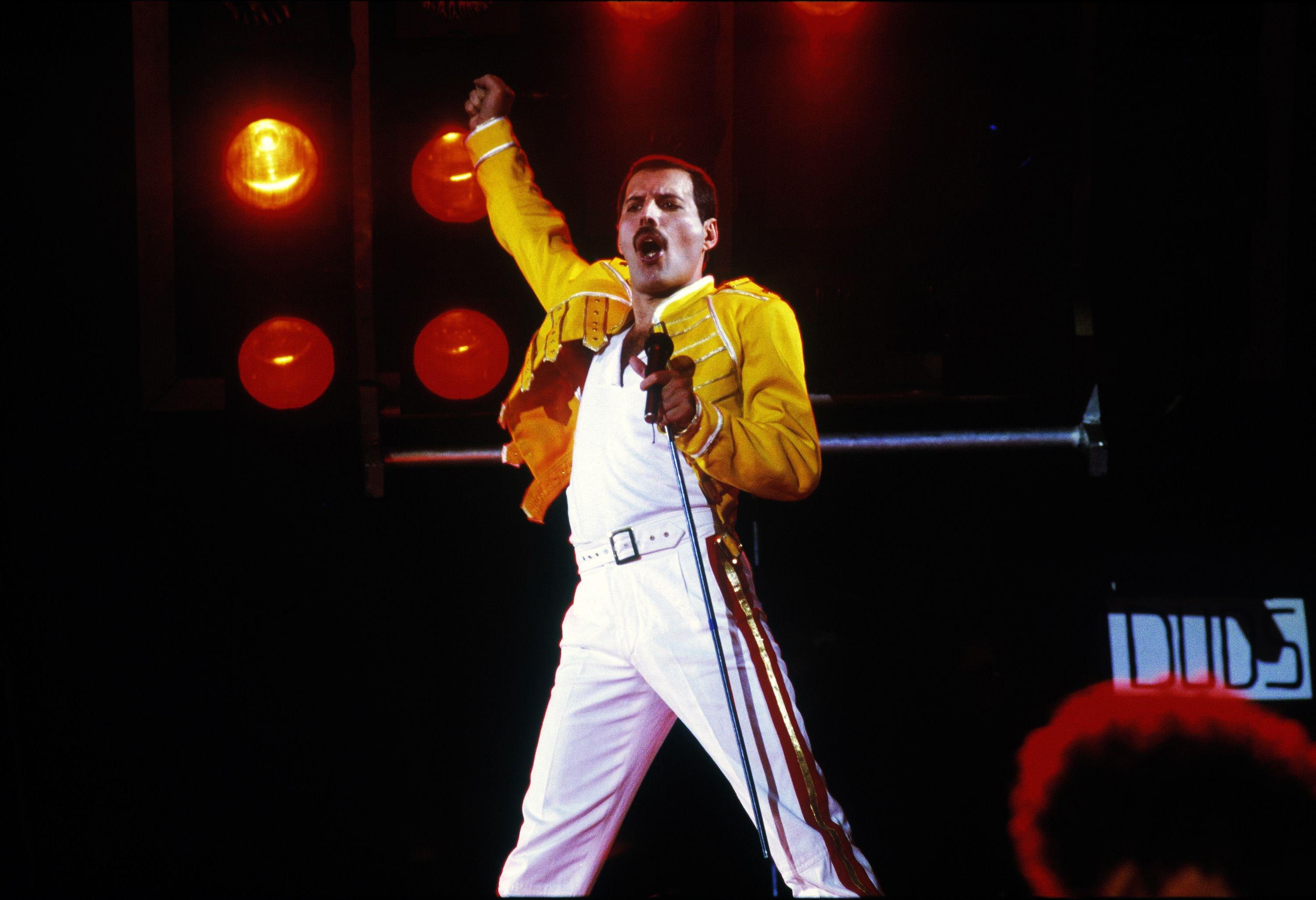
Freddie Mercury was a god of the stadium. You know the image: the yellow jacket, the mustache, and 72,000 people at Wembley eating out of the palm of his hand. But there is a version of Freddie that lived in the shadows of the "Queen" machine, a man who desperately wanted to be a disco diva and an opera star without three other guys voting on his every move.
The Freddie Mercury solo career isn't just a footnote. It was his escape hatch.
Honestly, if you watch the Bohemian Rhapsody biopic, you’d think his solo work was a betrayal that nearly destroyed the band. That’s just Hollywood drama. In reality, Freddie was actually the third member of Queen to release a solo project. Roger Taylor and Brian May had already dipped their toes in those waters while the band was still very much a thing.
Freddie didn't leave Queen. He just needed to breathe.
The Munich Years and the Synth-Pop Gamble
In the early 1980s, Freddie decamped to Munich. He loved the city’s nightlife, the freedom, and the fact that he could walk into a club without being "The King of Queen" every five seconds. This era gave us Mr. Bad Guy in 1985. It was a massive departure. While Queen was built on Brian May’s red special guitar and a certain rock-and-roll density, Freddie’s solo debut was unashamedly synth-pop and disco.
It was his "labor of love."
He spent nearly two years on it. Recording took place at Musicland Studios with Reinhold Mack, and the sessions were, by all accounts, a chaotic mix of perfectionism and partying. Freddie even thanked his bandmates in the liner notes "for not interfering." That’s peak Freddie humor right there.
But the album didn't set the world on fire.
In the UK, it hit number six, but in the US, it barely made a dent. Why? Maybe it was too "gay" for the American mainstream at the time. Maybe people just didn't want Freddie without the band. Whatever the reason, tracks like "Living on My Own" and "I Was Born to Love You" didn't become the global monsters he hoped for—at least, not until they were remixed years later.
Why "Barcelona" Changed Everything
If Mr. Bad Guy was Freddie trying to be a pop star, Barcelona (1988) was Freddie becoming an artist. He was obsessed with the Spanish soprano Montserrat Caballé. He called her "The Voice." When they finally sat down to record together, it wasn't a cynical marketing gimmick. It was a genuine, high-stakes collision of two different worlds.
It was brave.
Rock stars in the late '80s didn't just go and record full-blown operatic albums. It was unheard of. The title track, "Barcelona," is a towering achievement of vocal gymnastics. You can hear the pure, unadulterated joy in Freddie's voice. He wasn't competing with a guitar solo anymore; he was chasing a soprano into the stratosphere.
Caballé later said that Freddie didn't just have a rock voice—he had a "selling" voice. He understood the mechanics of opera more than he let on.
The "Commercial Disaster" Myth
Brian May once referred to Freddie’s solo venture as a "commercial disaster," but that’s a bit of a harsh take. Sure, compared to the stratospheric success of Greatest Hits, it was a smaller ripple. But it provided the creative "cocoon" Freddie needed to keep the band alive.
Without the freedom of the Freddie Mercury solo career, we might never have gotten the rejuvenated Queen that owned Live Aid.
He needed to get the disco out of his system. He needed to prove he could stand alone. And while his solo discography is slim—just two studio albums—it reveals a man who was far more vulnerable and experimental than the "macho" rock persona he wore on stage.
What You Should Do Next
If you really want to understand the man behind the myth, stop listening to "We Will Rock You" for a second. Go find the original 1985 version of "Made in Heaven" or the raw, piano-led "Love Me Like There's No Tomorrow."
- Listen to the "Mr. Bad Guy" Special Edition: The 2019 remix strips away some of the dated '80s production, letting his vocals actually breathe.
- Watch the "Barcelona" Documentary: It captures the moment he realized he could transcend the "rock star" label entirely.
- Compare the solo "I Was Born to Love You" to the Queen version: You’ll hear exactly what the band added (and what Freddie was trying to escape) in the original.
Freddie’s solo work was never about replacing Queen. It was about finding himself. By the time he returned to the "family" for the final albums, he was a more complete artist because he’d finally dared to walk the stage alone.